

By All in Maritime News | Dar es Salaam, Tanzania
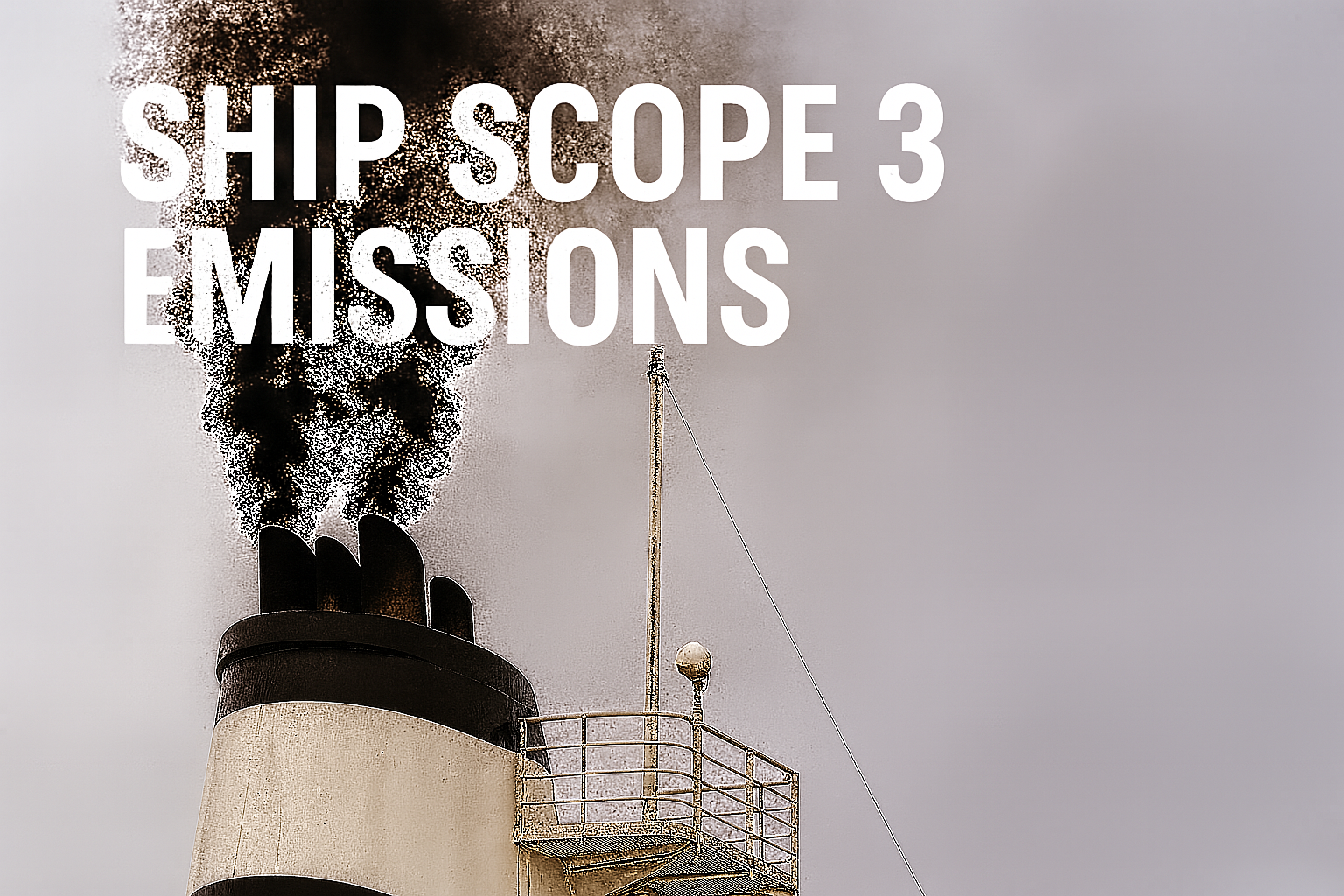
As global climate regulations tighten, one issue continues to confound even seasoned shippers and logistics managers: Scope 3 emissions. Often dismissed as someone else’s responsibility, these indirect emissions—generated across the value chain—are now squarely in the spotlight of supply chain audits and investor disclosures.
For Africa’s shipping and trade sectors, the challenge is acute. With minimal digital tracking, fragmented transport systems, and little regulatory pressure to report, who exactly is tracking Scope 3 emissions in Africa—and who will bear the cost of reducing them?
1. What Are Scope 3 Emissions?
The Greenhouse Gas Protocol defines Scope 3 emissions as all indirect emissions that occur in a company’s value chain, excluding purchased electricity (Scope 2).
In shipping and logistics, this includes:
- Emissions from vessel operations not owned by the cargo owner (chartered vessels, third-party carriers).
- Port terminal emissions tied to cargo handling.
- Upstream activities like packaging, warehousing, and inland haulage.
- Downstream emissions from distribution to end users.
“Scope 3 is where 70% to 90% of total emissions often hide,” says Dr. Olivia Katamba, climate finance researcher at the African Union Green Recovery Program. “If you ignore them, you’re not serious about decarbonization.”
2. Global Drivers Now Mandate Scope 3 Disclosure
From EU CSRD (Corporate Sustainability Reporting Directive) to U.S. SEC climate disclosure rules, cargo owners—especially those exporting to Europe and North America—are now required to report full-chain emissions, including shipping.
- Retail giants (e.g., Walmart, IKEA, Unilever) already demand Scope 3 visibility in their supplier logistics.
- Banks and insurers assess Scope 3 in ESG loan screening.
In April 2025, the International Sustainability Standards Board (ISSB) confirmed that transport-linked Scope 3 emissions will become part of baseline climate disclosures for listed firms starting 2026.
3. The African Dilemma: Fragmentation, Blind Spots, and Cost
In Africa, most shippers rely on third-party logistics firms or port agents without standardized emission tracking tools. Paper-based systems dominate inland haulage and port clearance, making data collection difficult.
“Many African exporters couldn’t tell you the fuel type of the vessel carrying their cargo, let alone its CO2 profile,” says Andrew Odhiambo, Logistics ESG Specialist, Nairobi.
Challenges include:
- Lack of digital cargo tracking integrated with emissions databases.
- No national emissions registries for maritime or logistics.
- Cost of emissions calculation and certification often pushed onto exporters.
4. Who Is Paying—and Who Should Be?
“Currently, the burden of Scope 3 compliance is falling disproportionately on cargo owners,” says Eng. Daniel Esilaba, Managing Director of Observater Surveys and Services Ltd, speaking to All in Maritime News.
“Exporters are expected to produce Scope 3 data even when they don’t control the ship, the fuel, or the haulage. This is unsustainable unless there is shared responsibility across the chain.”
Observater is actively supporting clients by:
- Providing vessel CII-linked bunker emission estimates.
- Generating port terminal carbon intensity reports.
- Offering emissions certification packages for multi-modal transport.
5. Emerging Solutions in Africa
Some progress is underway:
- Kenya, Ghana, and South Africa are piloting national GHG inventory frameworks that include logistics.
- DP World and Africa Global Logistics are testing embedded carbon tracking into their terminal management systems.
- Observater has launched a training program for ESG auditors and surveyors to build Scope 3 calculation capacity across Eastern and Southern Africa.
“This is not just about reporting. It’s about gaining access to green corridors, lower freight premiums, and ESG-aligned buyers,” says Esilaba.
6. The Road Ahead: Integration and Investment
Experts agree that African governments must:
- Develop regional emissions databases and reporting frameworks.
- Support SME exporters with digital tools for Scope 3 visibility.
- Offer fiscal incentives for green logistics adoption.
“Africa must avoid being penalized for Scope 3 gaps it didn’t create,” warns Dr. Katamba. “But we also can’t afford to be excluded from climate-aligned trade.”
Conclusion: No More Blind Spots
Scope 3 emissions are no longer invisible. For African traders, they now sit at the intersection of finance, compliance, and competitiveness. Those who fail to measure will struggle to trade.
Firms like Observater Surveys and Services Ltd are helping close this gap—providing real, measurable, and credible emissions data to empower African exporters in a rapidly greening global market.
Reach out to Eng. Daniel Esilaba at: daniel.n@obsevater.com or www.observater.com
Contact: news@allinmaritime.com
Tel: +27 063 069 1191
Offices: Durban | Dar es Salaam | Nairobi | Dubai
Website: www.allinmaritime.com
All in Maritime News — Your Source for Global Maritime Intelligence
