

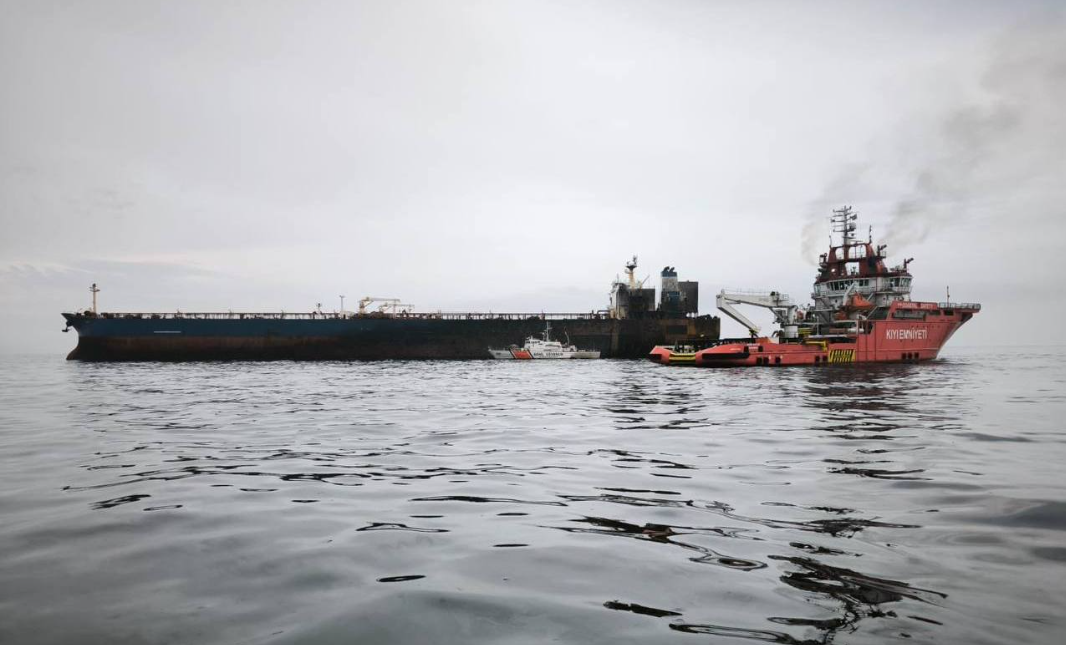
The global “shadow fleet” crisis has escalated once again, with a third tanker suffering a major incident off the coast of Senegal this week, heightening alarm across maritime security circles already unsettled by recent drone strikes on shadow-operated vessels in the Black Sea.
The latest incident involved an ageing, uninsured crude carrier operating under obscure ownership and a flag of convenience—common hallmarks of the opaque network of vessels known as the shadow fleet. According to regional maritime authorities, the tanker suffered a severe mechanical failure that led to a temporary loss of propulsion, drifting dangerously close to fishing grounds before being stabilised by responding tugs from Dakar.
While no spill has been confirmed, environmental agencies in West Africa remain on high alert, citing the vessel’s poor maintenance record and previous port detentions. This marks the third such emergency in Senegalese waters in under six weeks, underscoring growing concerns about shadow-fleet traffic shifting from the heavily monitored Mediterranean and North Atlantic corridors toward Africa’s less policed maritime zones.
Global Security Concerns Intensify
The Senegal incident follows a string of drone strikes targeting shadow fleet tankers in the Black Sea earlier this month, incidents widely linked to ongoing geopolitical tensions involving sanctioned oil shipments. Those attacks caused significant structural damage to at least two tankers, ignited onboard fires, and forced emergency port closures in nearby coastal areas.
Security analysts warn that the convergence of drone warfare and unregulated tanker activity poses an unprecedented risk to global shipping. The unpredictable movement of shadow fleet vessels—often operating without AIS signals, proper classification, or international insurance—creates blind spots that complicate naval monitoring and emergency response.
Africa Emerges as a New Shadow Fleet Transit Route
With scrutiny tightening across Europe and the Middle East, West Africa is increasingly emerging as a preferred transit corridor. Senegal, Mauritania, and Guinea-Bissau have all reported a sharp uptick in calls and offshore transfers involving older tankers engaged in sanctioned oil trades.
Port authorities across the region have urged stronger coordination with the IMO and international tanker owners’ associations to curb illegal ship-to-ship transfers and enforce transparency protocols.
Maritime legal experts note that many shadow fleet tankers are operating far beyond their recommended lifespan, often lacking class certification and proper documentation. This increases the likelihood of machinery failures, structural fractures, and environmental disasters—especially in regions with limited spill-response capacity.
Industry Leaders Call for Immediate Action
In light of the Senegal incident, global shipping insurers and P&I clubs reiterated warnings about the escalating risks associated with unregulated oil tankers. Calls are mounting for:
- Stricter port-state controls in West Africa,
- Enhanced surveillance using AIS verification and satellite tracking,
- A crackdown on flag-hopping and shell ownership structures, and
- Clearer international enforcement mechanisms for sanctions-evading fleets.
Environmental groups are urging coastal states not to underestimate the potential impact. A single spill from a decades-old tanker off West Africa could devastate marine ecosystems, fishing economies, and coastal populations.
A Crisis Far From Contained
With drone warfare intensifying in the Black Sea and shadow fleet vessels shifting to new theatres of operation, maritime analysts warn that more incidents are likely unless coordinated global enforcement is strengthened.
The combination of ageing infrastructure, opaque ownership, and high-risk geopolitical trades continues to make the shadow fleet one of the most volatile and dangerous elements of today’s global shipping network—placing coastal states like Senegal squarely on the front line of an expanding maritime crisis.
Tell us What is Happening in Your Area: Contact Maritime Context at: news@maritimecontext.com
