

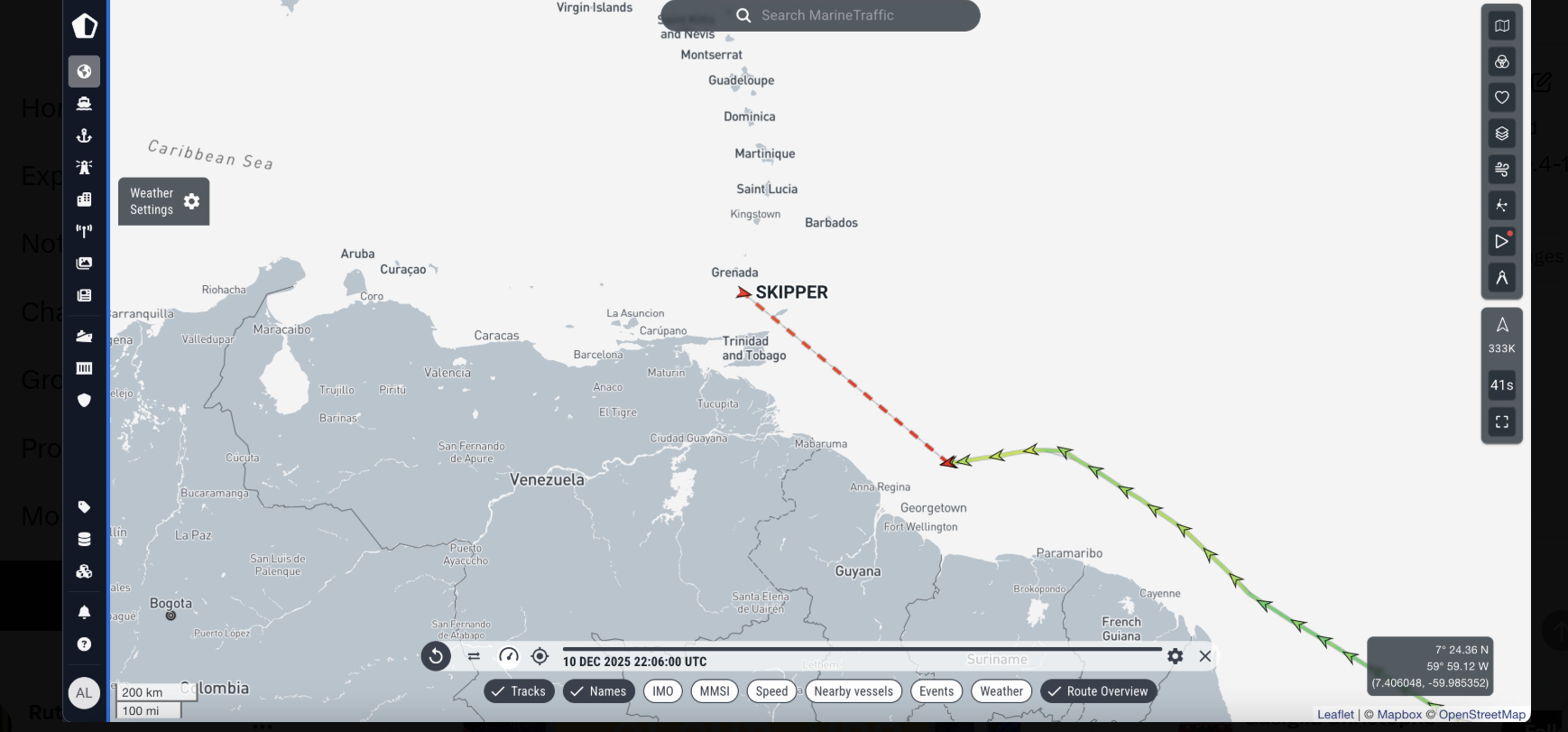
Caribbean Sea — 10 December 2025 — United States forces have seized the VLCC Skipper off the coast of Venezuela after confirming the vessel was covertly transporting 1.1 million barrels of sanctioned Merey crude, intensifying Washington’s pressure campaign on Nicolás Maduro’s regime and sending ripples through global oil markets.
The 20-year-old crude carrier, sailing under the Guyana flag, was intercepted during a coordinated operation involving the US Coast Guard, FBI, and elements of the US military. Officials executed a combined narcotics and sanctions-related warrant, citing extensive evidence of illegal loading operations and sanctions evasion.
Satellite and AIS Evidence Confirm Covert Loading
US authorities stated that satellite surveillance showed the Skipper loading Venezuelan Merey crude at the José Terminal, despite being prohibited from engaging in any Venezuelan petroleum trade. The tanker’s AIS transmissions were falsified, with position signals showing the vessel drifting hundreds of miles away while high-resolution imagery placed it directly at loading berths.
This method mirrors a pattern used by many vessels in the so-called “dark fleet” — tankers that manipulate AIS data, conduct nighttime operations, or sail under obscure registries to mask sanctioned cargo movements.
A Long History of Sanctions Evasion
The Skipper has been on the OFAC sanctions list since November 2022, and maritime analysts have tracked a series of high-risk and deceptive voyages since then. These include:
- Unexplained AIS gaps off the coast of Iran
- Ship-to-ship (STS) transfers in the Red Sea and Eastern Mediterranean
- Approaches to Syrian territorial waters
- Previous calls at Iranian anchorages commonly used by sanctioned tankers
The vessel’s ownership structure, spread across front companies registered in multiple jurisdictions, has long been associated with networks moving Iranian and Venezuelan crude in violation of international restrictions.
Washington Steps Up Pressure on Caracas
The dramatic interception marks a significant escalation in US maritime enforcement targeting Venezuela’s oil sector. Officials say the seizure is part of a broader crackdown aimed at dismantling the fleet of 30+ sanctioned or high-risk tankers that have kept Venezuela’s oil exports afloat despite years of sanctions.
Venezuelan authorities denounced the action as “piracy,” accusing Washington of violating international law and interfering with sovereign energy operations. The US government, however, insists the operation was lawful and backed by criminal and sanctions warrants.
Market Reaction and Global Oil Impact
News of the seizure prompted a 0.4–1% jump in crude prices, reflecting market concerns over tighter supplies of heavy crude grades. Analysts warn that additional enforcement actions could further squeeze global heavy-sour crude availability — particularly as several refineries in Asia and the US Gulf rely on such grades.
Industry observers say the seizure of the Skipper could deter other dark-fleet operators moving Venezuelan and Iranian crude, raising operational risks and insurance pressures across a shadow shipping network already under scrutiny.
Outlook
The Skipper is expected to be relocated to a US-controlled anchorage pending legal proceedings. Meanwhile, Washington’s focus on smuggling networks and AIS-manipulating tankers is likely to intensify, with maritime authorities warning operators that deceptive practices will trigger swift interdiction.
The incident underscores the growing role of satellite intelligence, AI-enhanced vessel tracking, and multinational enforcement teams in policing sanctioned maritime activity — signaling a new phase in US sanctions enforcement at sea.
Tell us What is Happening in Your Area: Contact Maritime Context at: news@maritimecontext.com
