

By All in Maritime News | June 30, 2025 | Nairobi, Kenya
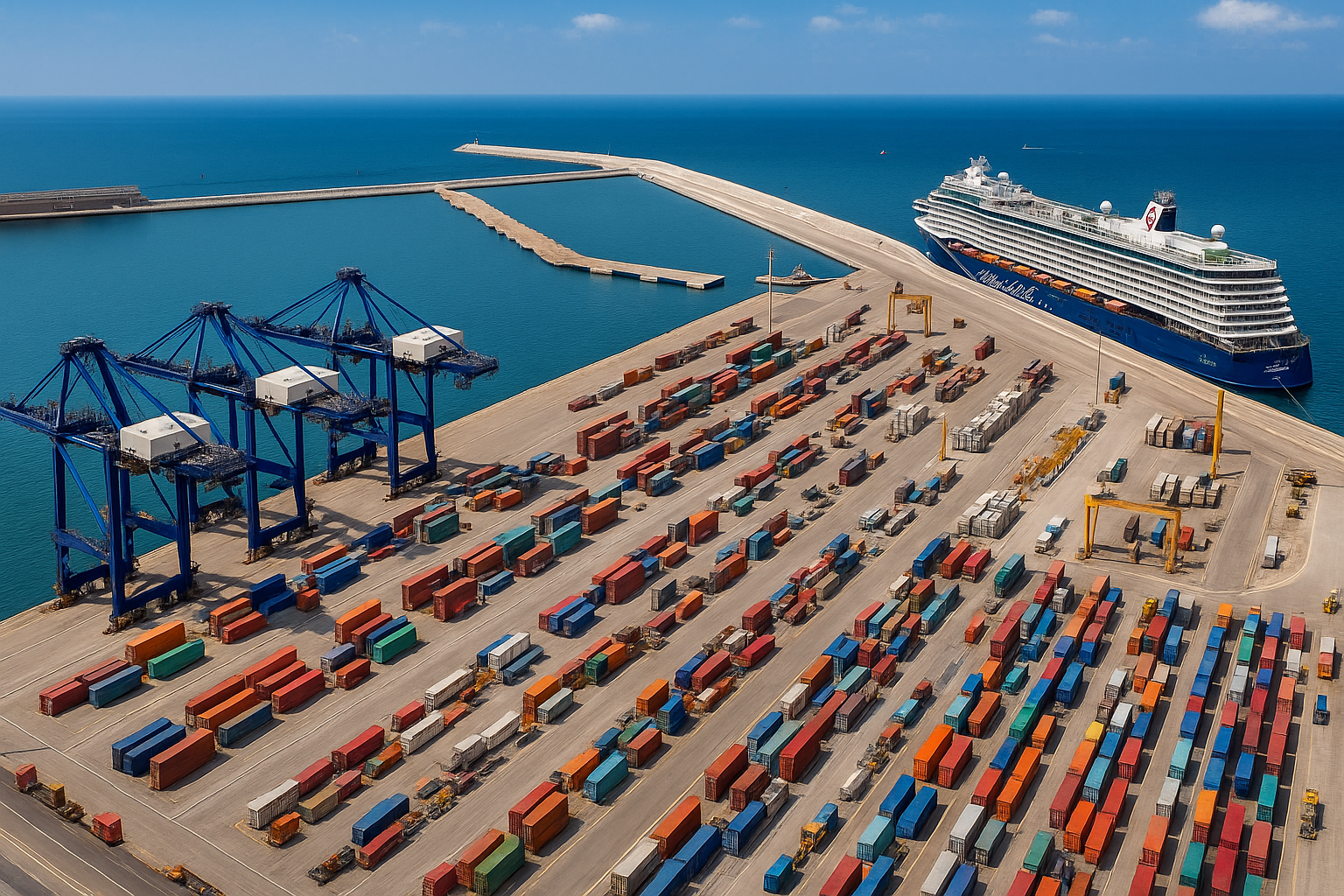
Eastern Africa’s ports are entering a period of intense transformation. As global shipping realigns and regional economies expand, the pressure to streamline cargo handling and customs clearance has never been greater. Across Kenya, Tanzania, Uganda, Rwanda, and beyond, public and private sectors are investing in digital systems, inland depots, and multimodal solutions to accelerate cargo movement.
But while progress is evident, long-standing structural issues—congestion, corruption, cost opacity—continue to frustrate efficiency. This in-depth report investigates how the region is confronting these challenges and whether current reforms are enough to unlock its full trade potential.
1. The Digital Customs Revolution: Is the Single Customs Territory Delivering?
The East African Community’s flagship policy, the Single Customs Territory (SCT), is aimed at creating a seamless regional trading space. In early 2025, the EAC Secretariat rolled out an upgraded real-time digital platform that integrates port, border, and customs operations across member states.
According to the EAC Secretary-General, the new system “enables coordinated risk assessment, cargo tracking, and document sharing, significantly reducing duplication and clearance delays.”
Results so far:
- Border clearance times reduced by up to 50% on high-traffic corridors like Mombasa-Kampala and Dar es Salaam-Kigali.
- Integration with port community systems in Mombasa and Dar es Salaam, enabling cargo pre-clearance before arrival.
- Live pilot deployments at Inland Container Depots (ICDs) in Naivasha, Isaka, and Kigali.
Challenges:
- Full regional integration is slowed by differing national systems, legacy infrastructure, and weak last-mile automation in some partner states.
- Exporters report persistent delays for high-risk goods due to inconsistent risk profiling.
2. Smart Ports and Paperless Platforms: A Work in Progress
Kenya and Tanzania have made major strides in port modernization. At Mombasa Port, a new Terminal Operating System (TOS), biometric e-Gate passes, and automated yard operations have replaced most paper-based processes.
In Dar es Salaam, the Port Management Information System (PMIS) connects with Tanzania Revenue Authority (TRA), Tanzania Bureau of Standards (TBS), and clearing agents in a unified platform.
As Captain William Ruto, Managing Director of the Kenya Ports Authority, explained earlier this year: “We are determined to transform Mombasa into a world-class logistics hub. These digitization projects are central to achieving that goal.”
Key Outcomes:
- Cargo dwell times reduced from an average of 12 days in 2020 to 5.6 days in 2025.
- Over 85% of import documentation is now processed electronically at Mombasa.
- Vessel turnaround times improved due to electronic berth planning and cargo tracking.
Ongoing Issues:
- Smaller clearing firms struggle with system access and training.
- Occasional ICT outages still paralyze operations during peak traffic.
3. Bureaucracy, Delays, and Informal Charges: The Invisible Hand
Despite system upgrades, the clearing process remains fraught with obstacles. Multiple inspection agencies, unclear valuation protocols, and informal payments continue to plague the supply chain.
Industry operators cite unpredictability in documentation and customs clearance as major pain points. For instance, minor discrepancies in cargo declarations often trigger full re-inspections—delaying release by days or even weeks.
A senior operations executive from a leading freight forwarder, speaking anonymously, stated: “We’ve seen cases where clearance takes 72 hours on paper but 12 days in reality. The gap is human—manual approvals, inconsistent enforcement, and rent-seeking.”
Impacts:
- High demurrage and storage costs, particularly for containerized imports.
- Undermining of regional trade predictability, especially for time-sensitive exports like horticulture and pharmaceuticals.
4. The Rise of Inland Ports and Multimodal Corridors
As seaports reach capacity, governments are increasingly investing in inland logistics platforms and regional transport corridors.
In Uganda, the under-construction Bukasa Inland Port is expected to move over 5 million tonnes annually via Lake Victoria barge and road links. Kisumu Port has been revived for lake trade, while MV Mpungu, East Africa’s first scheduled RO-RO freight ferry, was launched in January 2025.
In Kenya, the Standard Gauge Railway (SGR) connects Mombasa to Nairobi and Naivasha, where bonded ICDs provide clearance and dispatch options for transit cargo to Uganda, Rwanda, and DRC.
“Multimodal logistics is the next frontier,” said Benon Kajuna, Uganda’s Permanent Secretary for Transport. “We must move away from road-only transit to unlock real value and reduce costs.”
Achievements:
- Transit times from port to Kampala cut from 14 days to 6–8 days.
- Improved safety and reduced road damage due to cargo shifting to rail and barge.
Barriers:
- First-mile access remains weak—rural exporters face high transport costs to reach ICDs.
- Connectivity between railway, road, and barge is still disjointed in many locations.
5. The True Cost of Clearing: Still Unpredictable, Still Too High
While digital platforms and policy reforms have improved process visibility, the cost burden of clearing remains a sticking point.
Importers routinely pay between USD 250 and USD 600 per container in clearing charges—excluding shipping line fees, customs valuation discrepancies, scanning costs, warehousing, and inspection agency levies.
Recent reports by TradeMark Africa and the World Bank indicate that high fees, coupled with procedural inefficiencies, result in total logistics costs averaging 30–40% of landed cargo value in the EAC region—compared to 8–15% in Asia or Europe.
Frequent changes in tax policy, inconsistent application of exemptions, and lack of centralized grievance redress mechanisms further complicate trade.
Consequences:
- Small and medium enterprises are squeezed out of formal logistics channels.
- Under-invoicing and smuggling remain rampant in high-duty segments like electronics, fuel, and textiles.
Conclusion: Connecting Systems, People, and Trust
Eastern Africa is on the right path. From Mombasa to Kigali, from Dar es Salaam to Bukasa, the region’s cargo handling and clearance ecosystem is slowly being rewired for efficiency, transparency, and speed.
The progress is undeniable: digitized documentation, integrated customs systems, inland port investments, and multimodal options are now real features of the logistics landscape.
But for Eastern Africa to truly compete on the global stage, reform must go beyond systems. It requires deeper institutional accountability, harmonized policy implementation, empowered small traders, and decisive investment in last-mile infrastructure.
As Eng. Daniel Esilaba, Managing Director of Observater Surveys and Services Ltd, aptly puts it:
“Efficient cargo handling is not just about digital platforms. It’s about trust, consistency, and competent partnerships. At Observater, we work every day to ensure cargo moves securely, transparently, and professionally across borders. Because in Africa, every minute saved in clearance is a ton gained in opportunity.”
With a robust footprint across East Africa, Observater continues to provide reliable support in cargo surveys, cargo damage inspections, risk assessments, and compliance audits—helping shippers, forwarders, and port authorities navigate the region’s evolving logistics ecosystem with confidence.
Contact: news@allinmaritime.com
Tel: +27 063 069 1191
Offices: Durban | Lagos | Abidjan | Dakar
All in Maritime News — Your Source for Maritime Intelligence
