

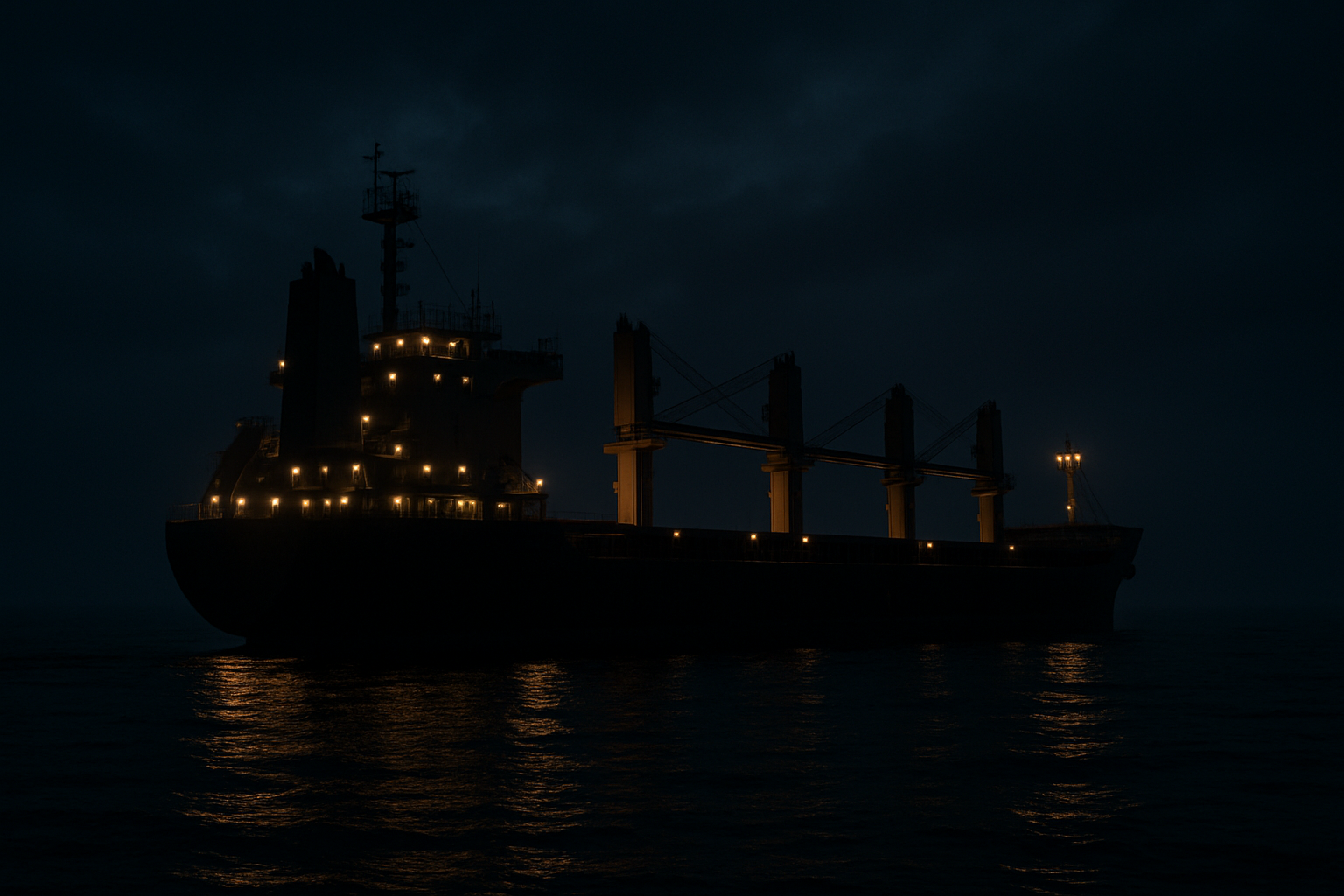
Murmansk, Russia – In a move stirring fresh waves across global oil markets and geopolitical fault lines, a U.S.-sanctioned crude oil tanker is now en route to a major Russian export terminal that supplies refined petroleum products and fuel oil to Europe. Satellite imagery and AIS (Automatic Identification System) data confirm the vessel’s approach toward the port of Ust-Luga—a critical maritime gateway for Russia’s energy exports.
Despite facing direct U.S. Treasury restrictions for facilitating transactions involving Russian crude, the vessel—flying a flag of convenience—has bypassed typical Western enforcement frameworks, navigating through a network of loosely monitored waters and complex ownership arrangements.
Quiet Waters, Loud Signals
While international maritime law allows freedom of navigation, the move is raising sharp questions in Washington, Brussels, and beyond. The tanker, whose beneficial ownership is obscured through a web of offshore shell companies registered in the Caribbean and Middle East, is reportedly transporting vacuum gas oil (VGO) or potentially Urals crude—commodities that underpin Europe’s fuel refining capacity.
A senior maritime intelligence analyst, speaking under anonymity due to the sensitivity of the matter, said:
“This vessel has appeared on OFAC’s radar before, yet continues to operate through intermediary ports and third-party brokers. Its latest voyage to Ust-Luga signals a disturbing loophole in global sanctions enforcement.”
European Dependence in the Crosshairs
Although the European Union has significantly cut direct imports of Russian crude since early 2023, recent reports show a growing reliance on processed products and feedstocks rerouted through non-sanctioning countries or masked behind complex logistics chains.
According to data obtained from Lloyd’s List Intelligence and corroborated by port call logs:
- Over 22.7 million barrels of Russian VGO and fuel oil reached EU ports in Q1 2025.
- Nearly 30% of these volumes were shipped by vessels flagged or previously associated with sanctioned entities.
- More than 10 U.S.-sanctioned tankers made indirect or shadow port calls to Russian export facilities since January.
The situation not only undermines sanctions but also casts doubt on global oil traceability standards, raising alarms among compliance officers and policymakers.
Industry Experts Weigh In
Dickens Malala, Regional Director of Marine Compliance at Mariclaim Marine Global Surveyors stated:
“The technical ability of sanctioned tankers to pivot their routes and mask true destinations is becoming more sophisticated. We’re observing vessels using false transponders, engaging in mid-sea ship-to-ship transfers, and switching flags mid-voyage—all aimed at confusing regulators and insurers.”
He added that port state control inspections are now “playing catch-up” in a global game of cat-and-mouse.
Jamal, a maritime lawyer based in Mombasa, said:
“Legal enforcement is crippled by jurisdictional gaps. If the vessel never docks in U.S. waters or its allies, there’s little legal teeth to bite. Maritime law lacks a unified, enforceable global framework for sanction enforcement—making the high seas a grey zone of compliance.”
Diplomatic Ripples
The U.S. Department of State has neither confirmed nor denied intelligence on the vessel, but sources close to Capitol Hill say the National Security Council is closely monitoring the situation.
European Commission officials, meanwhile, face mounting pressure to tighten loopholes in their own sanctions architecture. Germany and Italy, two of the largest importers of refined products from third-party countries, are now reviewing fuel contracts involving Russian-origin material.
A source within the European Parliament’s Subcommittee on Security and Defence disclosed:
“We’ve underestimated the adaptability of maritime logistics in circumventing sanctions. What we need now is a digital oil passport system—AI-traceable supply chains from wellhead to pump.”
Shadow Fleet & The Rise of the ‘Dark Tankers’
This vessel is part of the so-called “shadow fleet” or “dark fleet”—a loosely affiliated network of tankers operating under obscure ownership, flag-switching tactics, and minimal insurance oversight. Many of these ships are aged, under-maintained, and often rely on substandard classification societies.
Their operations have led to a rise in marine accidents, pollution incidents, and claims disputes, particularly in busy chokepoints like the Turkish Straits, the Strait of Hormuz, and the Suez Canal.
What Comes Next?
With sanctions enforcement stretched and energy markets still absorbing shocks from Red Sea disruptions, Ukraine-related instability, and OPEC+ policy swings, this incident may accelerate the following:
- New Sanctions Toolkits: The U.S. and EU may expand secondary sanctions to shipowners, brokers, and even refiners.
- Insurance Clampdowns: Global reinsurers may impose tighter due diligence, raising premiums for vessels flagged in high-risk registries.
- Maritime Tech Upgrades: Expect increased investment in AI-powered tracking systems, blockchain-based cargo verification, and global fuel origin certification.
Conclusion: A Wake-Up Call at Sea
This tanker’s quiet voyage to Ust-Luga may appear routine on the maritime radar, but beneath the surface, it reflects deeper fractures in the global sanctions regime. As geopolitics and energy security intersect at sea, the question remains: How long can the shadow fleet outmaneuver the world’s most powerful economies?
For now, the oil flows. But the storm is only gathering.
Filed under: Maritime Security, Energy Policy, Sanctions Enforcement, Tanker Tracking
Contact the newsroom: news@allinmaritime.com | +27 063 069 1191
