

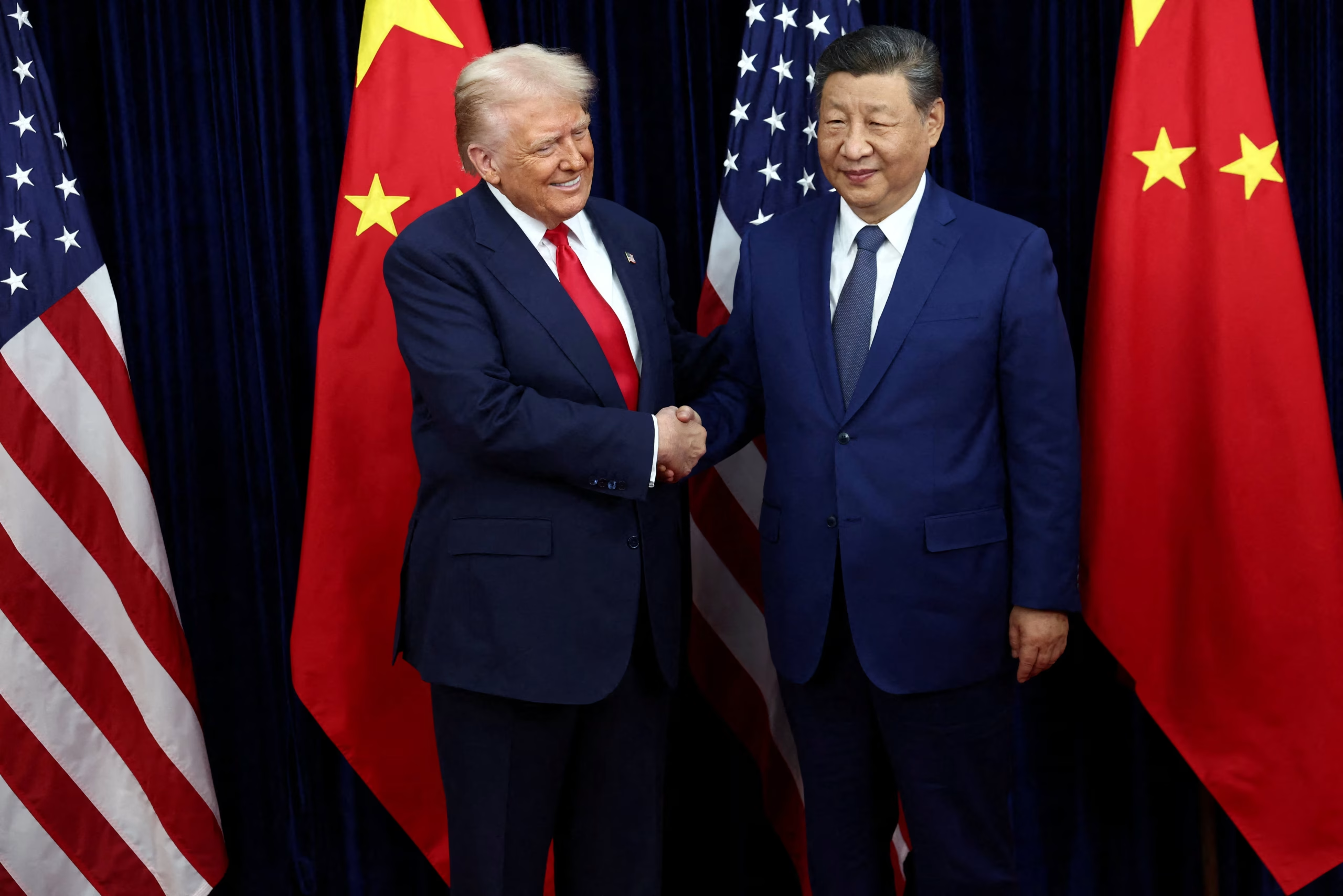
Rare earths, tariffs, and global supply chains dominate talks at Busan meeting
In a pivotal diplomatic encounter that could reshape the trajectory of global trade, U.S. President Donald Trump and Chinese President Xi Jinping met on October 30, 2025, in Busan, South Korea, marking their first face-to-face dialogue since the U.S. presidential transition. The high-stakes meeting took place on the sidelines of the Asia-Pacific Economic Cooperation (APEC) summit and sought to ease months of economic and geopolitical tensions between the world’s two largest economies.
The Busan meeting comes amid escalating disputes over technology exports, tariffs, and access to rare earth minerals, with ripple effects across global industries — from semiconductor manufacturing to maritime logistics. Both leaders described the encounter as constructive, with President Trump calling it “a 12 out of 10 meeting” and Xi Jinping emphasising a “new phase of pragmatic cooperation.”
Key Outcomes of the Meeting
According to statements released by both delegations and verified by Reuters and The Guardian, the leaders agreed on several critical points:
- Tariff Adjustments: The United States will reduce select tariffs on Chinese imports, including cutting the tariff on fentanyl-related chemical precursors from 20 percent to 10 percent. This move aims to improve bilateral trust and facilitate smoother trade flows in regulated goods.
- Rare Earths Agreement: China pledged to resume limited exports of rare earth elements to the U.S. — materials essential for electric vehicles, renewable energy systems, and advanced electronics. This agreement is expected to stabilize global supply chains that have faced severe strain since 2023.
- Agricultural Purchases: Beijing committed to increase imports of American soybeans, corn, and sorghum, signaling renewed cooperation in the agricultural trade sector that had sharply declined during the earlier tariff standoffs.
- High-Level Dialogues: Both nations agreed to restart strategic economic and technology dialogues suspended since 2022, with working groups to meet quarterly to address disputes and regulatory concerns.
A Meeting Laden with Symbolism and Strategic Caution
While the Busan summit projected a sense of cautious optimism, underlying issues remain unresolved. Neither side addressed the Taiwan question, South China Sea navigation rights, or technology export controls in detail. Analysts note that the renewed cooperation primarily targets short-term stabilization, leaving deeper structural rivalries intact.
For South Korea, the host nation, the summit underscored its growing diplomatic leverage as a neutral convening ground amid intensifying Indo-Pacific competition. Seoul’s facilitation of dialogue further aligns with its ambitions to strengthen its position as a logistics, technology, and maritime hub.
Implications for Global Trade and Maritime Logistics
The outcomes of the Trump–Xi meeting could reverberate across global shipping and supply chains. The reduction in tariffs and partial restoration of rare earth exports may ease congestion at key ports and reduce freight volatility, particularly in Asia–U.S. trade routes.
- Container Trade Stability: Renewed agricultural and technology trade between the U.S. and China could boost eastbound and westbound container volumes, benefitting ports in Busan, Shanghai, Los Angeles, and Long Beach.
- Maritime Equipment Manufacturing: The rare earth agreement is significant for shipbuilding nations such as South Korea and Japan, where these materials are vital for advanced navigation systems and electric propulsion technologies.
- Survey and Maintenance Services: A more predictable flow of trade supports vessel operations, port surveys, and logistics audits, enabling companies in the maritime service sector to plan maintenance and inspection schedules with greater certainty.
Unresolved Challenges and Future Outlook
Despite the positive headlines, industry observers caution that the Busan agreements are time-limited and politically fragile. The rare earth arrangement, for instance, extends only for one year and could be revoked if either side accuses the other of non-compliance.
Moreover, long-term disputes over semiconductor access, cyber-security, and strategic dominance in the Indo-Pacific remain flashpoints. The U.S. continues to restrict the export of advanced microchips to China, while Beijing is prioritising domestic production of high-end components.
President Trump hinted at a possible visit to Beijing in April 2026, with Xi Jinping expected to make a reciprocal visit to Washington later next year — a sequence that could either consolidate progress or reopen geopolitical rifts, depending on domestic pressures.
Industry Perspective: A Temporary Calm, Not a Resolution
For the global maritime and trade community, the Busan meeting represents a momentary easing of tensions, rather than a definitive breakthrough. The shipping industry — already adapting to fluctuating trade policies, rising fuel costs, and evolving emission standards — may gain short-term relief from tariff adjustments and improved trade predictability.
However, analysts warn that the underlying rivalry between Washington and Beijing remains systemic, driven by competition for technological dominance, energy security, and supply-chain control. As such, maritime stakeholders should continue to diversify trade corridors, enhance operational resilience, and strengthen regional cooperation to weather future disruptions.
In summary, the Trump–Xi meeting in South Korea may be remembered as a strategic pause in a long economic contest, offering temporary stability while underscoring the fragility of global interdependence. For the shipping, trade, and logistics sectors — and the wider Indo-Pacific region — the outcome offers cautious optimism but demands vigilant preparation for whatever comes next.
Tell us What is Happening in Your Area: Contact Maritime Context at: news@maritimecontext.com
