

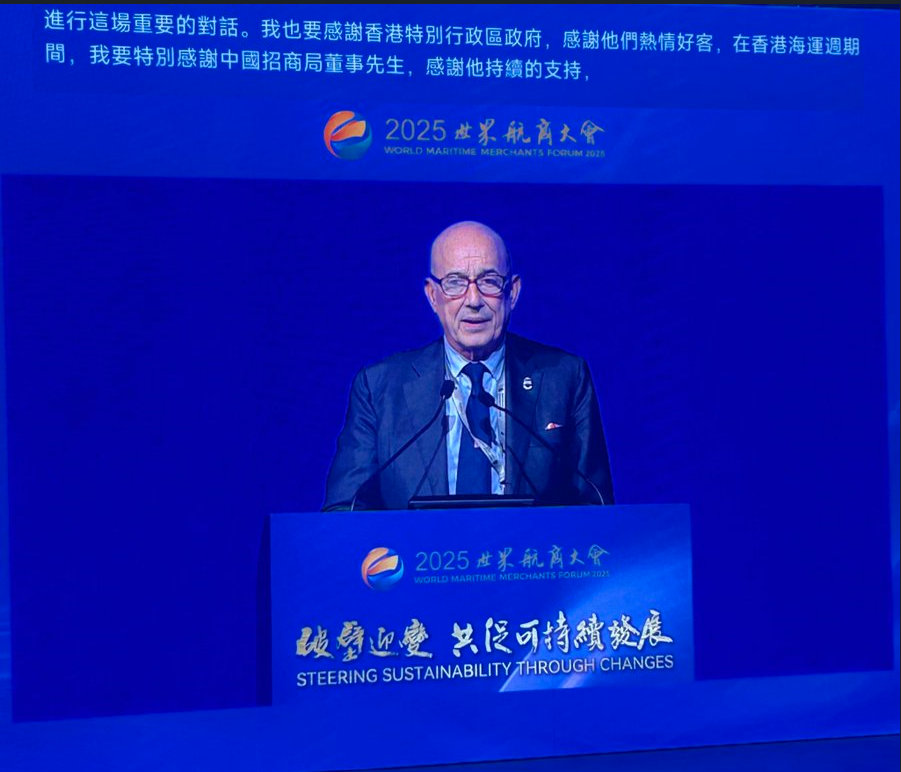
The global maritime industry received a decisive call for coordinated policy action and long-term investment as International Chamber of Shipping (ICS) Chairman Emanuele Grimaldi delivered a keynote address at the World Maritime Merchants Forum today. Speaking before a gathering of shipowners, cargo interests, port authorities, energy suppliers, and regulators, Grimaldi outlined the strategic policy directions he believes are essential to steer shipping toward a resilient and sustainable future.
His remarks come at a time when the shipping industry faces tightening environmental expectations, rapidly evolving fuel technologies, and pressing geopolitical uncertainties—all of which, he argued, require unified global responses rather than fragmented regional actions.
A Pivotal Moment for Global Shipping
Grimaldi began by underscoring the “historic juncture” confronting the maritime sector. He noted that the decisions made within this decade will determine whether the industry can meet its decarbonisation commitments while maintaining the smooth flow of global trade.
“Shipping cannot afford to navigate its transition alone, nor can it succeed amid regulatory inconsistency,” he said. “Our progress depends on coordination—across governments, across the industry, and across energy systems.”
Key Policy Directions from the ICS Chairman
1. Advancing Clean Fuel Pathways and Infrastructure Development
Central to Grimaldi’s speech was the urgent need to scale up production and distribution of low- and zero-carbon marine fuels. Despite promising advances in methanol-, ammonia-, hydrogen-, and battery-based propulsion, he warned that current global supply chains remain far from meeting future demand.
He called for:
- Joint industry–government investment in clean fuel corridors
- Binding long-term policies to incentivise green fuel production
- Harmonised lifecycle assessments to ensure fuels achieve genuine emissions reductions
Grimaldi noted that without rapidly expanding fuel infrastructure, shipowners face significant uncertainties when planning fleet renewal strategies.
2. Maintaining Regulatory Coherence Under the IMO
A major theme in the keynote was the importance of the International Maritime Organization (IMO) in delivering universal, stable, and enforceable regulations.
Grimaldi cautioned that isolated regional measures risk creating distortions and uneven competitive conditions. Instead, he urged governments to support consistent, worldwide policies—especially as the IMO finalises mid-term decarbonisation measures such as market-based mechanisms (MBMs) and fuel standards.
“Only the IMO can deliver the global rules needed to keep trade fair and emissions reductions meaningful,” he said.
3. Mobilising Investment and Ensuring a Fair, Inclusive Transition
Recognising the immense capital required for new fuels, new technologies, and fleet modernisation, Grimaldi stressed the need for predictable frameworks that can unlock financial flows into the sector.
He highlighted:
- The role of green financing and risk-sharing mechanisms
- The need for incentives that make first movers commercially viable
- Support for developing and emerging maritime nations to ensure no region is left behind
A just and inclusive transition, he argued, is critical to maintaining the global nature of shipping.
Industry-Wide Collaboration Essential
Beyond policy and regulation, Grimaldi emphasised that the maritime transition must be supported by genuine collaboration across the value chain. Energy suppliers, port authorities, shipbuilders, classification societies, and digital technology providers all play integral roles in creating a greener ecosystem.
He also underlined the importance of training and upskilling seafarers to operate increasingly complex vessels—a factor he described as “too often overlooked in policy conversations.”
Setting the Tone for the Forum
Grimaldi’s keynote set a clear strategic direction for the World Maritime Merchants Forum, shaping discussions expected to cover:
- Clean energy corridor development
- Digitalisation and AI-driven fleet optimisation
- Maritime finance and emerging investment instruments
- Supply chain resilience and security
- Future-ready ship designs and safety considerations
His message was unequivocal: the path to sustainable shipping requires global leadership, cohesive regulation, and shared responsibility across the maritime community.
As the Forum continues, industry stakeholders will assess how best to convert these policy priorities into concrete action—ensuring that shipping remains both environmentally aligned and economically competitive in the decades ahead.
Tell us What is Happening in Your Area: Contact Maritime Context at: news@maritimecontext.com
