

Trondheim, Norway – May–June 2025
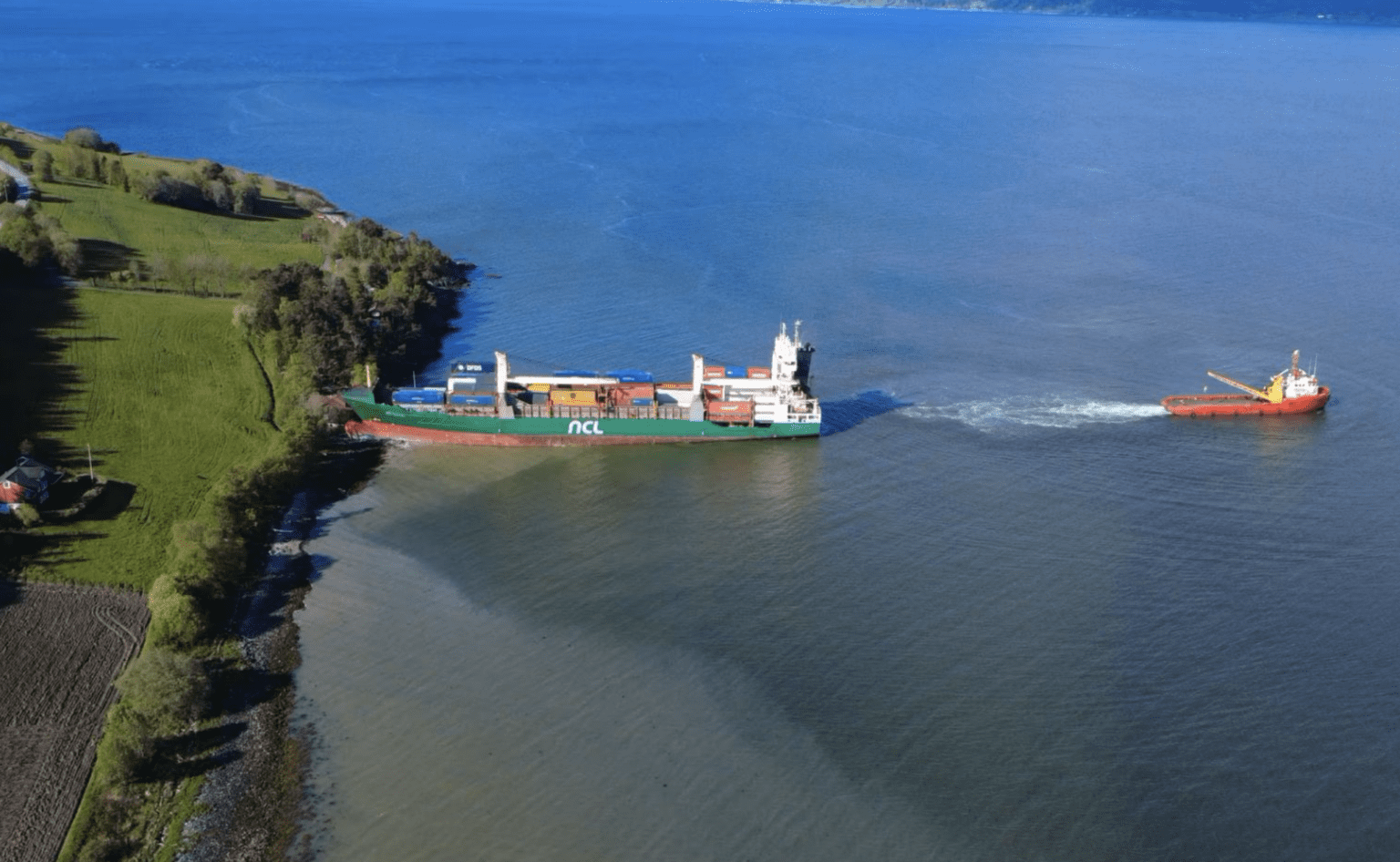
The container vessel NCL Salten, operated by North Sea Container Line, ran aground just offshore from a residential area near Trondheim on May 22, 2025, marking its third such incident in Norwegian waters in as many years. While no injuries or pollution were reported, the incident has raised urgent questions about navigation protocols, bridge watch discipline, and coastal shipping risk management in Northern Europe.
Incident and Response Timeline
- The 100-meter feeder vessel struck the shoreline while en route from Averøy to Orkanger, coming dangerously close to homes in the coastal area of Lade.
- All sixteen crew members remained on board and were unharmed.
- Emergency responders evacuated local residents and began containment operations immediately.
- The vessel was successfully refloated on May 27 after cargo offloading and ballast adjustments, and towed to Orkanger for inspection and repairs.
Port State Findings & Legal Action
- A Port State Control inspection at Orkanger revealed:
- The Bridge Navigation Watch Alarm System (BNWAS) was disabled before the incident.
- The vessel’s Safety Management System (ISM) was found non-compliant.
- Emergency escape hatches failed regulatory tests.
- The ship remains unseaworthy and under administrative detention until repairs are completed and the flag state grants clearance.
- The second officer admitted to falling asleep during night watch and has been charged with negligence under the Ship Safety and Security Act.
Structural and Cargo Risk Commentary from Mariclaim
Mariclaim Global Marine Surveyors & Adjusters, currently involved in assessing the incident, stated:
“Groundings like this one near Trondheim demand full hull stress analysis, inspection of lower tank structures, and verification of potential cargo shift. Even in light cases, prolonged contact with the seabed can induce longitudinal distortion and misalignment of lashing systems, with impact on cargo safety and claims.”
Observater Surveys & Services Ltd: Risk Oversight and Cargo Claims Preparedness
Eng. Daniel Esilaba, Director of Observater Surveys & Services Ltd, provided a grounded technical view on how incidents like this affect stakeholders far beyond Europe:
“In cases like the NCL Salten grounding, the vessel’s structural integrity becomes the first concern—but for cargo owners, what matters most is the condition and recovery of their goods. Containers may not be visibly damaged, yet they may suffer internal shifts, compression, water ingress, or thermal exposure.”
“From our experience handling cargo damage and loss adjusting across Africa, these cases often involve claims for machinery misalignment, spoiled foodstuffs, and packaging failures—sometimes months after discharge. The clock starts ticking the moment the incident happens.”
“We’ve activated response capacity at Mombasa, Dar es Salaam, Beira, and Lamu to assist clients expecting diverted or delayed containers. Observater is ready to provide certified on-dock condition surveys, damage classification, and loss adjustment reporting that meets insurer and legal evidentiary standards.”
“We are especially advising cargo owners, freight forwarders, and underwriters to initiate early assessments—before disputes over general average or salvage contribution escalate. Surveyors must be engaged not just to inspect, but to protect the financial interests of those impacted.”
Environmental and Structural Monitoring
Following salvage:
- Divers completed hull inspections at Orkanger.
- Seabed and shoreline environmental sampling continues to ensure no pollutant seepage occurred.
- Local authorities have begun reinforcing nearby slopes to prevent further landslide risk.
Wider Industry Implications
| Stakeholder | Implication |
|---|---|
| Shipowners & Managers | Increased scrutiny on bridge team fatigue, watchkeeping systems, and ISM gaps |
| Marine Insurers | Likely hike in premiums for coastal operations and stricter safety compliance |
| Cargo Owners & Shippers | Higher risk of delay, damage, or legal contribution under general average |
| Port Authorities | Pressure to improve salvage coordination and near-shore risk management |
| Surveyors & Adjusters | Surge in demand for condition inspections and damage certification |
Conclusion: A Preventable Crisis With Global Repercussions
The NCL Salten incident is not just a local navigational error—it is a symptom of growing fatigue and underinvestment in vessel safety systems in short-sea shipping operations. As the ship undergoes repairs and legal proceedings continue, cargo owners, insurers, and logistics firms must reassess the real-world risks associated with coastal operations and initiate better-prepared claims frameworks and verification protocols.
For stakeholders in Africa and beyond, this is a timely reminder that no incident is too distant to impact your supply chain.
All in Maritime News
Contact: news@allinmaritime.com
Tel: +27 063 069 1191
Offices: Durban | Dar es Salaam | Nairobi | Dubai
All in Maritime News – Your Source for Global Maritime Intelligence
