

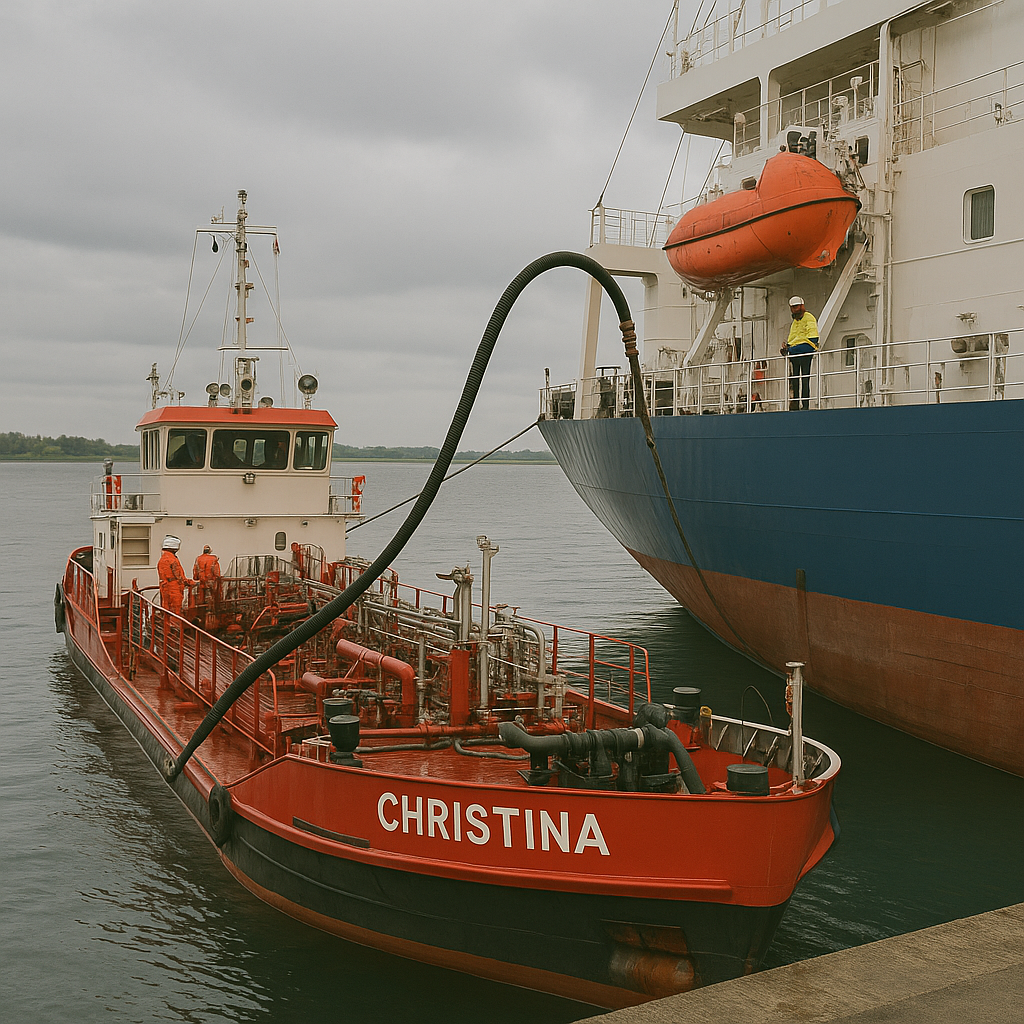
June 2025 – Mombasa, Kenya
With regional ports such as Mombasa, Dar es Salaam, Djibouti, Beira, and Lamu increasingly pivotal in global shipping routes, bunkering services in Eastern Africa are rapidly evolving to meet growing demand, regulatory requirements, and logistical complexity.
1. Surge in Vessel Calls and Bunker Demand
- The Port of Mombasa handled 1,411 vessel calls during 2024, of which 19% required bunkering—either alongside or offshore via the Shimanzi Oil Terminal (SOT).
- Cargo volumes at Mombasa reached 41.1 million tonnes in 2024—a 14.2% increase over 2023, with container traffic surpassing 2 million TEUs for the first time in a decade.
- Dar es Salaam saw around 890 vessel arrivals in 2024, with a significant share refueling at dedicated bunker stations.
- Djibouti continues its tradition as a Red Sea–Indian Ocean bunkering hub, while Beira and Lamu also serve bunkering needs directly tied to regional logistics.
2. Fuel Types, Suppliers & Compliance
- VLSFO (Very Low Sulphur Fuel Oil) and MGO (Marine Gas Oil) are dominant, driven by IMO 2020 sulphur regulations.
- Regional suppliers include Vivo Energy, Oryx Energies, TotalEnergies, and Gulf Bunkering.
- An emerging trend is clean fuel adoption—such as biofuels, LNG, and dual-fuel blends, especially for vessels on extended routes or under green charter mandates.
3. Infrastructure Growth & Bottlenecks
- Shimanzi Oil Terminal (Mombasa) now accommodates up to four bunker tankers simultaneously, with specialized VLSFO and MGO blending systems.
- Licensing of bunkering facilities at Mombasa, Dar es Salaam, and Lamu (as a clean-fuel terminal) has been prioritized to improve service reliability.
- However, challenges persist:
- Fuel quality discrepancies reported in Tanzania and Mozambique.
- Off-spec deliveries leading to engine issues and insurance claims.
- Administrative delays—some ports still classify bunker-only calls as full vessel entries, causing slowdowns.
4. Independent Oversight from Observater Surveys & Services Ltd
Eng. Daniel Esilaba, Senior Marine Surveyor at Observater Surveys & Services Ltd, emphasized the growing importance of technical oversight:
“With bunker prices averaging USD 650–690 per tonne for VLSFO, even a 1% error in delivery can become a six-figure discrepancy,” he explained. “Our role as independent surveyors is not just about quantity verification, but ensuring the entire bunkering operation upholds technical and contractual integrity.”
He added:
“At Observater, our bunker inspection service includes comprehensive tank dips, flowmeter cross-checks, delivery monitoring, and sealed-sample extraction to test for fuel homogeneity, contamination, and compliance with ISO 8217 specifications, as done with our partner laboratories. We work closely with vessel chief engineers and bunker suppliers to generate jointly signed bunker delivery notes, sample retention logs, and independent reconciliation reports.”
He further stated:
“As vessels avoid the Suez Corridor and head around the Cape, ports like Beira, Nacala, Richards Bay, and Mombasa are increasingly vital bunkering nodes—making transparency and quality assurance essential. We have seen rising cases where inaccurate delivery, poor sample sealing, or failure to follow transfer procedures have led to major commercial disputes, detention, or costly machinery failures.”
“Observater provides pre-bunkering risk advisory, mid-operation supervision, and post-delivery loss adjusting—giving vessel owners, charterers, and insurers the confidence that their bunker transactions are clean, secure, and defensible.”
5. Regional Growth Projections
- Mombasa’s refined fuel throughput is projected to reach 5.5 million tonnes by 2026, supporting growing bunkering needs.
- Lamu, under the Lapsset corridor, is being primed as a “green bunkering” hub by 2027.
- Djibouti, Dar es Salaam, and Beira are scaling both alongside and offshore bunkering capacity to handle longer-sea voyages and growing container traffic.
6. Drivers & Opportunities
- The Red Sea crisis has rerouted many vessels south, increasing the bunker service demand in East Africa.
- Growth in containerized trade, oil & gas shipments, and bulk exports has increased frequency and volume of bunker requirements.
- Environmental regulations and supply chain transparency initiatives are pushing ports toward clean-energy fuels, bunker barge licensing, and independent custody tracking.
7. Sector Challenges & Solutions
Challenges:
- Quality control: Navigating regulatory compliance and off-spec fuel claims.
- Administrative delays: Streamlining clearance for bunker-only calls.
- Infrastructure scale: Upgrading storage and barge capacity to handle surging demand.
Solutions:
- Establishing independent inspection protocols and sampling standards with Observater oversight.
- Regulatory reform to fast-track bunker call clearances.
- Expansion of LNG and biofuel bunkering infrastructure at key ports like Lamu and Djibouti.
Conclusion: Bunkering as a Strategic Enabler
Eastern Africa’s bunkering sector has transitioned from a supplementary service to a cornerstone of maritime resilience. As ports like Mombasa, Lamu, Djibouti, Dar es Salaam, and Beira expand their bunkering capacities, they enable not only larger commercial flows but also ensure regulatory compliance and seamless logistics for transiting vessels.
With rising fuel demand amid global trade volatility, transparency, independent inspections, and investments in clean fuel infrastructure will be pivotal. Observater’s role in ensuring accountable, dispute-ready fuel supply demonstrates how technical oversight underpins both operational reliability and financial integrity.
All in Maritime News will continue to monitor bunker market trends, port development, and policy frameworks shaping Eastern Africa’s maritime fueling landscape.
All in Maritime News
Contact: news@allinmaritime.com
Tel: +27 063 069 1191
Offices: Durban | Dar es Salaam | Nairobi | Dubai
All in Maritime News – Your Source for Global Maritime Intelligence
