

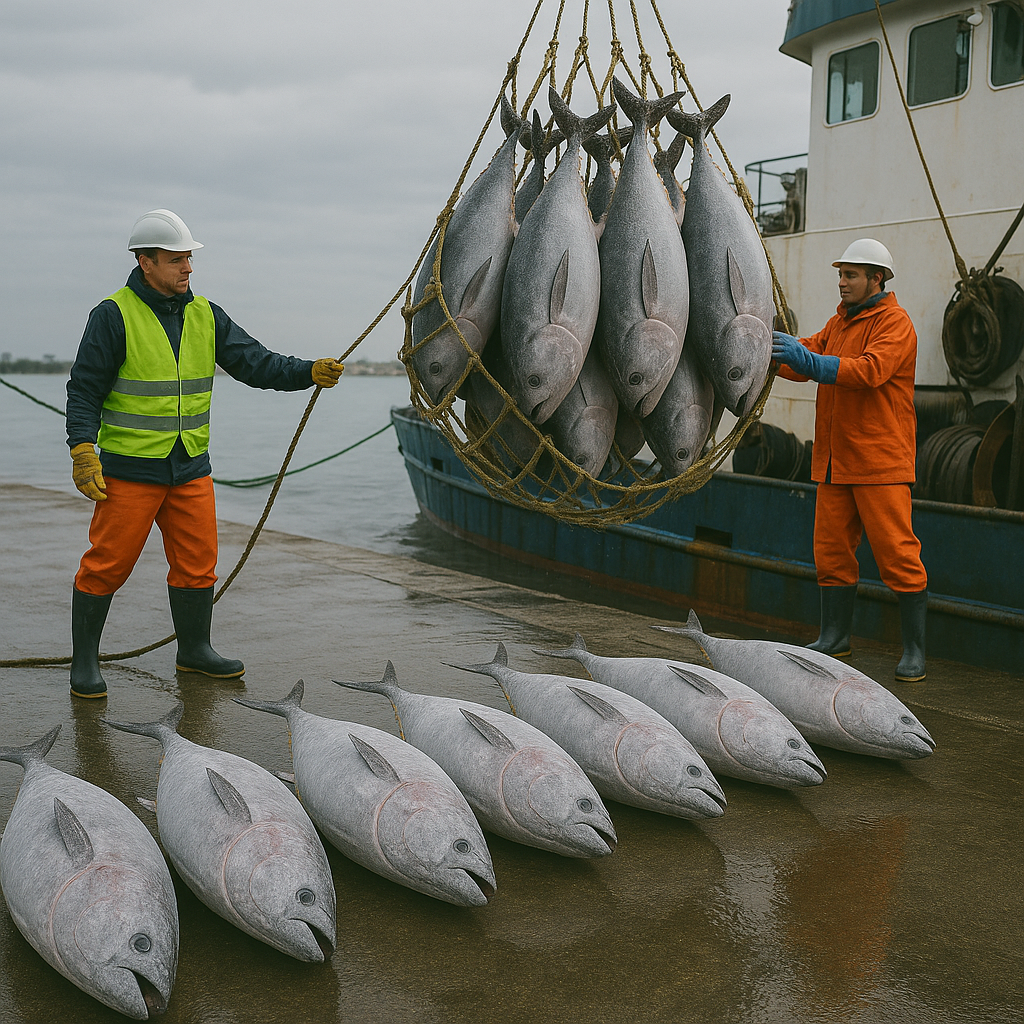
June 2025 – Shimoni, Kwale County, Kenya Kenya’s coastal transformation continues with the imminent commissioning of the Shimoni Fish Port, a flagship initiative by the Kenya Ports Authority (KPA). Designed to support global food security, create thousands of blue‑economy jobs, and modernize Kenya’s fishery value chain, Shimoni is evolving into a regional maritime powerhouse serving markets from the Indian Ocean to Europe and Asia.
1. World-Class Infrastructure Boosting Marine Capacity
Built to handle trawlers, mid-sized fishing vessels, and light coastal ships, the port’s core features include:
- A 75 × 30 m multipurpose berth, 135 m causeway, and 8 m draft channel
- Cold storage units, industrial ice plants, and fertile fish-processing halls
- Refrigerated export container yards, fish auction platforms, and fuel bunkering docks
- Expected to support 50,000 MT of annual fish throughput, up to five times current local landings
2. Job Creation: Empowering Youth and Coastal Communities
The port will directly support more than 3,000 blue-economy jobs, with an additional 12,000 indirect positions anticipated across:
- Artisanal fishing cooperatives
- Processing, packaging, and cold‑chain logistics
- Stevedoring, transport, and light engineering
- Coastal tourism and aquaculture support
Special training programs target women and youth, ensuring economic inclusion—a keystone of Kenya’s Blue Economy agenda.
3. Safeguarding Global Food Security
Situated strategically on the Indian Ocean, Shimoni is positioned to address growing protein demand in regions like the UAE, China, and Europe. As inland fisheries falter, demand for sustainable marine catch grows—placing Kenya in an ideal position to become a reliable exporter of tuna, prawns, octopus, and snapper.
Fishery exports surged from 10,875 MT in 2021 to 13,624 MT in 2022, generating over $40 million in revenue. The Shimoni facility—with its cold-chain capacity and container-ready output—will expand this contribution to UN Sustainable Development Goal 2 (Zero Hunger) and diversify national food systems.
4. Strategic Regional Reach
Shimoni will serve not only Kenya but also coastal markets across northern Tanzania, northern Mozambique, the Comoros, and Seychelles. Long-term plans include:
- A marine research and training center in partnership with KMFRI to support sustainable stock management
- Eco-tourism, dive fishing, and potential aquaculture sites drawing on local biodiversity
- Linking fishermen from Wasini Island and Lamu to higher-value global markets
Simultaneously, existing facilities at Liwatoni (Mombasa) and growing sites in Lamu offer complementary export hubs with export-ready processing capabilities.
5. Government Leadership & Enabling Policies
- President William Ruto has emphasized Shimoni as central to Kenya’s Blue Economy and food-security strategy.
- Deputy President Prof. Kithure Kindiki, Ministry CS Hassan Ali Joho, and PS Betsy Njagi have supported investor facilitation, coastal-community integration, and marine business enablement.
- KPA Chair Captain William Ruto reports that cold-chain and export systems will open by Q3 2025.
- Under Kenya’s Fisheries Act, Shimoni’s processing plants meet legal standards for handling, storage, licensing, and export quality.
6. Fish Processing, Exports & Species in Demand
Kenya has seen a spike in marine fish exports—notably tuna and crustaceans, which now make up over 90% of shipments from Lamu and Mombasa. Key commercial species include:
- Tuna and skipjack — global demand for sashimi and canned tuna remains high
- Prawns and shrimp — driven by European and Asian markets
- Octopus and snapper — high-value shellfish in European and Gulf state markets
These exports are increasingly moving in reefer containers, marked by improved traceability and reduced spoilage.
Expert Commentary: Observater Surveys & Services Ltd on Fish Export Inspections
As part of our investigative report on Shimoni Port’s readiness, All in Maritime News consulted Ms. Josephine Otieno, Senior Surveyor and Cold Chain Compliance Lead at Observater Surveys & Services Ltd, a recognized authority in East African marine and cargo inspections.
“Modern seafood export operations demand precision, hygiene, and traceability across every stage—from landing to loading,” Ms. Otieno began. “At Observater, we support exporters, logistics providers, and government agencies with the full suite of internationally benchmarked inspection protocols.”
She elaborated that the firm’s services are designed to comply with EU, GCC, China, and East Asian import requirements, and include:
Core Observater Fish Export Inspection Protocols: Pre-Shipment Quality Surveys
- Physical sampling of fish and crustaceans for spoilage, bruising, handling damage, or contamination.
- Inspection of batch labels and traceability documents (catch certificates, origin compliance).
Cold Chain & Temperature Monitoring
- Use of infrared thermometers and data loggers to record core product and reefer temperatures.
- Continuous door-to-door temperature tracking to verify adherence to required cold chain ranges (typically -18°C or lower for frozen seafood, 0°C to 4°C for chilled products).
- Audit of reefer pre-trip inspection (PTI) documentation, backup power checks, and container insulation performance.
Sanitation & Packaging Conformity
- Hygiene inspections of fish holds, cold rooms, packaging areas, and blast-freeze tunnels.
- Verification of HACCP protocols and pest management logs.
- Inspection of export-grade packaging materials: odorless, non-toxic, leak-proof, and appropriately labeled.
Container Loading Supervision & Securing
- On-site witnessing of reefer container stuffing, placement of temperature probes, and correct stacking to allow airflow.
- Sealing verification and issuance of condition reports for bill of lading documentation.
Post-Discharge Inspections (Receiving Port)
- Remote or partner-agent follow-up inspections at destination ports when required under charter party or insurance terms.
- Comparative analysis of loading vs. discharge condition reports in case of claims or transit disputes.
“These inspections are not just procedural—they are critical for cargo acceptance in Europe and Asia,” Ms. Otieno emphasized. “One failed hygiene test or temperature breach can mean rejected containers, financial loss, and reputational damage.”
“At Shimoni and other upcoming ports like Lamu and Liwatoni, we are fully prepared to support both domestic processors and international buyers with reliable marine inspection reports, cold-chain risk assessments, and dispute-ready documentation,” she added.
She concluded by affirming Observater’s commitment to helping Kenya become a trusted source of premium seafood globally.
7. Moving Forward: Investment, Oversight & Sustainability
Shimoni, together with Liwatoni and Lamu facilities, promotes a multi-port export network supporting resilience in seafood exports. The government actively welcomes global investors through investor-friendly policies, licensing schemes, cold-chain incentives, and export facilitation.
Global benchmarks (EU, Japan, GCC) require traceability, HACCP compliance, and sustainability assurances—all attainable through well-managed facilities and Observater-led inspection services.
Conclusion: A Maritime Future Anchored in Food, Jobs, and Blue Prosperity
Shimoni Port represents a nexus of sustainable development: improving coastal welfare, strengthening global food security, and supporting Africa’s maritime economic strategy. Through strategic leadership, infrastructure, workforce training, and private assurance—from Observater—Kenya is shaping a model for integrated Blue Economy growth.
All in Maritime News will continue monitoring Shimoni’s operational debut, export volumes, environmental stewardship, and impact on coastal communities and investors.
Contact: news@allinmaritime.com
Tel: +27 063 069 1191
Offices: Nairobi | Mombasa | Dar es Salaam | Durban
All in Maritime News — Your Source for Global Maritime Intelligence
