

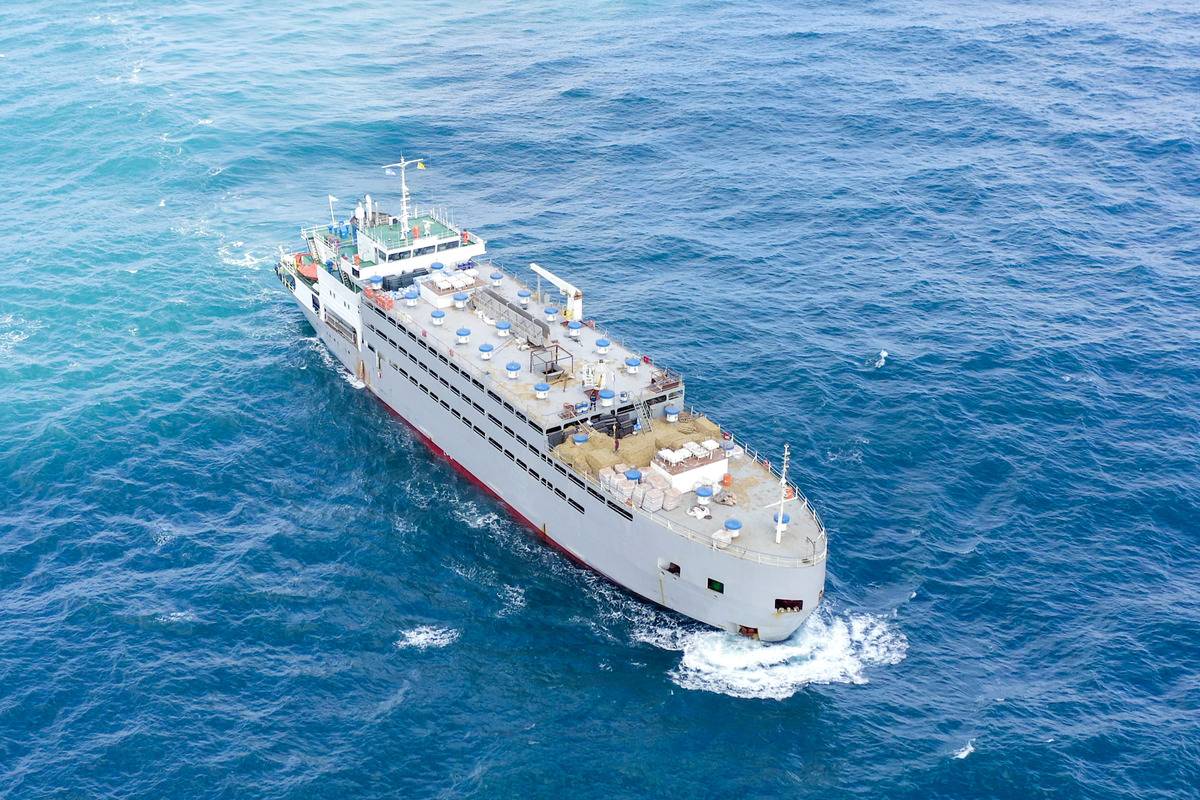
A Comoros-flagged livestock carrier came under fire on July 23 in the southern Red Sea, in an area west of Yemen’s Mocha Port, marking the latest in a series of maritime security incidents in one of the world’s most volatile shipping lanes.
According to maritime security firm Ambrey, the vessel was approached by an unidentified small wooden boat near the Hanish Islands, approximately 30 nautical miles northwest of Mocha. Occupants of the boat allegedly fired several shots at the vessel, prompting the ship’s crew to initiate evasive manoeuvres. No injuries or damage were reported.
The livestock carrier was on a voyage from Bosaso, Somalia, to Jeddah, Saudi Arabia. Notably, prior to the shooting, the ship reportedly received a suspicious message instructing it to divert course to the Yemeni port of Mocha. The source and legitimacy of the message remain unclear, raising concerns over false communication tactics used to lure commercial vessels into hostile territory.
Security analysts believe this attack is not linked to the Houthi movement, which has claimed responsibility for numerous drone and missile attacks on merchant vessels since late 2023. No group has come forward to take credit for the latest incident, and the modus operandi differs significantly from typical Houthi tactics, which tend to involve aerial drones or larger-scale missile strikes.
UK Maritime Trade Operations (UKMTO) issued a security advisory shortly after the event, urging merchant vessels to avoid the east side of the Hanish Islands and to exercise increased vigilance in the Bab el-Mandeb Strait and adjacent waters.
Ambrey advised shipmasters transiting the area to:
- Avoid unnecessary approaches by small craft
- Refuse boarding under suspicious instructions
- Treat unexpected communications—especially those directing course changes—with extreme caution
Escalating Risks in the Southern Red Sea
While the Red Sea has long been a critical chokepoint for global trade, its southern corridor has grown increasingly hazardous. The Bab el-Mandeb Strait, which separates the Arabian Peninsula from the Horn of Africa, is one of the most heavily trafficked maritime passages in the world—connecting the Mediterranean (via the Suez Canal) with the Indian Ocean.
Since the onset of the Gaza conflict in October 2023, the region has seen heightened hostilities, especially from Houthi forces based in northern Yemen, who claim solidarity with Palestinians. However, the latest incident appears to fall outside this geopolitical framework, suggesting a rise in opportunistic maritime threats from non-aligned armed actors.
This aligns with earlier patterns observed in Somali piracy and freelance maritime criminality, where unmarked vessels attempt to intercept trade ships, sometimes under false pretexts.
Industry Concerns and Recommendations
The livestock carrier incident underscores the increasing complexity of maritime threats in the region, blending geopolitical conflict with irregular criminal activity.
Shipping companies operating in the region are being urged to:
- Subscribe to real-time intelligence services like Ambrey and Dryad Global
- Follow routing and security recommendations issued by UKMTO and IMO
- Train crews on anti-piracy drills and false signal recognition
- Maintain 24/7 bridge watches, especially when transiting near Yemen or Eritrea
As geopolitical instability persists and non-state actors grow bolder, Red Sea maritime routes are facing a new phase of asymmetric risk. This latest shooting incident, though non-lethal, serves as a sharp reminder of the unpredictable nature of shipping through contested waters.
All stakeholders—from shipping lines and port operators to regional naval forces—are now tasked with recalibrating their threat assessments and operational practices in one of the world’s most strategically vital maritime corridors.
