

By All in Maritime News | June 2025
North Sea, United Kingdom — In the cold, churning waters off the eastern coast of England, a megastructure is rising. Stretching over 700 square kilometers—an area larger than Greater London—the Hornsea Project 3 offshore wind farm is set to become the largest in the world, redefining what is possible in renewable offshore engineering and reshaping the future of Europe’s energy system.
Developed by Ørsted, the Danish energy giant behind several of the world’s most iconic offshore wind projects, Hornsea 3 will have an installed capacity of 2.9 gigawatts (GW)—enough to power over 3 million UK homes. The project marks the latest chapter in the Hornsea offshore wind zone, following the successful completion of Hornsea 1 and 2.
Engineering a Titan of the Sea
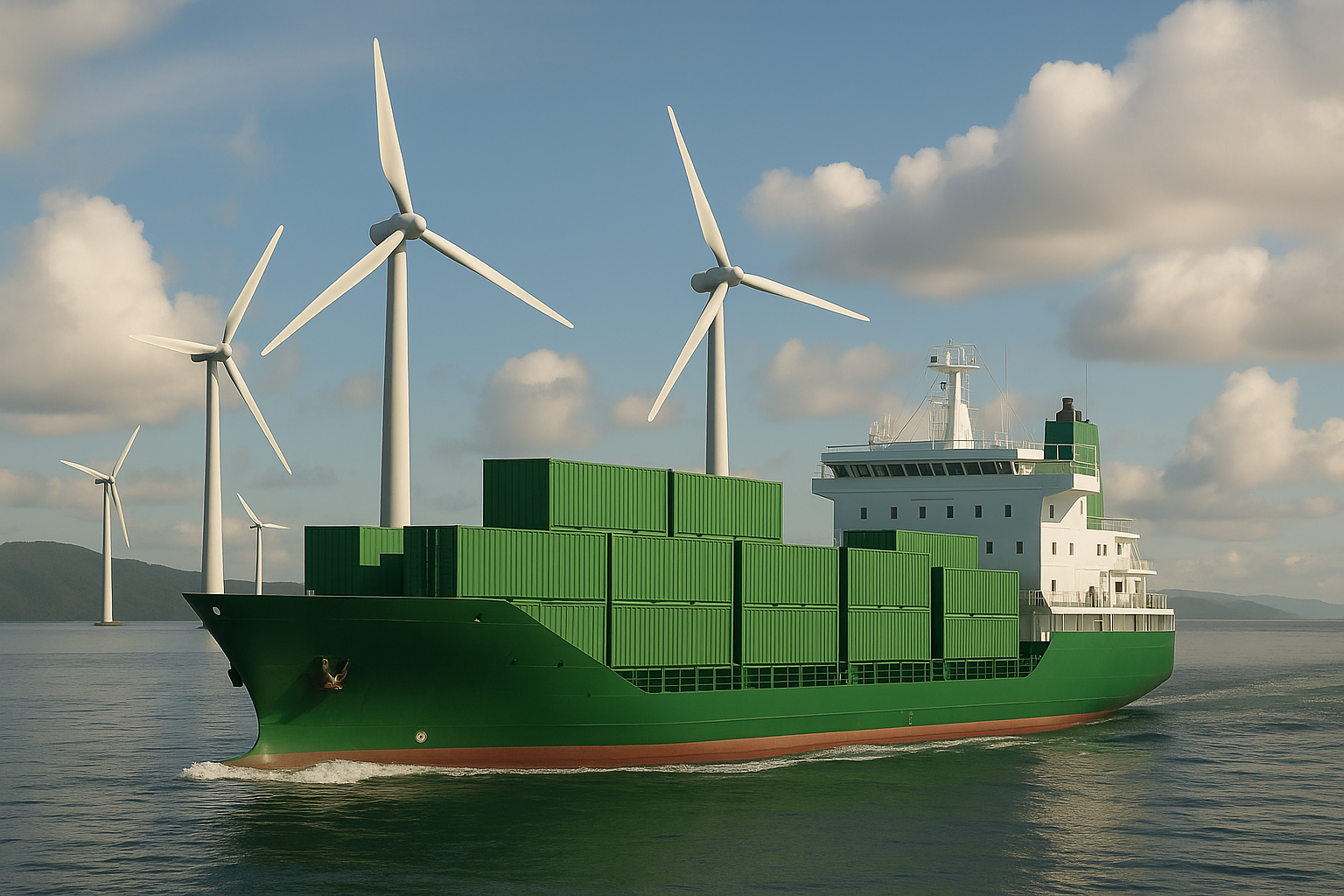
Hornsea 3 will consist of up to 231 wind turbines, each standing more than 260 meters tall—taller than the Shard in London—and fitted with 14 MW Siemens Gamesa SG 14-222 DD turbines. Each rotor blade stretches over 100 meters, covering a swept area the size of six football pitches.
The project’s offshore substation and reactive compensation station are already under fabrication, while multiple cable-lay vessels—including the Nexans Aurora and Leonardo da Vinci—are tasked with installing over 300 km of subsea HVDC export cables that will connect the wind farm to the national grid at Norfolk.
This is the first time the UK will integrate high-voltage direct current (HVDC) technology at such scale in an offshore wind farm—greatly reducing transmission losses over long distances and setting a precedent for future global projects.
Economic and Strategic Impact
The investment exceeds £8 billion, and the project supports over 5,000 direct and indirect jobs during construction, according to Ørsted. Key supply chain hubs include Hull, Grimsby, and Teesside, revitalizing maritime and fabrication yards that have long been dormant.
Once operational, Hornsea 3 will be a cornerstone of the UK’s target to reach 50 GW of offshore wind capacity by 2030—a goal critical to decarbonizing the grid and eliminating dependency on volatile fossil fuel markets.
It also represents a major step forward in grid resilience and security of supply: by powering millions of homes with zero-emission electricity generated at sea, the UK reduces its exposure to imported gas and geopolitical energy shocks.
Construction Milestones
- 2023: Site clearance and geotechnical surveys began.
- 2024: Fabrication of turbines and offshore substations commenced in Teesside and Denmark.
- 2025 (Ongoing): Offshore cable lay underway; turbine foundations and jackets being installed using vessels like the Seaway Strashnov and Voltaire.
- 2026–27: Turbine installation and phased grid connection.
- Late 2027: Full commercial operation expected.
Environmental Considerations
While monumental in scale, Hornsea 3 has not been without challenges. The project underwent one of the most rigorous environmental impact assessments in UK offshore wind history. Modifications were made to minimize seabird mortality, and construction timelines were adapted to reduce noise impact on marine mammals like harbour porpoises.
Ørsted has committed to comprehensive environmental monitoring programs and is working closely with the UK government, the Marine Management Organisation (MMO), and independent conservation scientists to ensure compliance and ecosystem preservation.
Industry Commentary
“Hornsea 3 isn’t just another wind farm—it’s a blueprint for how the world can power cities from the ocean,” said Dr. Emily Novak, a renewable energy policy analyst at the University of Southampton. “It combines frontier engineering, transmission innovation, and grid-scale ambition at a time when the energy transition desperately needs success stories.”
What Makes It a Global Model
Hornsea 3’s significance extends well beyond the UK. It proves that:
- Offshore wind can now scale into multi-gigawatt zones.
- HVDC transmission offers reliable long-range delivery.
- Local supply chains and shipyards can be reactivated for green infrastructure.
- Coexistence with marine ecosystems is possible with strong regulatory science.
Countries from Japan to South Korea, Brazil to South Africa, are watching closely. Several are planning multi-GW offshore wind tenders modeled on Hornsea’s cluster strategy and port regeneration success.
Conclusion
Hornsea Project 3 is not only the world’s largest offshore wind project under construction—it’s a symbol of industrial reinvention and climate resilience. Rising from the waters of the North Sea, it offers a compelling vision of how nations can lead the energy transition by harnessing the wind, sea, and ingenuity.
All in Maritime News will continue to follow the project’s milestones through installation, grid integration, and operational launch—tracking how the wind farm that towers over the sea might also reshape the future of global energy.
