

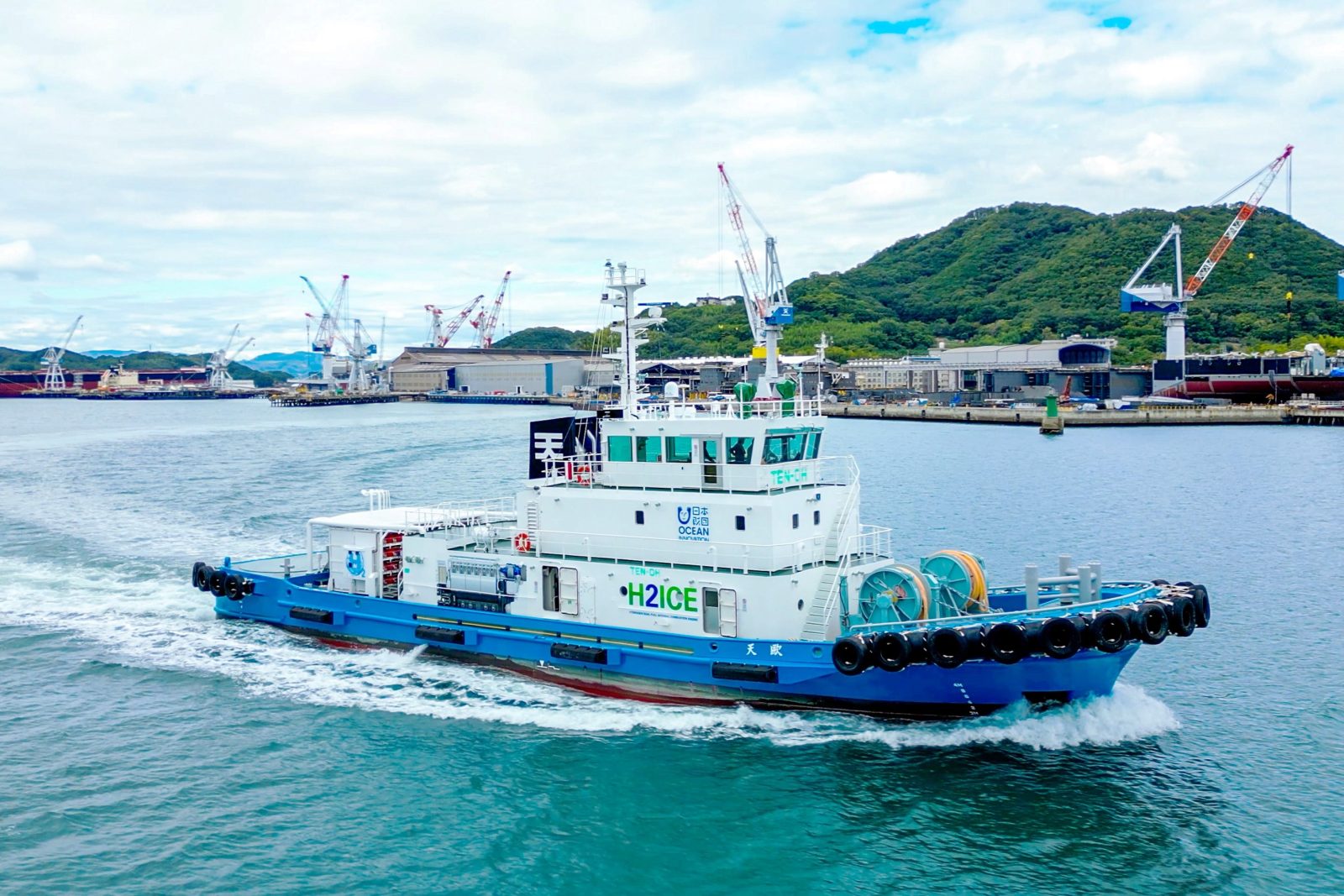
Japan has taken a bold step in maritime decarbonisation with the delivery of its first hydrogen dual-fuel tugboat. The vessel, named TEN-OH, was handed over on 15 October 2025 at the Tsuneishi Shipbuilding facility in Hiroshima.
Innovation at the Heart: Dual-Fuel Hydrogen & Marine Fuel Systems
TEN-OH is designed around a BEH2YDRO high-output hydrogen dual-fuel internal combustion engine (ICE), supported by a high-pressure hydrogen gas storage and supply system developed by JPNH2YDRO, a joint venture between the Tsuneishi Group and CMB.TECH.
The tugboat stores approximately 250 kg of hydrogen in its tanks. During operations, the engines can run on a hydrogen blend, significantly cutting CO₂ emissions. In the event of a hydrogen system fault, the vessel can seamlessly switch back to conventional marine fuel to ensure safety and reliability.
Specifications & Performance
- Length overall: 38.0 m
- Breadth: 9.6 m
- Draft: 4.2 m
- Gross tonnage: under 300
- Power plant: Twin 12-cylinder BEH2YDRO hydrogen dual-fuel engines, in the 4,400 horsepower class
These capabilities allow TEN-OH to deliver performance comparable to conventional tugboats while achieving substantial emission reductions.
Green Steel Construction
Beyond its propulsion system, the tug was also built using green steel, specifically JFE Steel’s JGreeX material, designed to reduce the carbon footprint associated with shipbuilding. This initiative highlights Japan’s growing focus on low-emission construction materials as part of its broader decarbonisation strategy.
Part of Japan’s “Zero Emission Ships Project”
TEN-OH is part of The Nippon Foundation’s “Zero Emission Ships Project,” which supports the development of vessels that produce zero CO₂ emissions, particularly in coastal and harbor operations. The tugboat will serve as a demonstrator for how hydrogen technology can be applied to high-power, maneuvering vessels such as tugs.
Strategic & Industry Implications
Tugboats play a critical role in ports, assisting larger ships during berthing and departure. Because they require high torque and agility, developing a hydrogen-powered version marks a technical breakthrough. The success of TEN-OH could open the door for wider adoption of hydrogen propulsion and other alternative fuels in the global tug and harbor vessel market.
Tsuneishi Shipbuilding President Okumura Sachio expressed pride in achieving this milestone, noting that the company is also exploring methanol and LNG-powered vessels. He added that the experience gained from TEN-OH will inform future innovations across the shipbuilder’s clean-energy portfolio.
Challenges and the Road Ahead
While TEN-OH represents a landmark achievement, scaling hydrogen propulsion in maritime operations still faces several hurdles:
- Fuel supply and infrastructure: Ports need hydrogen production, storage, and bunkering facilities.
- Economic factors: Hydrogen remains more expensive than conventional marine fuels.
- Safety and reliability: High-pressure hydrogen systems demand strict safety standards and redundancy.
- Regulation and standardization: Global maritime rules and certification for hydrogen use are still evolving.
Despite these challenges, Tsuneishi Shipbuilding aims to leverage the insights from TEN-OH to accelerate the transition toward cleaner, more sustainable shipping. The launch marks a defining moment in Japan’s journey toward achieving carbon neutrality in the maritime sector by 2050.
Tell us What is Happening in Your Area: Contact Maritime Context at: news@maritimecontext.com
