

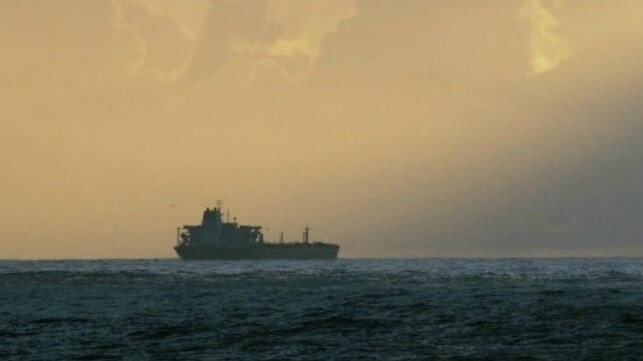
French maritime authorities have detained a shadow fleet tanker in European waters, arresting its captain and first officer in one of the most assertive enforcement actions against clandestine shipping operations to date. The move highlights growing international concern over shadow fleet activity, which threatens maritime safety, undermines sanctions, and poses serious environmental risks.
The Incident
The interception, carried out by France’s maritime enforcement units, revealed multiple irregularities ranging from incomplete documentation and dubious flag registry details to suspected breaches of international safety and pollution control standards. Officials described the vessel as “high-risk,” noting its links to opaque ownership networks typical of the shadow fleet.
The arrests of the captain and first officer mark a rare escalation, signaling that France and its European partners are prepared to hold senior crew directly accountable for regulatory violations.
Legal Dimension: Enforcing Maritime Order
Shadow fleet vessels often operate under “flags of convenience,” exploiting gaps in jurisdiction to avoid scrutiny. Many lack valid insurance or classification certification, placing them in breach of international law.
France’s decision to detain crew members rather than simply impound the ship reflects a tougher enforcement strategy. Legal experts suggest this could set a precedent within the European Union, where regulators are increasingly frustrated by the scale and sophistication of sanctions evasion in oil shipping.
Environmental Risks: A Floating Hazard
Beyond the legal violations, shadow fleet operations pose serious environmental threats. Many of these vessels are over 20 years old, with poorly maintained hulls and obsolete safety systems.
European maritime safety officials warn that ship-to-ship transfers conducted by shadow fleet tankers—often in international waters with minimal oversight—carry high risks of oil spills. Such incidents could devastate marine ecosystems and coastal economies. France’s action, therefore, is being framed not only as a sanctions-enforcement measure but also as a safeguard for the environment.
Geopolitical Angle: Pressure Point in Sanctions Regimes
The rise of the shadow fleet is closely tied to global sanctions on Russian and Iranian oil. By evading detection, these tankers provide a lifeline for sanctioned exporters, undermining the effectiveness of Western sanctions regimes.
France’s move aligns with broader EU efforts to clamp down on sanction-busting shipments, reinforcing European solidarity with U.S. initiatives that have already targeted ship managers and insurers linked to illicit transport. Analysts argue that stronger European enforcement may shift global shadow fleet activity further into less regulated waters, particularly around Africa and Asia, complicating monitoring efforts.
Industry Impact: Navigating Compliance Pressures
For the legitimate shipping industry, the crackdown presents both challenges and opportunities. Shipowners and insurers face mounting compliance obligations as regulators tighten screening procedures for vessel ownership, cargo origins, and voyage patterns. At the same time, stricter enforcement may reduce unfair competition from operators willing to cut corners.
Looking Ahead
Investigations into the seized tanker’s ownership structure and trading history are underway, with French authorities expected to share findings with EU partners. The case is likely to serve as a benchmark for future enforcement, reinforcing the message that European waters are no safe haven for shadow fleet operations.
As shadow fleets expand globally, incidents like this highlight a fundamental tension in modern shipping: balancing the freedom of navigation with the urgent need to uphold international law, protect the environment, and safeguard maritime trade integrity.
Tell us What is Happening in Your Area: Contact Maritime Context at: news@maritimecontext.com
