

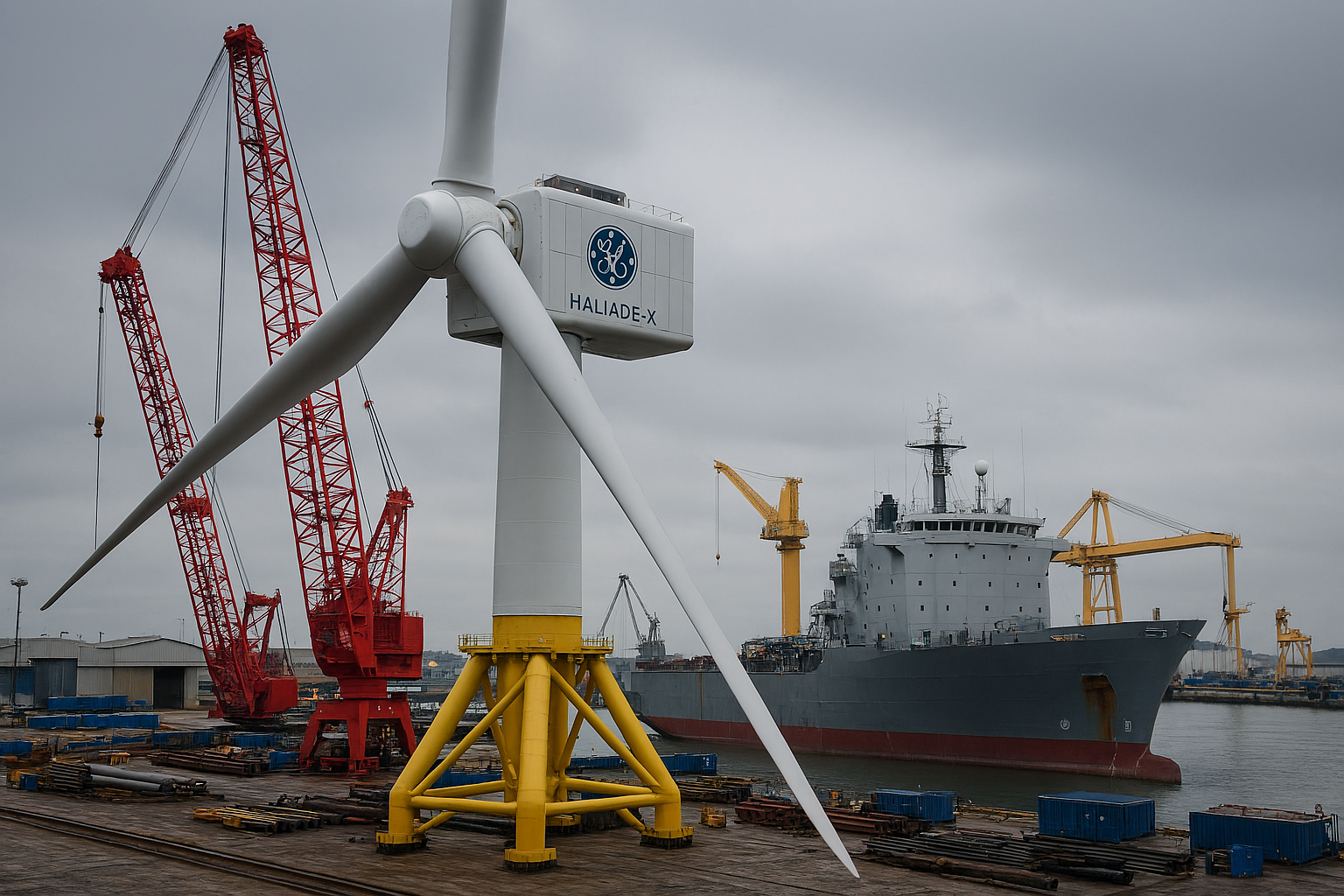
September 2025 — Washington, D.C.
The Trump administration’s abrupt decision to cancel nearly $679 million in federal funding for 12 offshore wind-related port projects has sent shockwaves through both the renewable energy and maritime sectors. Officials say the money will now be redirected toward bolstering traditional maritime infrastructure and U.S. shipbuilding capacity, part of a wider push to reposition America’s industrial base.
The move is one of the administration’s clearest breaks from the clean-energy strategies of the Biden era, with consequences stretching across regional economies, private investment pipelines, and the trajectory of U.S. maritime competitiveness.
Anatomy of the Cuts
The decision affects projects under the USDOT INFRA program and the Maritime Administration’s (MARAD) Port Infrastructure Development Program (PIDP).
- INFRA Losses: The largest blow fell on Humboldt Bay, California, which saw $427 million withdrawn. The terminal had been envisioned as the Pacific Coast’s anchor hub for offshore wind, capable of assembling and staging some of the world’s largest floating turbines.
- PIDP Withdrawals ($177 million): Included the Arthur Kill Terminal in Staten Island, Bridgeport Wind Port in Connecticut, Paulsboro Wind Port in New Jersey, Sparrows Point in Maryland, Norfolk Offshore Wind Logistics Hub in Virginia, and gateway upgrades at Rhode Island’s Davisville Port.
- PIDP Terminations (~$75 million): Projects cut outright include Massachusetts’ Salem Wind Port, North Carolina’s Radio Island rail upgrades, the Lake Erie Renewable Energy Resilience Project, and two New Jersey developments.
These facilities had been marketed not only as offshore wind staging areas but also as dual-use maritime assets capable of supporting heavy industry, shipping logistics, and even naval operations. Their cancellation now leaves gaps in U.S. port modernization efforts.
The Administration’s Case
Transportation Secretary Sean P. Duffy framed the cuts as a course correction:
“Thanks to President Trump, we are prioritizing real infrastructure improvements over fantasy wind projects that cost much and offer little. Offshore wind subsidies are draining resources that should strengthen our shipyards, ports, and energy supply chains.”
The administration argues that the U.S. has for too long diverted capital toward renewable subsidies while its shipbuilding industry shrank to just 0.04% of global output by 2024. Redirecting funds, officials contend, will revitalize maritime logistics, expand naval readiness, and bolster energy security.
Fallout Across the Marine Industry
1. Offshore Wind Supply Chain in Jeopardy
Without dedicated port terminals, the build-out of offshore wind farms faces serious logistical obstacles. Turbine components—often longer than a football field—require specialized quays, cranes, and assembly yards.
- Delays and Cost Inflation: Projects such as Ørsted’s Revolution Wind and Equinor’s Empire Wind now lack reliable staging ports, raising costs for developers who may need to reroute components through Europe or retrofit unsuitable U.S. ports.
- Private Investment at Risk: Industry groups warn that more than $5 billion in state and private funding tied to these projects could unravel, as confidence erodes in federal backing.
2. Regional Economic Setbacks
States that banked on offshore wind ports as job creators are now bracing for economic fallout:
- Massachusetts (Salem): Governor Maura Healey warned of losing 800 construction jobs and hundreds of permanent roles linked to the terminal.
- California (Humboldt Bay): The cut devastates a rural economy that saw offshore wind as its ticket to diversification and industrial renewal.
- Virginia (Norfolk): Lawmakers say the wind logistics hub would have doubled as a container-handling and naval-support facility—its loss undercuts broader port competitiveness.
3. Short-Term Boost for Shipbuilding
By steering funds into shipyards and maritime logistics, the administration aims to rebuild capacity in areas like:
- Military shipbuilding (HII, General Dynamics): Expanding facilities and digitalizing yards.
- Commercial shipbuilding (Edison Chouest, Gulf Coast yards): Potential co-funding for dual-fuel vessels, LNG carriers, and supply ships.
- Traditional energy logistics: Enhancing coal, oil, and LNG terminals to secure export flows.
Industry insiders note, however, that redirecting funds does not automatically translate into new contracts or skilled labor. U.S. shipyards face chronic shortages of welders, fitters, and naval architects, raising questions about execution.
4. Investor Confidence and Legal Battles
The policy shift has rattled global developers:
- Ørsted has filed suit, calling the halt to Revolution Wind “unlawful” and warning of billions in stranded assets.
- Rhode Island and Connecticut have jointly sued the federal government, arguing that cancellations violate cooperative agreements and harm local economies.
- Subsea investors caution that political volatility could drive capital to Europe and Asia, where offshore wind enjoys stronger state backing.
Broader Industry Dynamics
- Geopolitical Positioning
- By undermining offshore wind, the U.S. risks ceding leadership in a sector where Europe and China dominate.
- Conversely, investment in shipyards could help counterbalance China’s dominance in commercial vessel construction.
- Climate and Energy Strategy
- Offshore wind projects were slated to deliver 5–7 GW of carbon-free power by 2030. Analysts warn that cancellations will complicate state-level decarbonization plans and force greater reliance on gas and coal.
- Labor Market Implications
- Shipyard work could revive traditional industrial towns but lacks the scale of job creation tied to offshore wind construction and maintenance.
- States like New Jersey and Massachusetts now face the dual challenge of job losses in wind and uncertain gains in shipbuilding.
- Maritime Technology Gap
- Offshore wind port infrastructure often doubles as a testbed for heavy-lift cranes, specialized jack-up vessels, and floating platform assembly. Without it, the U.S. risks falling technologically behind European peers.
The Industry Speaks
- Liz Burdock, Oceantic Network: “By dismantling these commitments, the administration is not only weakening national security but also destroying good-paying jobs that modernize our maritime infrastructure.”
- State Leaders (Northeast Governors): Warn of “irreversible harm” to clean-energy transition plans and competitiveness.
- Traditional Maritime Advocates: Applaud the move as overdue support for shipyards and ports neglected for decades.
Looking Ahead
The $679 million in redirected funds will now be recompeted under MARAD and DOT programs, with priority given to traditional port upgrades, shipyard expansions, and naval infrastructure. But details remain sparse, and questions linger:
- Will redirected funds be enough to meaningfully revive U.S. shipbuilding, given chronic labor and cost challenges?
- Can offshore wind developers proceed without federal support, relying solely on state and private capital?
- How will international investors perceive the volatility of U.S. energy and maritime policy?
Conclusion
The Trump administration’s decision represents a fundamental recalibration of U.S. maritime priorities. In the short term, shipyards and traditional energy logistics may benefit, while offshore wind faces delays, lawsuits, and investor flight.
In the long term, however, the U.S. marine industry stands at a crossroads: will it leverage redirected funds to build sustainable industrial capacity, or will the retreat from offshore wind cost America its place in the rapidly growing global clean energy supply chain?
Either way, the stakes extend well beyond the ports—touching on national energy policy, industrial competitiveness, and America’s maritime future.
Stay with us for verified, expert, and on-the-ground maritime journalism.
Contact: news@allinmaritime.com
Tel: +27 063 069 1191
Offices: Durban | Lagos | Abidjan | Dakar
All in Maritime News — Your Source for Maritime Intelligence
