

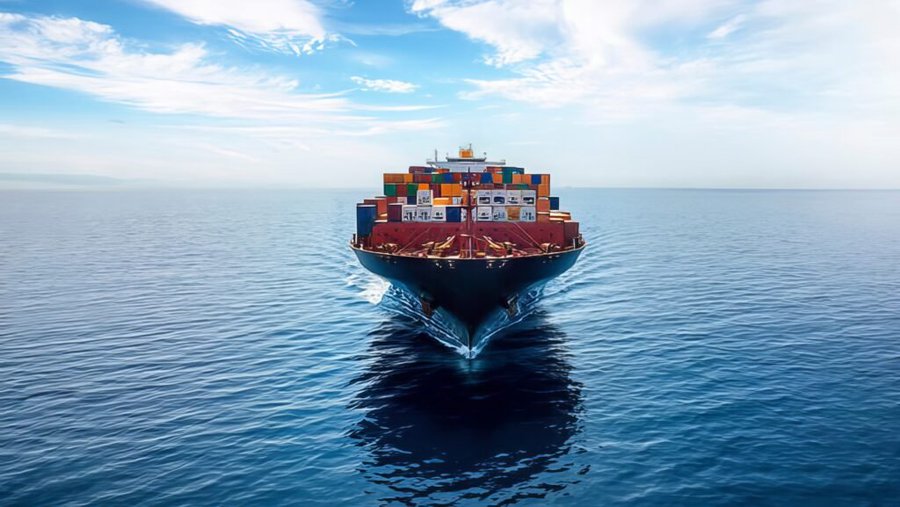
The case for Mombasa
Mombasa sits astride the Indian Ocean trunk line linking the Arabian Gulf and Indian Subcontinent to the Cape of Good Hope and South Atlantic. It is the natural bunkering gateway for East Africa’s mainline calls and coastal feeder loops serving Kenya, Tanzania, Mozambique, Somalia, the island states, and hinterland markets as far as Uganda, Rwanda, DRC and South Sudan.
Three factors make Mombasa the most strategic bunkering port in Eastern Africa:
- Geography that doesn’t detour schedules. Vessels transiting between the Middle East/India and the Cape pass within easy reach of Mombasa’s Outside Port Limits (OPL) area, which allows fuel top-ups without entering port.
- Established marine services ecosystem. From bunker suppliers and barges to surveyors, chandlers, ship agents, and repair teams, Mombasa concentrates the people and assets needed to complete a clean, defensible bunker delivery, day or night.
- Operational optionality. Owners can choose in-port delivery alongside or OPL bunkering at sea. That flexibility is critical for schedule integrity, congestion avoidance, and cost control.
OPL bunkering: the schedule-saver
OPL (Outside Port Limits) bunkering is a ship-to-ship (STS) transfer conducted at designated offshore anchorages or drift positions just beyond the port’s legal limits. For liners maintaining tight windows, tankers repositioning, bulkers awaiting laycans, or vessels avoiding port dues and congestion, OPL is a high-leverage tool:
- Minimal disruption. No pilotage, no berth queues—just a controlled rendezvous, transfer, documentation, and departure.
- Cost efficiency. Reduced port charges and faster turns keep time-charter exposure and voyage costs in check.
- Operational continuity. Combine OPL bunkers with stores, crew shifts by launch, minor repairs, and class-approved inspections to compress downtime into a single offshore call.
In-port vs OPL: how owners decide
- Choose in-port when cargo ops, heavy maintenance, or class surveys already require berthing, or when weather offshore is marginal.
- Choose OPL to protect schedule integrity, avoid congestion, and keep bunker-only calls lean—provided safety, quality assurance, and documentation are watertight.
Surveyor’s view: Observater on safe, efficient OPL bunkering
When contacted for comments Observater Surveys & Services Ltd, one of Kenya’s most active bunker survey and loss-prevention teams. Their stance is clear: OPL bunkering is a powerful practice when engineered with discipline. Below are their comments and recommendations. Let us help, reach us on: ops@observater.com or www.observater.com
Recommended safety controls at OPL
- Dynamic risk assessment. Confirm met-ocean window (swell, wind, current), daylight vs night visibility, traffic picture, and tug/launch readiness.
- Clear STS plan. Agreed approach/stand-off distances, lee creation, fendering, hose routing, emergency break-away, and VHF protocol.
- Stability and mooring checks. CFD/trim considerations for receiving vessel, brake holding power, chafing gear, and continuous tension watch.
- Pollution prevention. Double-valve isolation, drip trays, scuppers plugged, sorbents ready, SOPEP muster, and agreed stop-transfer signals.
- People and permit to work. Work aloft/over-side permits as needed, enclosed-space/Hot Work absent, and full PPE with lighting for night ops.
Observater comment: “At OPL the environment changes faster than alongside. We treat the sea state as another ‘system’ to monitor—right alongside temperature, density and pump rate. If any one of those runs out of tolerance, we slow down or stop.” — Observater Bunker Team
How Observater helps clients save at OPL (and prove every tonne)
1) Pre-bunker planning that avoids drift time.
- Traffic coordination with agent and supplier to tighten ETA windows.
- Passage timing to arrive during favorable sea state and current.
- Pre-agreed sampling plan, nominated manifolds, and equipment checklist sent to all parties.
2) Quantity assurance that closes classic loss vectors.
- ROB measurements (fuel oil, marine gasoil) on receiving vessel before/after, including trim/list corrections and wedge calculations.
- Barge tank soundings with calibration tables; if Mass Flow Meters (MFMs) are used, Observater verifies seals, serials, error curves, latest calibration, and temperature compensation logic.
- Temperature & density control. Independent temperature checks; density verification at 15 °C for correct MT conversion; cross-check vs BDN figures.
- Start/stop loss defense. Witness line packing, slow-start protocol, and purge/stripping so cargo in hoses and lines is accounted for on both sides.
- Anti-“cappuccino” vigilance. Watch sight glasses for entrained air/foam, insist steady pump rates, and document abnormal hissing or fluctuating pressures.
- Time-stamped evidence. Manifold pressure/pump rate logs, ullage sheets, photos/video, GPS tracks, and signed minute-by-minute timeline.
3) Quality assurance without surprises later.
- Continuous drip sampling at the receiving manifold with proper flushing; composite samples sealed and witnessed.
- MARPOL-compliant sample custody, labels, and seal numbers; on-the-spot tests (appearance, water, density) and lab referrals when needed.
4) Documentation that wins disputes.
- On-scene reconciliation of Mass = Volume × Density(15 °C) for barge vs ship; variances quantified and explained in real time.
- If figures diverge beyond tolerance, Observater escalates with written protest, evidence pack, and negotiated resolution before sailing.
5) Turn-time optimization.
- Coordinating launch services, spares and stores so bunkering, provisioning, and small jobs overlap safely.
- Tight communications among bridge teams to minimize waiting on weather or barge.
6) Claims and recovery support.
- If a shortage or quality issue emerges, Observater’s report, samples, and photo/video chain give owners a defensible basis for commercial recovery or technical remediation.
What this means in practice
Well-run OPL operations typically avoid measurable quantity slippage (often in the order of fractions to low single-digit percent) and shave hours off a bunker-only call compared to a port call—results that compound over a trading year. The key is independent measurement, disciplined procedures, and contemporaneous evidence.
Observater comment: “Every tonne we can prove you received is money you don’t lose. Our job is to turn uncertainty into a signed, time-stamped trail that stands up to scrutiny.” — Observater Bunker Team
Practical checklist for owners/charterers choosing Mombasa OPL
- Fix the window early. Share ETA and met-ocean tolerances with agent, supplier, and surveyor 24–48 hours out.
- Nominate the surveyor in the stem. Put Observater (or your chosen independent) on the bunker request so the supplier expects full witnessing.
- Ask for the method. State whether delivery is by MFM or tank tables; request calibration certificates or barge tank tables in advance.
- Define sampling unambiguously. Receiving-manifold drip sampling, composite volume, seal numbers, and custody.
- Confirm safety roles. Who calls “stop,” who controls pump rate, emergency break-away criteria, and pollution kit locations.
- Close the loop before sailing. Reconcile figures, sign the BDN with remarks if applicable, file the evidence pack, and debrief.
MainGate Shipping: The trusted agents at Mombasa
Alongside surveyors, ship agency and representation is the backbone of successful OPL operations. Here, MainGate Shipping Ltd. stands out as the leading bunkering agent and protective ship agent in Mombasa. With a team of experienced master mariners and ex-chief engineers, MainGate coordinates bunker barges, suppliers, surveyors, and offshore services seamlessly.
Why ship owners rely on MainGate at OPL
- Protective agency expertise. Representing owners’ interests, MainGate ensures suppliers, barges, and local actors adhere to agreed terms.
- Bunker facilitation. Scheduling, launch arrangements, crew transfers, documentation, and permits all handled with precision.
- 24/7 offshore readiness. Launches, tug coordination, chandling, and emergency attendance delivered day or night.
- Trusted partnerships. Strong ties with suppliers, port authorities, and service providers ensure smooth operations.
MainGate Shipping comment: “Our mission is to protect ship owners’ time, costs, and reputation. At OPL, everything moves faster—our job is to ensure nothing is missed and every stakeholder delivers as promised.” — MainGate Shipping Operations Team
Conclusion: Choose Mombasa; make OPL your advantage
For ships moving on East Africa’s high-value corridors, Mombasa offers the right blend of location, capability and choice. When time is money, OPL bunkering at Mombasa keeps schedules intact and voyage costs lean—provided you bring the same rigor offshore that you would alongside.
That is where Observater Surveys & Services Ltd. earns its keep: by hard-wiring safety, measurement discipline, and ironclad documentation into every OPL delivery. The result is simple—tonnes you ordered, tonnes you receive, and a paper trail that proves it.
Contact: news@allinmaritime.com
Tel: +27 063 069 1191
Offices: Durban | Lagos | Abidjan | Dakar
All in Maritime News — Your Source for Maritime Intelligence
