

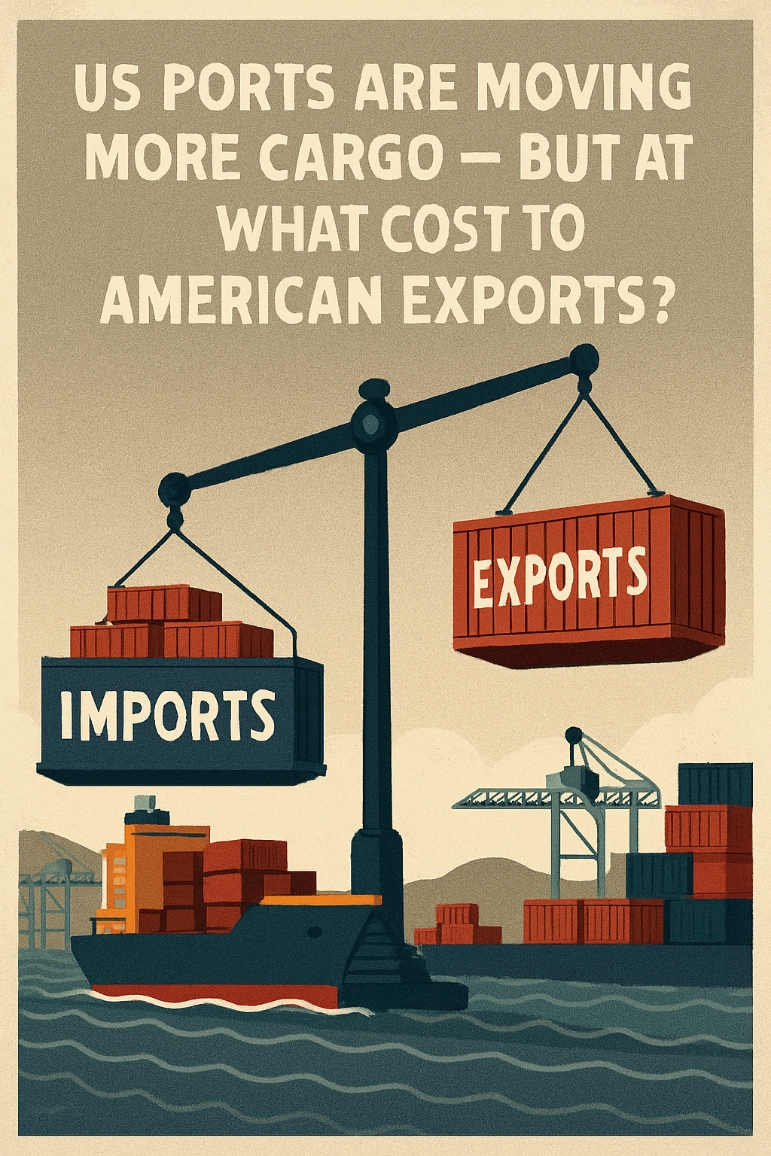
In the first half of 2025, U.S. container ports reported a 1.7% year-on-year increase in total cargo volumes. On the surface, this sounds like good news—ports are busier, logistics are flowing, and imports are up. But beneath that headline lies a troubling imbalance: imports rose by 4.3%, while exports dropped by 4.2%.
This growing divide should not be ignored. Yes, strong imports may reflect a stable U.S. economy and consumer confidence, but the decline in exports is a red flag for American producers, farmers, and manufacturers who depend on global markets. It’s time we ask: Are our ports just gateways for incoming goods, or should they also serve as strong export hubs?
An Import-Heavy Economy
There’s no denying the positive momentum on the import side. Businesses are rebuilding inventories, retailers are stocking up early for the holiday season, and shipping bottlenecks have improved. U.S. ports—especially on the West Coast and Gulf—have stepped up, handling increased volumes with fewer delays. This is a win for importers and consumers.
But that success tells only half the story. As more goods pour in, fewer U.S. products are heading out. In fact, the ratio between imports and exports continues to widen. Empty containers are piling up in ports with no cargo to carry on their return trips. This is not just a logistical inefficiency—it’s a lost opportunity.
What’s Hurting Our Exports?
The reasons behind the export decline are not mysterious. Tariff adjustments, a strong U.S. dollar, and shifting demand from overseas markets are making U.S. goods less competitive abroad. Meanwhile, exporters face rising costs, complex regulations, and reduced incentives to ship.
American farmers, for example, are feeling the pinch as foreign buyers turn to more affordable or easily accessible markets. The same goes for industrial manufacturers, who are struggling with both cost pressures and reduced interest from long-standing trade partners.
We can’t afford to let these trends continue unchecked.
Policy and Strategy Must Shift
What we need is a renewed focus on making exports easier, cheaper, and more attractive. That means:
Expanding trade agreements that open new markets.
Offering better support for small and mid-sized exporters.I
Investing in export infrastructure and incentives at the port level.
Ports shouldn’t just be landing zones for foreign goods—they should be launchpads for American products, ideas, and innovation.
The Bottom Line
A 1.7% increase in total port traffic is worth noting, but it’s not the full story. The real concern is that America is importing more while exporting less, and this growing imbalance could weaken our global trade standing over time.
We must start thinking beyond port volume statistics. Are we supporting American exporters as much as we should? Are we investing in policies that balance trade, not just move cargo? These are the questions that matter.
If we don’t act now, we risk becoming a nation that consumes more than it creates—and that’s not a sustainable course for any economy.
Stay with us for verified, expert, and on-the-ground maritime journalism.
Contact: news@allinmaritime.com
Tel: +27 063 069 1191
Offices: Durban | Lagos | Abidjan | Dakar
All in Maritime News — Your Source for Maritime Intelligence
