

The recent wave of Houthi-led assaults on commercial vessels in the Red Sea marks a grim turning point in maritime security. These are no longer sporadic disruptions or isolated political gestures, they are deliberate, lethal operations targeting the arteries of global trade.
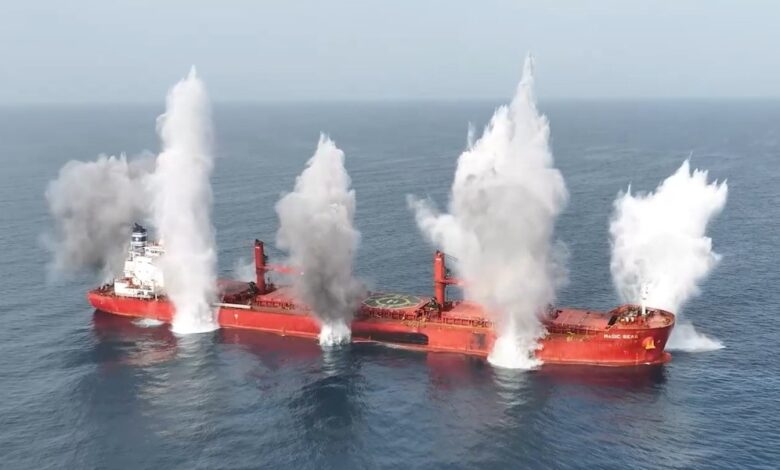
In early July, the Eternity C and Magic Seas, both Greek-managed bulk carriers, were attacked with missiles, drones, and explosive boats. Crewmembers were killed. Others were abducted. One vessel sank. These are acts that clearly violate the laws of armed conflict. Human Rights Watch now classifies them as potential war crimes.
Yet beyond the immediate tragedy lies a larger truth: global shipping is now operating under a persistent, asymmetric threat with no clear end in sight and current protections are dangerously insufficient.
The Red Sea Corridor Is Broken
Once a preferred shortcut connecting East and West, the Bab el-Mandeb Strait and Suez Canal are now shunned by most major carriers. Container lines, oil tankers, and LNG vessels have rerouted around the Cape of Good Hope, extending voyages by 10 to 14 days, straining global schedules, and inflating costs across supply chains.
This rerouting, born of necessity, has pushed up fuel consumption, tied up vessel capacity, and congested secondary ports from Durban to Mumbai. It has also exposed the limits of existing naval missions. The EU’s Operation Aspides, for example, remains under-resourced, averaging fewer than one warship per day to protect hundreds of miles of dangerous waters. When the Eternity C was struck, it had an armed guard team onboard. It didn’t matter.
The Cost of Insecurity
The financial impact is mounting. Marine war-risk insurance premiums have surged, doubling or tripling for some routes. Container spot rates have climbed over 170% on key Asia–Europe lanes. Shippers are adding Red Sea surcharges ranging from $500 to over $2,700 per container. Oil transporters, especially LR2 tankers, have seen year-over-year rate spikes as high as 267%.
Yet the true cost is systemic: delays, unpredictability, vessel shortages, inflation in consumer prices, and degraded trust in the safety of commercial corridors.
A Threat to African and Global Trade
Africa is at the center of the fallout, geographically, economically, and logistically. Ports like Durban, Lomé, Mombasa, and Cape Town are feeling the pressure of diverted vessels and extended schedules. While this has driven some short-term traffic and demand, the infrastructure strain is real.
Moreover, global trade resilience hinges on reliable passage through chokepoints like the Red Sea. If this corridor remains compromised, long-term investments will reroute supply chains—permanently altering the flow of commerce between Asia, the Middle East, Africa, and Europe.
The Industry Must Stop Hoping and Start Preparing
The maritime industry is adapting, but slowly. Hoping the crisis will pass is not a strategy. Protection regimes must be restructured. Naval coalitions require better coordination, faster response times, and tighter vessel tracking. Shipping lines must invest in alternative routing strategies, dual-crewing for longer voyages, and insurance models that anticipate chronic geopolitical risk.
And above all, the international community must treat attacks on seafarers with the same urgency it affords other forms of warfare. These are not acceptable losses they are targeted violations.
What happens in the Red Sea doesn’t stay in the Red Sea. The shipping lanes that fuel global growth are under siege. The maritime world must respond—not with panic, but with preparation, policy, and resilience.
All in Maritime News — Your Source for Global Maritime Intelligence
Tel: +27 063 069 1191
Offices: Durban | Dar es Salaam | Nairobi | Dubai
Email: news@allinmaritime.com
