

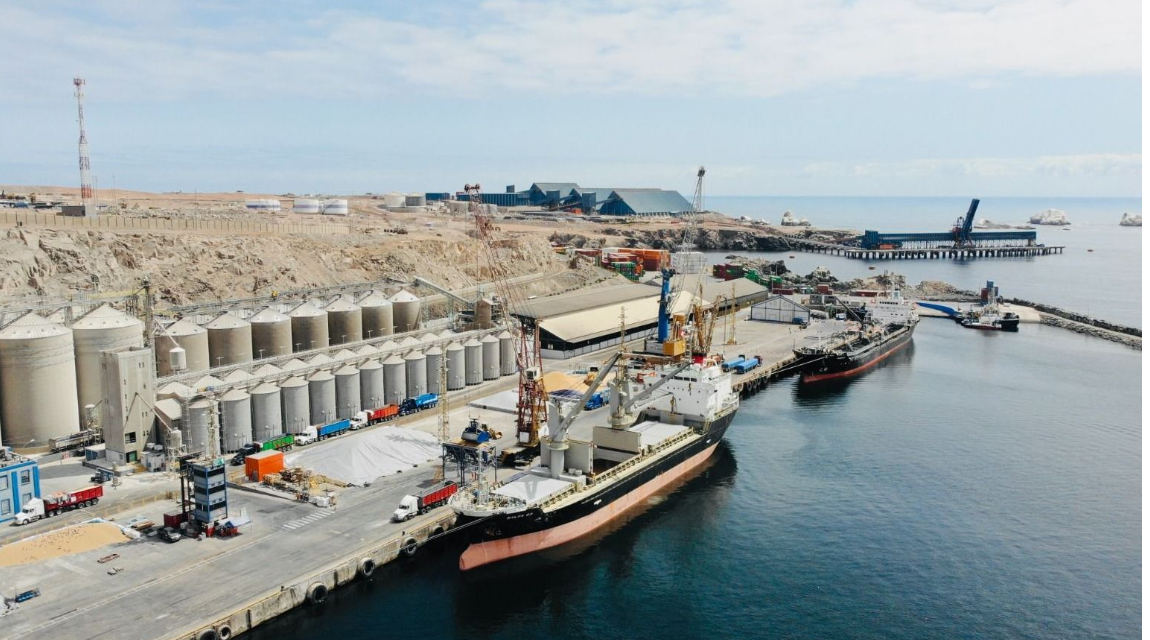
Terminal Internacional del Sur (Tisur) has unveiled a major US$700 million investment plan to expand and modernize the Matarani Port Terminal, marking one of the largest private port infrastructure commitments in southern Peru. The announcement follows the signing of Addendum No. 5 to the terminal’s concession agreement, which extends Tisur’s operating rights for an additional 30 years.
The expansion is designed to significantly enhance port capacity, improve operational efficiency, and support the rapid growth of mining and agro-export activities across the Arequipa region and southern economic corridor.
Major Infrastructure Upgrades Planned
Tisur’s development program includes a wide range of strategic improvements aimed at preparing Matarani for future cargo demand. Key components of the project include:
- A new 285-meter multipurpose berth, increasing annual berth capacity by roughly 25%.
- Construction of a 150-meter breakwater, providing stronger protection and enabling more reliable year-round operations.
- Modernization of existing docks, including deepening works and installation of new electric cranes with lifting capacities up to 100 tonnes.
- A new 4.6-hectare container handling yard, equipped with electrical connections to support refrigerated containers.
- A 40,000-tonne mineral storage facility, designed to improve loading efficiency for bulk mineral exports.
These investments address growing pressure on the terminal, which has been operating close to its maximum capacity due to surging regional export volumes.
Strategic Importance for Southern Peru
The expansion aligns with several major mining projects planned for the region, collectively exceeding US$11 billion in future investments. These include the Zafranal, Tía María, Cerro Verde, Las Bambas, Antapaccay, Constancia, and Mina Justa projects — all of which depend heavily on southern Peru’s port infrastructure.
By expanding Matarani, Tisur aims to:
- Prevent congestion and operational bottlenecks
- Support long-term mineral export growth
- Strengthen Peru’s competitiveness in the Pacific market
- Provide improved logistics for agriculture and general cargo sectors
Tisur’s leadership noted that without this expansion, rising production from regional industries would quickly outpace existing port capacity.
Economic and Social Impact
Construction of the upgraded facilities is expected to create around 1,800 direct jobs, with a strong focus on employing workers from the Arequipa region, particularly Islay province. Beyond employment, the investment is set to stimulate local economic activity through increased trade volumes and broader supply-chain demand.
The company has also continued supporting local development projects through tax-funded infrastructure initiatives, reinforcing its role as a key economic contributor in southern Peru.
Public–Private Alignment
The Peruvian government has welcomed the investment, describing it as a strong signal of private-sector confidence in the country’s long-term economic outlook. The approved concession addendum enables Tisur to execute the multi-year project, which is expected to progress through environmental permitting and detailed engineering in the coming years before large-scale construction begins.
A Long-Term Vision for Regional Competitiveness
Once completed, the US$700 million expansion will position Matarani as a modern, high-capacity Pacific gateway, enabling Peru to handle larger vessels, greater cargo volumes, and more diversified trade flows.
For Tisur, the project is a transformative initiative aimed at ensuring that southern Peru’s mining and export industries remain globally competitive throughout the next three decades.
Tell us What is Happening in Your Area: Contact Maritime Context at: news@maritimecontext.com
