

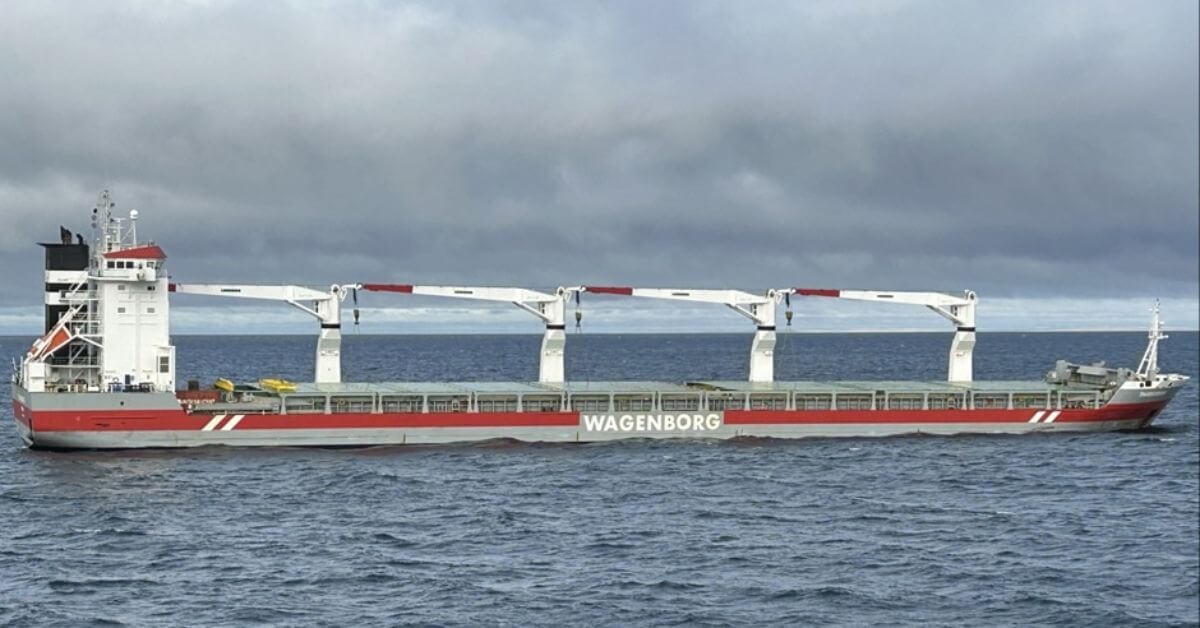
Franklin Strait, Canadian Arctic — After more than a month grounded in remote Arctic waters, the Dutch-flagged cargo vessel Thamesborg has been successfully refloated and is now under escort toward a port of refuge, Canadian and salvage officials announced today.
What Happened
The Thamesborg ran aground on September 6, 2025, in the Franklin Strait, off Prince of Wales Island in the Northwest Passage. Onboard were 15 crew members and an ice pilot; none were injured, and there has been no pollution reported from the incident.
Damage was largely limited to several ballast tanks; crucially, the fuel tanks and cargo holds remained intact and did not suffer water ingress.
Salvage Efforts and Refloating
The refloating operation involved removing (lightering) more than 5,000 tons of industrial carbon blocks from the vessel’s cargo, which were transferred to other ships in the area. The icebreaking supply vessel Botnica provided key equipment to pump water from the damaged ballast tanks, helping to stabilize and lift the Thamesborg.
The Canadian Coast Guard’s CCGS Des Groseilliers stood by throughout the operation, monitoring environmental safety and inspecting hull integrity.
The Thamesborg was successfully refloated at approximately 6:00 a.m. local time on October 9, 2025, roughly 33 days after it became grounded. Following refloating, inspection teams surveyed the hull for further damage, after which the vessel began its escorted transit toward a port of refuge, expected to be Baie-Comeau, Quebec, later this month.
Broader Implications
The operation highlights the logistical and environmental challenges of Arctic navigation, particularly in remote waterways prone to seasonal ice conditions. Even for ice-class vessels with experienced pilots, the risks of grounding in such areas remain high.
The coordinated effort between the shipowner, salvage teams, and Canadian authorities proved critical to the successful outcome. The incident is expected to prompt renewed scrutiny of Arctic shipping safety, route planning, and environmental response capacity as maritime traffic through the Northwest Passage continues to grow.
What’s Next
The Thamesborg will undergo further inspection at its port of refuge to confirm its seaworthiness before returning to service. Investigations are underway to determine the exact cause of the grounding, including potential navigational and weather-related factors.
Bottom Line:
What could have become a serious environmental disaster ended in success — a stranded vessel refloated with no pollution, no injuries, and valuable lessons learned for the future of Arctic maritime operations.
Tell us What is Happening in Your Area: Contact Maritime Context at: news@maritimecontext.com
