

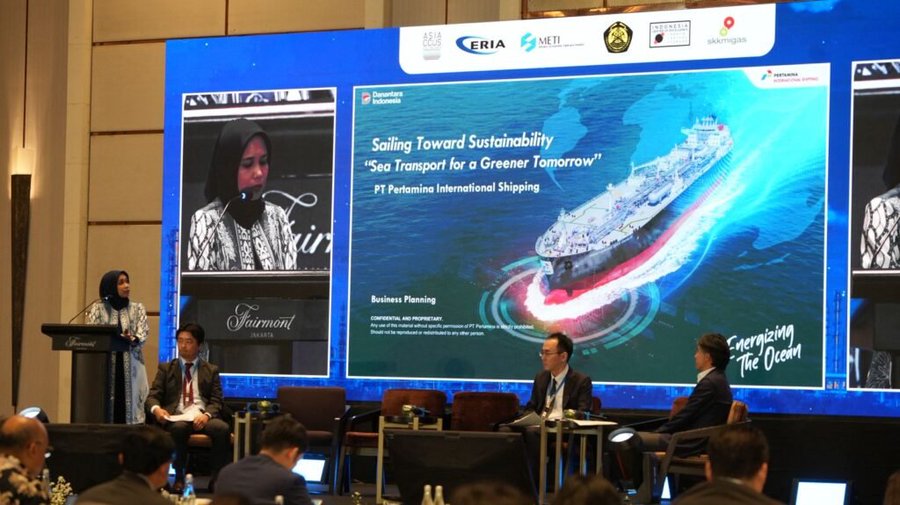
Jakarta, September 28, 2025 – Pertamina International Shipping (PIS), the integrated marine logistics arm of Indonesia’s state-owned energy giant Pertamina, is setting its sights on the rapidly growing carbon capture and storage (CCS) and carbon capture, utilization, and storage (CCUS) sectors, positioning itself to become a key logistics player in Southeast Asia’s decarbonization drive.
As governments and industries accelerate their net-zero commitments, CCS/CCUS technologies are gaining momentum as critical tools for reducing carbon emissions from hard-to-abate sectors such as cement, steel, and oil and gas. Analysts suggest the “sweet spot” of this emerging market lies in efficient transportation infrastructure — an area where PIS already holds strong expertise.
Building on Core Shipping Strengths
PIS, which operates a diversified fleet ranging from LNG carriers and crude tankers to clean product and gas carriers, is exploring the development of specialized carbon dioxide carriers to support domestic and regional CCS/CCUS projects. Executives at the company highlight that its established operational network and proven safety record in energy shipping provide a natural foundation for entering the CO₂ logistics market.
“We are preparing to capture opportunities in the CCS/CCUS value chain, especially in shipping solutions that connect industrial emitters with offshore and onshore storage facilities,” a PIS spokesperson noted, emphasizing the company’s role in Indonesia’s broader energy transition strategy.
Indonesia’s Strategic Role
Indonesia is emerging as a regional hub for CCS/CCUS, with several pilot projects already underway and the government signaling stronger policy support for large-scale deployment. The country’s abundant geological formations — particularly depleted oil and gas reservoirs — offer significant storage potential, attracting interest from international energy players.
By positioning PIS at the center of these developments, Pertamina aims not only to strengthen its energy logistics portfolio but also to support Indonesia’s ambition to meet its carbon reduction targets under the Paris Agreement.
Partnerships and Innovation
To prepare for this shift, PIS is engaging with ship designers, technology providers, and regulators to assess future fleet requirements for CO₂ transport. Industry sources suggest that collaboration will be crucial in creating scalable shipping solutions, as CCS/CCUS infrastructure requires integration across capture sites, pipelines, shipping, and storage terminals.
At the same time, the company is aligning its move with Pertamina’s wider decarbonization efforts, which include expanding LNG shipping, trialing low-carbon fuels, and adopting digitalized fleet management systems to cut operational emissions.
A New Maritime Frontier
Observers note that while CCS/CCUS remains at an early stage in Asia, the pace of development is accelerating. Japan, South Korea, and Singapore have already announced carbon storage and trading initiatives, signaling future demand for regional carbon shipping capacity.
“Whoever moves early into CO₂ logistics will likely secure a long-term advantage,” said one Southeast Asian energy analyst. “For PIS, this is a natural evolution of its shipping business — and one that could position Indonesia as a regional leader in the CCS/CCUS value chain.”
With the groundwork now being laid, Pertamina International Shipping is preparing to seize what it sees as the next frontier of maritime logistics — one that could define its role in the energy transition for decades to come.
Tell us What is Happening in Your Area: Contact Maritime Context at: news@maritimecontext.com
