

Dar es Salaam / Mombasa – October 31, 2025
East Africa’s maritime logistics network has been thrown into disarray after Tanzania’s Port of Dar es Salaam suspended all operations amid widespread civil unrest following the October 29 general elections. The shutdown has crippled regional supply chains, forcing traders and shipping lines to divert cargo to Kenya’s Port of Mombasa, which is now experiencing a sudden surge in traffic and operational pressure.
Officials at the Tanzania Ports Authority (TPA) confirmed that port operations including container handling, fuel discharges, and bulk cargo movements have been halted indefinitely. The decision followed escalating demonstrations and security concerns near the Kurasini and Kigamboni port districts, where thousands of dockworkers were unable to report for duty.
“The safety of personnel and assets cannot be guaranteed under current conditions,” the TPA said in a statement. “Operations will resume once stability is restored.”
Dar es Salaam paralysis ripples across the region
The closure of Dar es Salaam, Tanzania’s main maritime artery and the primary gateway for Zambia, Malawi, Burundi, Rwanda, and parts of the Democratic Republic of Congo, has caused severe logistical disruptions. Dozens of vessels remain stranded at anchorage, while over 3,000 containers are reported to be stuck within the port yards, including consignments of fertilizer, fuel, and industrial raw materials.
Logistics experts warn that fuel reserves across the region could begin to run dry within days if the crisis persists. “The closure has created an immediate supply shock,” said a Dar-based freight forwarder. “Ports like Mombasa and Beira are already under immense strain as everyone rushes to find alternative routes.”
Mombasa steps up as trade diversions intensify
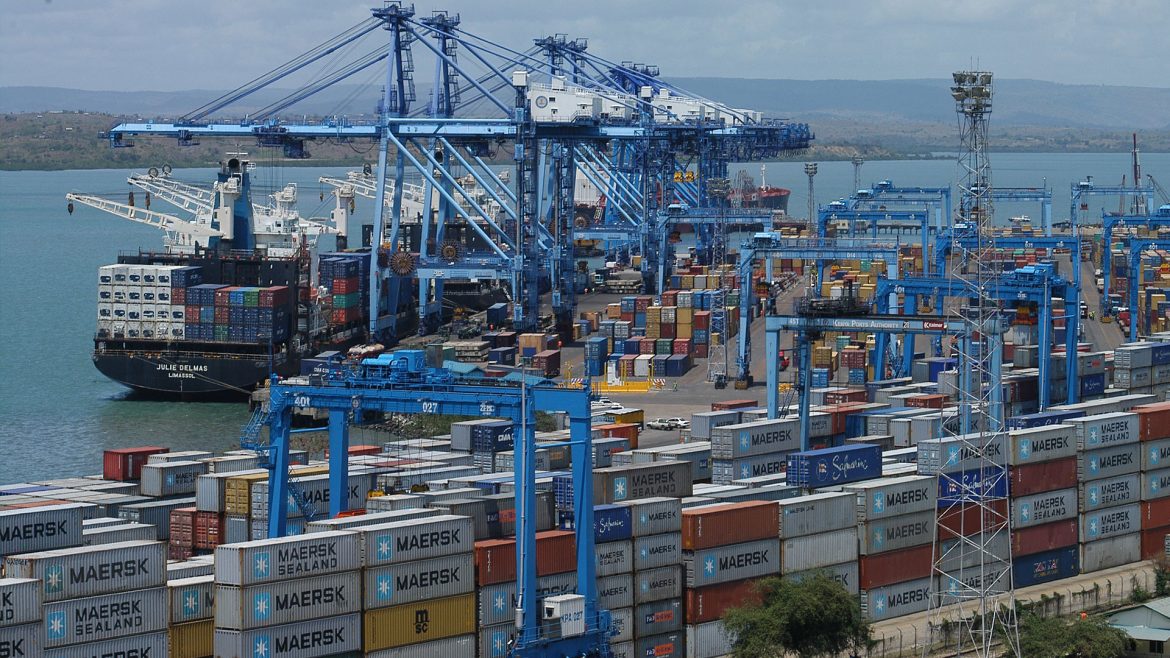
Across the border, the Port of Mombasa has become the unexpected beneficiary of Tanzania’s political turmoil. Over the past 14 days, Mombasa has handled an average of 57 vessels, a marked increase from normal levels, as cargo owners and shipping lines shift operations from Tanzania’s Central Corridor to Kenya’s Northern Corridor.
Freight forwarders confirm that the redirected cargo includes fertilizer for Zambia and Malawi, petroleum imports for Rwanda and Burundi, and essential goods bound for the DRC. “Many of our clients have switched to Mombasa due to uncertainty in Dar es Salaam,” said a logistics agent at Kilindini Harbour. “We’re seeing more vessel arrivals and longer yard dwell times, but the system is still holding.”
Kenya Ports Authority (KPA) officials said operations at container and bulk terminals are currently stable, though they are closely monitoring yard capacity. “We have contingency measures in place to handle increased throughput,” said a KPA spokesperson. “Our goal is to maintain efficiency while supporting the region during this disruption.”
Expert insight from the ground
According to Mr. Linus Opondo, a Marine Surveyor at Observater Surveys and Services Limited in Mombasa, the unfolding crisis underscores how closely East Africa’s maritime fortunes are linked to political stability.
“The Dar es Salaam shutdown has reaffirmed a long-standing truth in regional trade, that the sea may be calm, but instability on land can sink operations just as fast,” Mr. Opondo said. “We’ve seen a sharp rise in vessel inspections, cargo surveys, and emergency clearance requests here in Mombasa. While the port is coping admirably, sustained diversions could stretch capacity and impact turnaround times. Still, Kenya’s logistical resilience is proving to be a vital stabilizer for the region right now.”
His remarks reflect the growing operational strain on marine surveyors, freight handlers, and inspection agencies who are working around the clock to maintain cargo flow integrity amid the surge.
Trade realignment and economic implications
The closure of Dar es Salaam and the corresponding diversion of traffic to Mombasa highlight how political instability can reshape East Africa’s trade geography overnight. The Dar port normally handles nearly 90% of Tanzania’s seaborne trade and over 40% of transit cargo for neighboring states. Every day of closure represents millions of dollars in lost revenue for Tanzania’s economy.
For Kenya, however, the disruption presents both opportunity and risk. Increased throughput at Mombasa boosts revenue and reinforces its dominance as the region’s principal maritime gateway. Yet the added volume also risks congestion, higher turnaround times, and strain on transport infrastructure, particularly along the Mombasa–Nairobi–Naivasha–Malaba corridor.
Regional organizations, including the East African Community (EAC) and COMESA, have urged Tanzania to restore order and resume port operations, warning that prolonged instability could escalate into a full-scale supply crisis affecting fuel distribution, agriculture, and manufacturing.
Outlook: A fragile maritime balance
Analysts suggest that if Tanzania’s unrest drags on, the resulting cargo diversion could lead to a permanent shift in trade routes, weakening Dar es Salaam’s long-term competitiveness. Investors and insurers are already reassessing risk exposure in Tanzania’s blue economy, while shippers are likely to adjust insurance premiums and freight rates to reflect heightened instability.
Meanwhile, Mombasa’s performance during this crisis may further cement Kenya’s position as East Africa’s logistical anchor a development with lasting geopolitical and economic consequences.
For now, Dar es Salaam’s usually bustling docks remain eerily quiet, while cranes at Mombasa swing non-stop, unloading and stacking the redirected cargo of an entire region. In East Africa’s maritime landscape, stability, not geography, has once again proven the ultimate determinant of trade flow.
Tell us What is Happening in Your Area: Contact Maritime Context at: news@maritimecontext.com
