

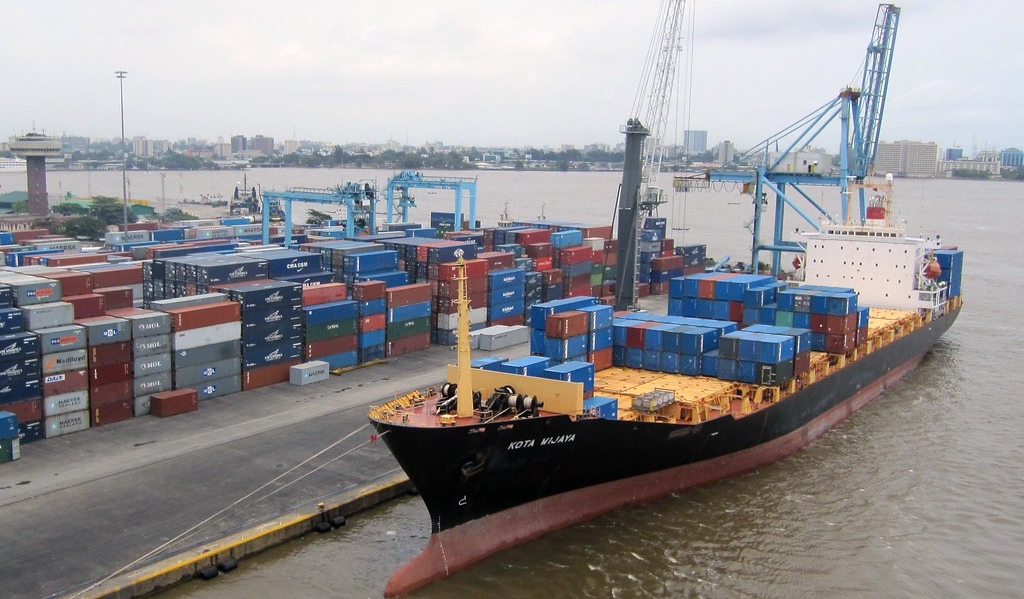
Lagos, Nigeria – October 31, 2025
Nigeria’s major seaports have once again failed to feature in Lloyd’s List Top 100 Global Ports Ranking for 2025, underscoring deep-rooted inefficiencies, infrastructural challenges, and policy gaps that continue to weaken the nation’s maritime competitiveness.
The annual report — regarded as one of the world’s most authoritative port performance benchmarks — included four African ports in this year’s list: Tanger Med in Morocco, Port Said and Alexandria in Egypt, and Lomé Port in Togo. Notably, Nigeria, Africa’s most populous nation and one of its largest economies, did not make the cut, despite its strategic location and extensive coastline.
Top African performers
Leading the continent’s representation, Morocco’s Tanger Med Port maintained its position among the world’s top 30 ports, reflecting its continued expansion, digitalization, and efficient transshipment services that connect over 180 ports globally. Egypt’s Port Said and Alexandria also sustained strong rankings due to massive investments in automation, dredging, and terminal upgrades that have made the Suez Canal region a global logistics hub.
Meanwhile, Lomé Port in Togo has emerged as West Africa’s standout performer — and the only sub-Saharan port on the list — thanks to consistent operational reforms and partnerships with international terminal operators. The port has become a key transshipment hub for the Gulf of Guinea, serving vessels that once frequented Nigerian waters.
Nigeria’s continued decline
In contrast, Nigeria’s ports — including Lagos’s Apapa and Tin Can Island, Port Harcourt, and Onne — continue to struggle with congestion, inadequate infrastructure, and bureaucratic bottlenecks that discourage shipping lines and investors.
Industry observers cite outdated cargo-handling systems, inefficient customs processes, and logistics gridlock along access roads as persistent obstacles. These factors have not only eroded Nigeria’s competitiveness but also shifted cargo traffic to neighboring ports such as Lomé, Cotonou, and Tema.
A senior maritime analyst noted:
“Nigeria’s absence from the ranking is not a surprise. The country’s ports remain among the most expensive and time-consuming in the region to operate through. Without urgent reforms in port governance, automation, and intermodal connectivity, Nigeria will continue to lose ground to smaller but more efficient West African rivals.”
Economic implications
Nigeria’s non-appearance on the global ranking carries wider economic implications. Ports serve as gateways for more than 85% of Nigeria’s international trade, and inefficiencies directly affect foreign exchange inflows, import-export timelines, and industrial productivity.
The Nigerian Ports Authority (NPA) has in recent years pledged modernization efforts, including the digitization of cargo clearance and the reconstruction of key quays. However, maritime stakeholders argue that reforms have been slow, fragmented, and poorly implemented.
In contrast, countries like Morocco and Egypt have aligned port development with national industrial strategies, integrating logistics corridors with manufacturing and export processing zones — a model analysts say Nigeria must urgently emulate.
Regional contrast and lessons
The inclusion of Lomé Port in Togo — a nation with a fraction of Nigeria’s coastline and GDP — is seen as a wake-up call for West Africa’s largest economy. Lomé’s partnership with global operators such as MSC’s Terminal Investment Limited (TIL) has driven significant efficiency gains, positioning the port as a preferred regional hub.
In comparison, Nigerian ports have lost a sizable share of regional transshipment traffic, with shipping lines increasingly bypassing Lagos for Lomé or Tema to avoid high turnaround times and infrastructure delays.
Looking ahead
Analysts say Nigeria’s exclusion from the Lloyd’s List Top 100 should serve as a catalyst for reform rather than embarrassment. Maritime experts emphasize the need for urgent investment in deep-sea ports, digitalization, customs simplification, and hinterland connectivity to reverse years of decline.
With projects such as the Lekki Deep Sea Port showing early promise, Nigeria still has the potential to reclaim regional dominance — but only if policy implementation matches ambition.
As one port consultant summarized:
“The ranking doesn’t just measure size — it measures efficiency, technology, and reliability. Nigeria has the potential, but potential without performance means very little in global shipping.”
Tell us What is Happening in Your Area: Contact Maritime Context at: news@maritimecontext.com
