

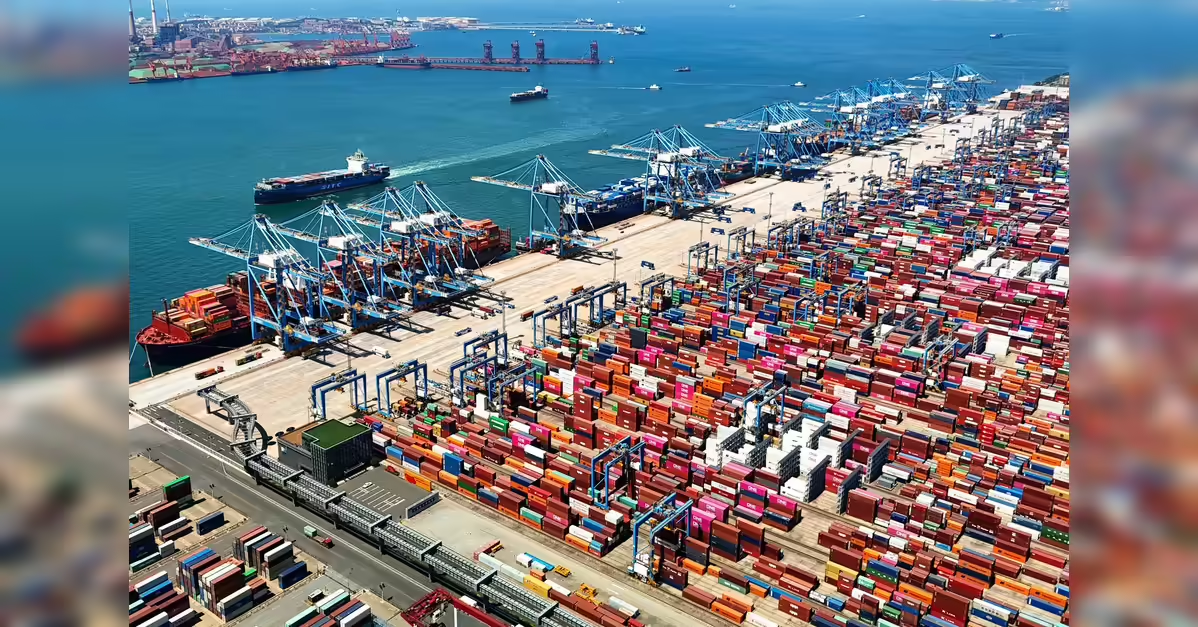
In a striking escalation of maritime logistics disruption, vessels carrying bulk commodities are encountering the longest berth-waiting times of the year at major Chinese ports. The delay surge is being driven not just by capacity constraints, but by an emerging interplay of regulatory and geopolitical forces.
Queueing Metrics Spike
For the week ending 19 October 2025, the average time from vessel arrival to berth at Chinese ports reached approximately 2.66 days — up about 17 percent from the previous week and marking the longest average so far this year.
At Dongjiakou Port in Shandong, vessels waited roughly 2.79 days, while at Yantai Port, waiting times rose to around 2.7 days from 1.8 days the previous week. These figures highlight mounting congestion across northern Chinese terminals, where commodity vessels such as those carrying crude oil, coal, and iron ore are particularly affected.
Root Causes: Fees, Diversions, and Uncertainty
While congestion is not unusual for major import hubs, two intertwined developments are driving the current spike:
1. New Fee Regime Targeting U.S.-Linked Tonnage
China recently introduced additional fees for vessels with American ownership or registration ties. The measure, seen as a reciprocal response to U.S. surcharges on Chinese-linked ships at U.S. ports, has caused confusion among shipowners uncertain about the new fee structure. Many have opted to delay port entry or adjust their routes until further clarification is provided. The resulting hesitation has added pressure to anchorage zones, as more ships accumulate offshore awaiting clearance or confirmation of charges.
2. Diversion of Cargo Flows from Sanctioned Terminals
At the same time, tankers and bulk carriers have been diverted from certain sanctioned terminals such as the Rizhao Shihua Crude Oil Terminal. The redirection of these vessels to alternate ports like Zhoushan and Ningbo has intensified competition for berthing slots and operational resources, contributing to the growing queue. This has created a ripple effect where congestion spreads from one terminal to others, reducing overall port efficiency.
Why This Matters
For maritime service providers and stakeholders in the global commodity chain, the impact is far-reaching:
- Higher Demurrage and Idle Time: Longer berth waiting periods directly increase demurrage charges, driving up costs for shipowners and charterers.
- Operational Unpredictability: Extended waiting times disrupt scheduling for cargo operations, surveys, and inspections, complicating coordination among shipping agents and service providers.
- Supply Chain Ripple Effects: As China is the world’s largest importer of raw commodities, even short-term port delays can cascade globally, affecting loading schedules, inland transport, and storage capacity.
- Trade and Regulatory Risk: The new fee regime underscores how shipping logistics are increasingly influenced by geopolitical developments, forcing companies to monitor both policy changes and operational performance in real time.
What to Watch
- Weekly Waiting Time Trends: Persistent increases in waiting times signal deeper structural bottlenecks rather than temporary congestion.
- Port-Specific Backlogs: Northern ports such as Dongjiakou, Yantai, and Rizhao remain key congestion zones, with potential spillover into eastern hubs.
- Policy Clarity on Fees: The scope of China’s retaliatory charges remains under scrutiny; further ambiguity could deter ship calls or complicate scheduling for international carriers.
- Diversion Impacts: As vessels continue to reroute from sanctioned or high-cost ports, secondary terminals may experience sudden surges in traffic.
- Contract and Cost Management: Companies must reassess charter and survey contracts to mitigate exposure to unexpected idle costs and service delays.
Final Thoughts
The mounting queue of commodity vessels at Chinese ports is more than a cyclical congestion issue — it reflects the growing convergence of geopolitics, port logistics, and maritime trade regulation. For maritime service providers such as Observater Surveys and Services Limited, staying ahead of these developments through precise berth-delay tracking, proactive risk assessments, and real-time advisories will be essential to maintaining operational reliability and client confidence.
Tell us What is Happening in Your Area: Contact Maritime Context at: news@maritimecontext.com
