

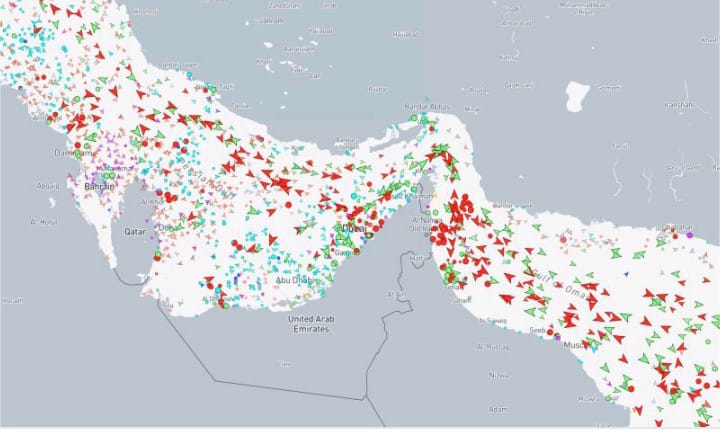
In a surprising twist for global shipping observers, a significant portion of Iran’s oil tanker fleet has reappeared on maritime tracking systems after years of operating under the radar. Satellite and AIS (Automatic Identification System) data indicate that numerous Iranian-flagged vessels have reactivated their transponders, marking their first coordinated return to visibility in nearly seven years.
The brief resurgence — first detected in mid-October by maritime intelligence platforms such as TankerTrackers.com and MarineTraffic — saw up to 80% of Iran’s National Iranian Tanker Company (NITC) fleet transmitting real-time position and voyage data. The development comes amid shifting geopolitical tides, tightening sanctions enforcement, and increasing scrutiny of so-called “shadow fleet” operations.
A Fleet Long in the Shadows
Since 2018, Iranian tankers have largely operated covertly, often using tactics such as AIS signal manipulation, flag hopping, and ship-to-ship transfers to disguise cargo origins and destinations. These methods allowed Tehran to maintain oil exports despite Western sanctions, particularly to major buyers such as China.
By turning off their AIS transponders, Iranian vessels effectively disappeared from global tracking networks — a practice that, while common among sanctioned fleets, drew criticism for undermining maritime safety and transparency.
Their sudden reappearance therefore raises both intrigue and speculation across the shipping industry.
Possible Motives Behind the Move
Analysts remain divided on why Iran has chosen this moment to partially lift the veil.
One school of thought suggests that Tehran may be signalling a willingness to normalise aspects of its maritime trade, especially as international negotiations and shifting alliances reshape regional energy routes. Reactivating trackers could be a gesture of transparency aimed at reducing seizure risks or regaining limited legitimacy within the global tanker market.
Others interpret the move as strategic posturing rather than genuine openness. Some tankers reportedly went dark again within days, hinting that the signal restoration may have been temporary — perhaps a calculated display intended to confuse sanctions monitors or demonstrate operational resilience under scrutiny.
Additionally, the reactivation may have logistical roots. As insurance and port state controls tighten against “dark fleet” activity, compliance pressures may be forcing Iranian operators to show at least partial AIS visibility to secure port access or maintenance services.
A Shift in the Shadow Fleet Dynamic
The timing is notable. The global “shadow fleet” — an informal network of older or re-flagged tankers used by sanctioned states like Iran, Russia, and Venezuela — has ballooned to over 3,200 vessels, representing a growing share of global oil transport.
With Western regulators now moving to clamp down on opaque shipping practices, Iran’s limited return to transparency could represent a tactical adaptation to avoid further seizures and insurance blacklisting.
For maritime security officials, however, the move offers a rare glimpse into Iran’s logistical web, potentially aiding the monitoring of illicit crude flows that have long evaded detection.
Transparency or Tactical Illusion?
Whether this marks a permanent shift or a fleeting display remains uncertain. Analysts caution that Iran’s behaviour has historically been fluid and strategic, shaped by evolving sanctions, market access, and geopolitical tensions.
If the AIS reactivation endures, it could signal a subtle but significant course correction in Iranian maritime policy — one that acknowledges the mounting costs of operating in total opacity.
If not, it will serve as yet another chapter in the ongoing cat-and-mouse game between sanctioned shippers and global regulators.
Bottom line: Iran’s tankers may have resurfaced, but whether the fleet has truly come out of the shadows — or merely adjusted its camouflage — remains to be seen.
Tell us What is Happening in Your Area: Contact Maritime Context at: news@maritimecontext.com
