

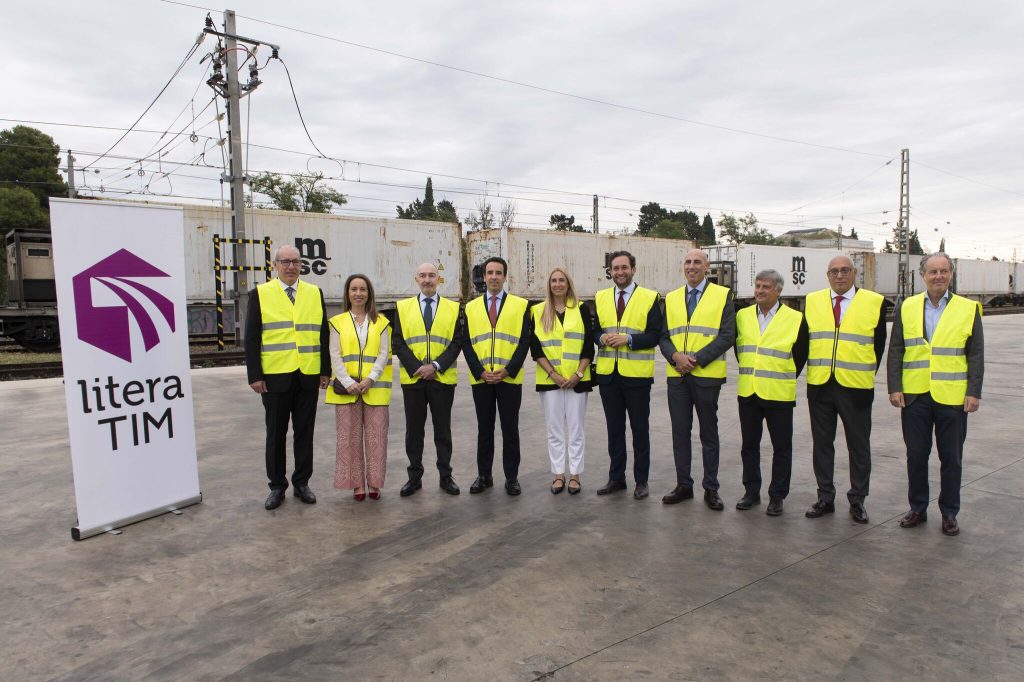
Tamarite de Litera, Spain — October 2025:Spanish industrial conglomerate Samca Group has officially opened its new LiteraTIM Intermodal Terminal in Tamarite de Litera, a strategic hub designed to strengthen the country’s inland connections with major seaports and accelerate the shift toward greener logistics.
Developed through Terminal Intermodal Monzón (TIM), the €24 million project is a collaboration between Samca Group, Renfe Mercancías, and the Ports of Barcelona and Tarragona. Samca holds a 75% stake in the venture, with the remaining shares owned by the port authorities and Renfe.
Strategic Gateway for Agro-Industrial
ExportsLocated in the Aragón region, near the La Melusa rail siding, the new facility spans 18,000 square metres and can handle up to seven trains daily. It features capacity for 600 container units (UTIs), including 84 reefer containers, serving the region’s growing demand for temperature-controlled and agro-industrial exports.
The LiteraTIM terminal is expected to play a central role in supporting the Aragonese agro-food corridor, enhancing the movement of products such as meat, forages, and essential oils to the ports of Barcelona, Tarragona, and Bilbao for international distribution.
Intermodality and Environmental Impact
By prioritizing intermodal efficiency, the terminal integrates rail, road, and port operations, enabling more sustainable freight movement across the Iberian Peninsula.
According to Samca Group, the terminal will eliminate approximately 25,000 truck journeys annually, translating to a reduction of more than 5,000 tonnes of CO₂ emissions per year. This aligns with Spain’s and the EU’s broader objectives to decarbonize freight transport and transition toward rail-based logistics networks.
In addition to its environmental contribution, the project has generated 48 direct jobs and numerous indirect employment opportunities within the logistics and transport ecosystem
Enhanced Customs and Storage Capabilities
The LiteraTIM terminal is authorized as a Temporary Storage Facility (ADT) and Customs Warehouse (LAME), simplifying export procedures for regional industries. This status allows the terminal to handle both domestic and international cargo flows, offering value-added logistics services such as customs clearance, consolidation, and reefer management.
Officials from the Ports of Barcelona and Tarragona emphasized that the partnership reinforces the ports’ inland connectivity, providing shippers with an efficient rail-based alternative to long-haul trucking.
A Model for Sustainable Freight in Southern Europe
Speaking at the inauguration ceremony, Samca Group representatives highlighted that LiteraTIM reflects the company’s long-term vision for sustainable, multimodal logistic
“With LiteraTIM, we are not only improving the competitiveness of Aragon’s industry but also contributing to the decarbonization of freight transport in Spain,” a Samca spokesperson stated.
The terminal’s opening positions it as a benchmark for regional intermodal development in Southern Europe, bridging inland production centers with maritime gateways while reducing environmental impact and operational costs.
About Samca Group
Based in Zaragoza, Samca Group operates across diverse sectors including energy, mining, construction materials, logistics, and agriculture. Through projects such as LiteraTIM, the company continues to expand its footprint in the transport and infrastructure space, supporting Spain’s transition toward integrated, low-carbon logistics chains.
Tell us What is Happening in Your Area: Contact Maritime Context at: news@maritimecontext.com
