

October 1, 2025
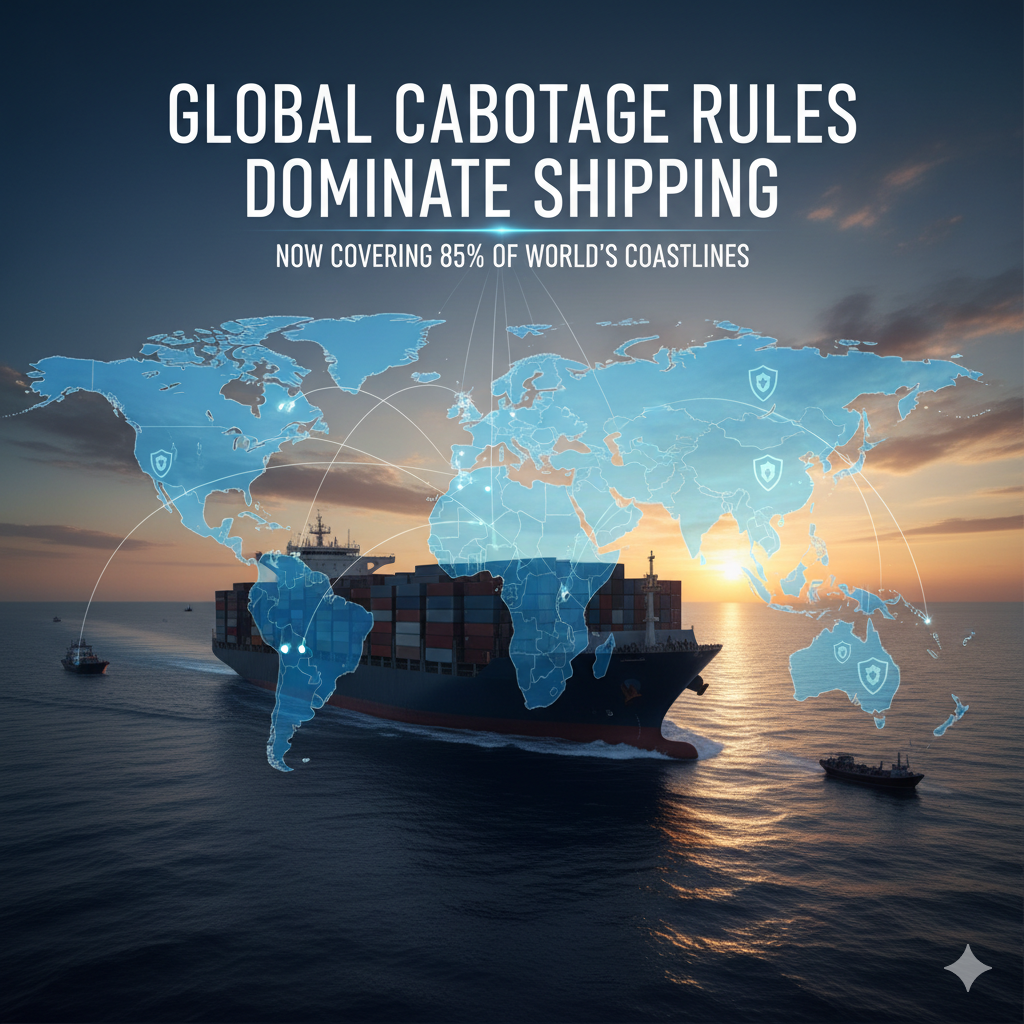
Cabotage laws—regulations restricting the transport of goods and passengers between domestic ports to nationally flagged or locally owned vessels—have now expanded to cover an estimated 85% of the world’s coastlines, according to recent maritime policy reviews.
This sweeping coverage reflects a decisive shift in how coastal states view their maritime sectors: less as open corridors of international trade, and more as strategic assets for economic protection, security, and sovereignty.
Expanding Beyond Traditional Hubs
While the United States’ Jones Act of 1920 remains the most cited example, the past two decades have seen a surge of cabotage adoption and enforcement across multiple regions.
- Asia-Pacific: Indonesia and the Philippines tightened rules to ensure national carriers dominate inter-island trades.
- Africa: Nigeria, Ghana, and Angola have expanded cabotage in offshore energy logistics, tying compliance to local content policies.
- South America: Brazil and Argentina extended privileges for domestic operators in coastal and inland waterways.
- Europe: Despite the EU’s push for liberalized shipping, several member states maintain restrictions in ferry and short-sea services.
Why States are Turning Inward
Analysts identify three main drivers behind this global consolidation of cabotage:
- Economic Protection – Governments aim to retain freight revenues locally, strengthen national fleets, and create jobs.
- National Security – Reserving domestic shipping for local vessels reduces dependence on foreign operators during crises or conflict.
- Maritime Development – By protecting local trades, states hope to spur shipbuilding, crewing, and maritime service growth, feeding into broader blue economy ambitions.
Industry Pushback
International shipowners and trade groups have voiced concern over the widespread tightening of cabotage rules. The International Chamber of Shipping (ICS) argues that such restrictions:
- Increase shipping costs by limiting competition.
- Reduce efficiency, as smaller domestic fleets struggle with capacity.
- Complicate decarbonization efforts by fragmenting shipping markets, making fuel transition and route optimization harder to achieve.
Despite this pushback, policymakers across continents see cabotage as a long-term strategic safeguard rather than a temporary policy tool.
A Defining Feature of Maritime Policy
With 85% of the world’s coasts now under cabotage regulation, the model has become a defining feature of global shipping governance. Experts suggest the scope may widen further, potentially extending to emerging domains such as offshore renewable energy, port services, and short-sea green corridors.
“Cabotage is no longer a regional exception—it’s a global standard,” observed one maritime policy analyst. “Shipping companies must adapt, building stronger local partnerships and compliance strategies if they want to stay competitive in increasingly fragmented markets.”
As the maritime industry balances global trade efficiency with national sovereignty, the dominance of cabotage laws signals a future where the freedom of the seas will be ever more closely guarded by the jurisdictions that line them.
Tell us What is Happening in Your Area: Contact Maritime Context at: news@maritimecontext.com
