

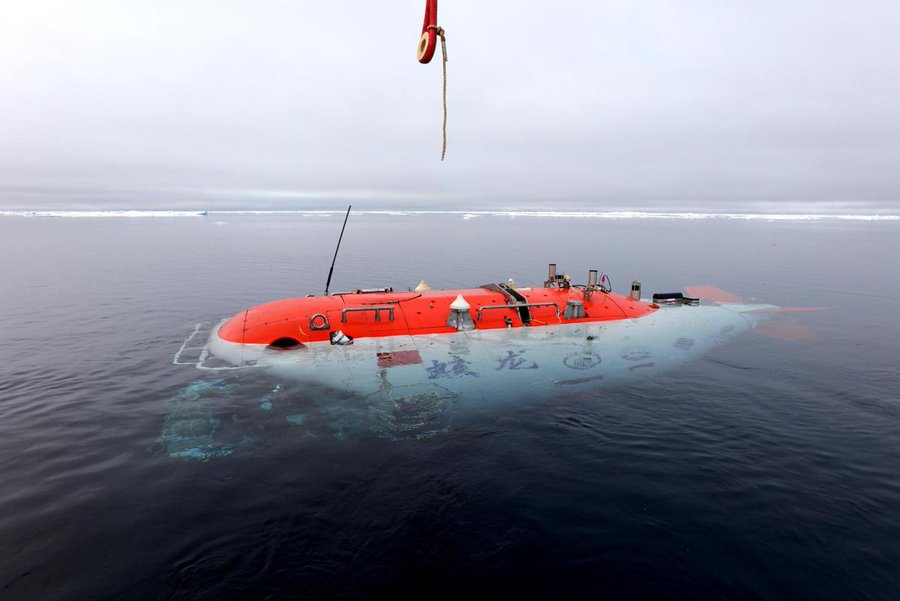
China has achieved a historic milestone in its polar research program with the successful completion of its first manned dive beneath the Arctic ice during the country’s 15th Arctic Ocean Scientific Expedition. The breakthrough underscores both China’s growing scientific capabilities and its expanding presence in the polar regions at a time of heightened international interest in the Arctic.
A Record-Breaking Expedition
The expedition, which concluded this month, was the largest Arctic research mission ever organized by China. It deployed a fleet of four advanced research vessels—Xuelong-2 (Snow Dragon 2), Shenhai-1 (Deep Sea 1), Tansuo-3 (Explorer 3), and Jidi—covering thousands of nautical miles across the Arctic Ocean.
The mission was tasked with a wide range of objectives, including surveying the marine environment, studying atmosphere-ice-ocean interactions, monitoring drifting sea ice, and collecting data on ecological changes beneath the ice. According to officials, the scale and scope of the 15th expedition surpassed all previous Arctic ventures by the country.
First-Ever Manned Dive
The highlight of the mission came when the deep-sea submersible Jiaolong descended beneath the polar ice, marking China’s first manned dive in such extreme conditions. Supported by its mothership Shenhai-1 and the icebreaker Xuelong-2, the dive required navigating thick ice cover, sub-zero temperatures, and limited underwater visibility.
Chinese scientists reported that the dive yielded groundbreaking observations, including evidence of significant spatial variation in benthic ecosystems. Differences in biodiversity, organism density, and body size were documented across areas spanning tens to hundreds of kilometers, providing rare insights into how Arctic seabed ecosystems adapt to harsh and changing conditions.
Scientific and Strategic Implications
Conducting a manned dive under Arctic ice represents a formidable technical challenge, one that only a handful of countries have successfully achieved. Beyond its symbolic value, the operation provides China with direct access to scientific data that is vital for understanding the Arctic’s rapid environmental transformation.
The Arctic is warming at nearly four times the global average, and researchers warn that changes in ice cover, ocean circulation, and marine ecosystems have profound implications for global climate stability. By gathering first-hand observations and biological samples, China’s scientists aim to contribute to global climate models, enhance understanding of carbon storage in seabeds, and track the resilience of fragile ecosystems under stress.
At the same time, the achievement highlights China’s growing interest in the Arctic’s geopolitical and economic dimensions. With the region opening up to new shipping routes and resource opportunities due to melting ice, the ability to operate advanced missions under polar conditions signals Beijing’s intent to be a key stakeholder in future Arctic affairs.
International Collaboration and Next Steps
While China has celebrated the success of its manned dive, questions remain about how its scientific findings will be shared with the international community. Arctic research is often conducted through multinational collaborations, and transparency in data sharing will determine how these discoveries feed into global environmental policy and climate action.
Officials emphasized that the expedition was conducted with scientific cooperation in mind and expressed willingness to work with international partners on future research. However, analysts note that the scale of China’s investment in polar science also reflects strategic motivations, particularly as nations increasingly view the Arctic as both an environmental barometer and an emerging frontier for economic competition.
Conclusion
The completion of the 15th Arctic Ocean Scientific Expedition marks a defining moment for China’s polar research program. By achieving its first manned dive beneath Arctic ice, China has not only pushed the boundaries of deep-sea exploration but also positioned itself as a central player in the unfolding story of the Arctic.
As climate change accelerates transformations in the region, the data and insights collected from this expedition could prove crucial in shaping global understanding and policies aimed at safeguarding the fragile Arctic environment.
Tell us What is Happening in Your Area: Contact Maritime Context at: news@maritimecontext.com
