

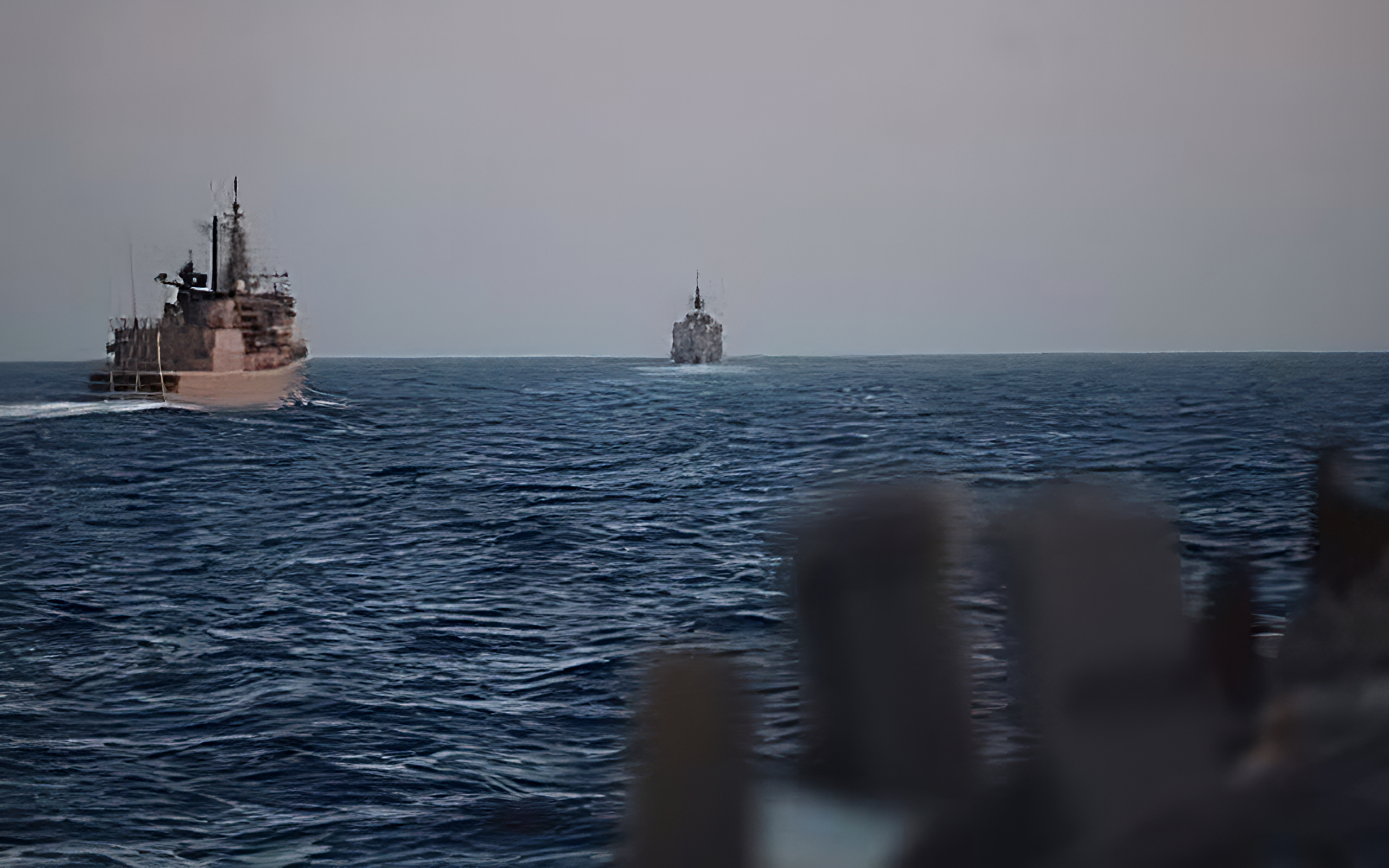
Athens, Greece: Greece has launched a substantial military exercise in the Aegean Sea following Turkey’s issuance of a maritime advisory (NAVTEX) announcing planned survey activity in waters claimed by Greece. The move underscores the long-standing and unresolved maritime tensions between the two NATO allies.
What Happened
Early on Wednesday, September 17, Greece initiated a medium-scale joint readiness exercise involving air, sea, and land forces. The operation was launched at 5:00 a.m. and was executed under the coordination of the Hellenic National Defence General Staff.
More than 60 fighter jets, the Hellenic Navy fleet, special forces units stationed across dozens of islands, and army formations based near the land border in Evros took part in the exercise. It covered vast parts of the Aegean—from northern Evros to the island of Kastellorizo in the southeast.
Trigger: Turkey’s Survey Activity
The exercise came in response to a NAVTEX (0863/25) issued by Turkey’s İzmir station, announcing planned scientific or research surveys by the Turkish vessel Piri Reis. The coordinates outlined in the advisory extended into maritime areas west of Lesvos, south of Chios, and near the islet of Kalogeros, as well as central Aegean locations.
Athens objected strongly, stating that these areas fall within Greece’s territorial waters or continental shelf, where it claims full sovereign rights. In response, Greece issued its own NAVTEX through the Limnos Hydrographic Station, rejecting the legitimacy of Turkey’s notice and asserting Greek jurisdiction over the specified regions.
Purpose of the Drill
The Greek military stated that the exercise aimed to test readiness, operational responsiveness, and coordination among the various branches of its armed forces. It was conducted without prior announcement to simulate real-time threat response.
Government officials emphasized that the exercise also served as a message of deterrence, demonstrating Greece’s commitment to defend its sovereignty in contested regions.
Turkish Reaction
Following Greece’s military actions, Turkey issued an additional NAVTEX and reiterated its position that several Aegean islands should remain demilitarized under international treaties. Turkish officials expressed concern that Greek military activity in these regions could lead to increased instability and potential miscalculations.
Historical and Legal Context
The maritime dispute between Greece and Turkey is deeply rooted in disagreements over territorial waters, continental shelves, exclusive economic zones (EEZs), airspace, and the legal status of various Aegean islands. While Greece bases many of its claims on the United Nations Convention on the Law of the Sea (UNCLOS), Turkey has not signed the treaty and disputes its application in the region.
Although both nations have recently attempted to mend ties — including a high-level bilateral declaration of friendship signed in late 2024 — this episode reveals the enduring fragility of their relationship.
Implications and Risks
The escalation underscores the risks of military exercises and survey activities in disputed waters. Close encounters, miscommunication, or unplanned incidents between armed forces could lead to unintended escalation, jeopardizing regional stability.
Observers warn that without diplomatic resolution mechanisms, even routine actions such as scientific surveys or military drills can become flashpoints.
What to Watch Next\
- Whether Turkey proceeds with the Piri Reis survey mission and in which specific areas.
- Potential diplomatic engagement or protests from either side.
- NATO’s and the EU’s responses to renewed tensions between two of their member states.
- The risk of airspace or naval incidents in the coming days.
Greece has reaffirmed its intention to defend its sovereignty and monitor Turkish movements closely. The situation in the Aegean remains fluid and under scrutiny by both regional players and the international community.
Tell us What is Happening in Your Area: Contact Maritime Context at: news@maritimecontext.com
