

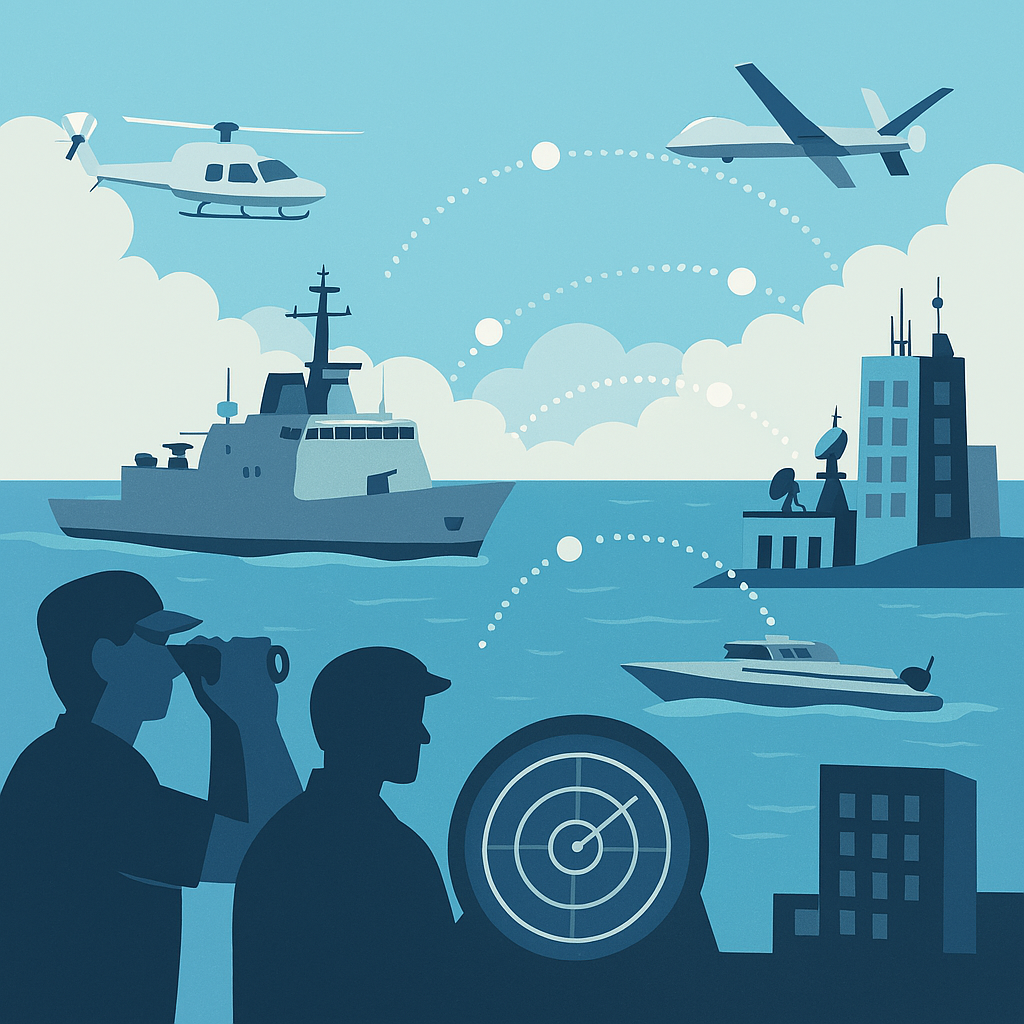
September 16, 2025 — A new operational framework has been launched to enhance maritime security in the Western Indian Ocean and Gulf of Aden, bringing together 21 regional states under the Djibouti Code of Conduct (DCoC) and its Jeddah Amendment (JA).
The framework, endorsed during the inaugural meeting of Working Group 3 on Operational Cooperation and Coordination at Sea in Mombasa (1–4 September), aims to transform regional security commitments into practical, coordinated action at sea.
Scope of the Framework
The initiative is designed to:
- Improve operational coordination among navies, coast guards, and law enforcement agencies;
- Enhance maritime domain awareness (MDA) by expanding information-sharing and strengthening national maritime information centres;
- Harmonize law enforcement and regulatory measures to counter piracy, armed robbery, smuggling, human trafficking, and illegal fishing;
- Facilitate joint or coordinated patrols, surveillance, and incident response across participating states.
By focusing on operational outcomes, the framework bridges a longstanding gap between policy development and implementation.
Broad Participation and Support
All 21 DCoC signatory states are included, with technical and financial backing from over a dozen international partners, including the International Maritime Organization (IMO), the Indian Ocean Commission, the Kingdom of Denmark, and UNITAR.
IMO Secretary-General Arsenio Domínguez hailed the framework as a “historic step that moves cooperation from commitments on paper to coordinated action at sea,” stressing its role in securing critical shipping routes in one of the world’s busiest maritime corridors.
Regional Significance
The Western Indian Ocean, encompassing the Gulf of Aden and approaches to the Red Sea, is a vital artery for global trade but remains vulnerable to piracy, trafficking, and illegal fishing. Officials highlighted that recent surges in regional instability, including spillovers from conflicts in the Red Sea, underscore the urgency of operational cooperation.
Julie Gascon, President of the Montreal Port Authority and participant in related IMO forums, noted that “ensuring maritime safety here directly impacts supply chain stability for economies worldwide.”
Challenges Ahead
While widely welcomed, the framework faces hurdles, including:
- Resource limitations among smaller coastal states;
- Differences in national laws governing maritime enforcement;
- Reluctance to share sensitive information due to sovereignty and security concerns;
- Sustainability of funding to maintain operations beyond donor cycles.
Analysts say that success will depend on how quickly the framework translates into real joint patrols, interoperable surveillance, and harmonized enforcement practices.
Next Steps
Working Group 3 will develop a roadmap to:
- Establish protocols for joint patrols and incident response;
- Expand national and regional MDA centres;
- Align legal frameworks to support cross-border operations.
The IMO confirmed that partners will continue to provide technical training and financial assistance to ensure long-term viability.
Tell us What is Happening in Your Area: Contact Maritime Context at: news@maritimecontext.com
