

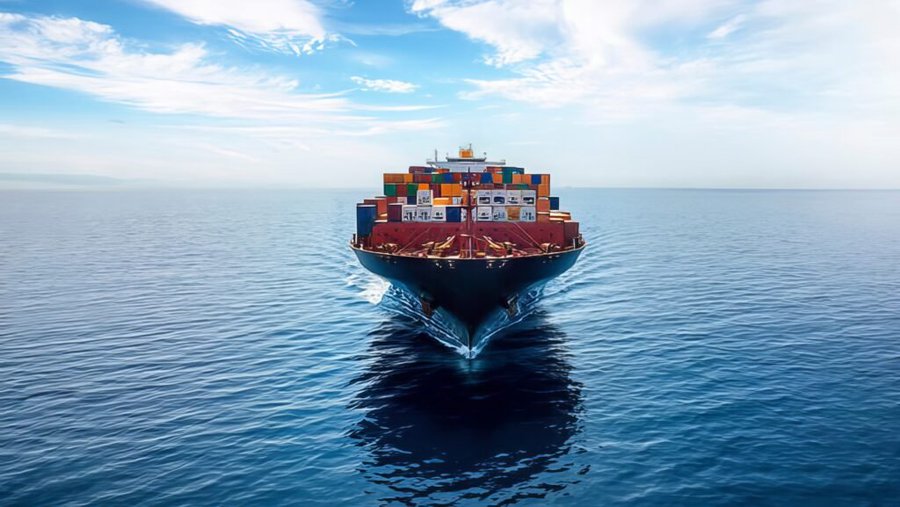
South Korea’s decision to launch a collaborative emission monitoring partnership is more than a technical exercise, it’s a strategic move that could reshape the way global shipping corridors evolve in the decarbonization era.
For years, the maritime industry has talked about cleaner fuels, zero-emission vessels, and port electrification. Yet, a fundamental question has lingered: how do we reliably measure the impact of these changes? Without precise emissions data, commitments to net-zero shipping remain aspirational. South Korea’s initiative directly tackles this gap.
From Reporting to Real-Time Accountability
Traditional emissions reporting has been fragmented, often based on estimates or delayed submissions. This system leaves room for inaccuracies and, in some cases, underreporting. By shifting to real-time monitoring, South Korea introduces accountability not just for shipowners but for ports, financiers, and regulators who depend on credible data to drive decisions.
For example, charterers increasingly demand proof of carbon performance before contracting vessels. A verified real-time monitoring system could become a differentiator in the global freight market, rewarding operators who invest in efficiency.
Catalyst for Green Shipping Corridors
South Korea is strategically positioned on major shipping lanes connecting Asia, the Middle East, and the Pacific. By integrating emission monitoring with its ports and shipping companies, it can lead the development of green corridors, dedicated trade routes where vessels operate under strict decarbonization protocols.
Partnerships with global counterparts, such as the Pacific Environment and the Korea Maritime Institute, suggest that South Korea sees monitoring not only as compliance but as a way to establish credibility in trans-Pacific and intra-Asia trade. This could help South Korean ports become anchor nodes in future green shipping networks.
Technology as the Differentiator
Emission monitoring is not simply about sensors on ships. It’s about integrating data streams—fuel consumption, weather routing, engine performance, and port operations—into unified dashboards. South Korea’s strength in digital innovation, AI, and shipbuilding places it in a unique position to turn monitoring into a competitive advantage.
By doing so, it may well set standards that others will follow. Much like how Korean yards shaped the evolution of LNG carriers decades ago, South Korea could now influence the global template for emissions transparency.
The Risk of Fragmentation
However, there is a caveat. If South Korea’s system is not harmonised with international frameworks such as the IMO’s Data Collection System (DCS) or the EU’s Emissions Trading System (ETS), there is a risk of fragmentation. Shipowners could face overlapping or conflicting requirements, which would complicate compliance and increase costs. Success will therefore depend on aligning domestic leadership with international consensus.
Conclusion
By investing in emission monitoring, South Korea is not only bolstering its own decarbonisation drive but also positioning itself as a leader in defining the rules of the game. Real-time transparency could become the passport to future shipping markets, where only the most accountable and efficient operators thrive.
If South Korea succeeds, it won’t just be monitoring emissions—it will be setting the pace for the world’s green shipping corridors.
Stay with us for verified, expert, and on-the-ground maritime journalism.
Contact: news@allinmaritime.com
Tel: +27 063 069 1191
Offices: Durban | Lagos | Abidjan | Dakar
All in Maritime News — Your Source for Maritime Intelligence
