

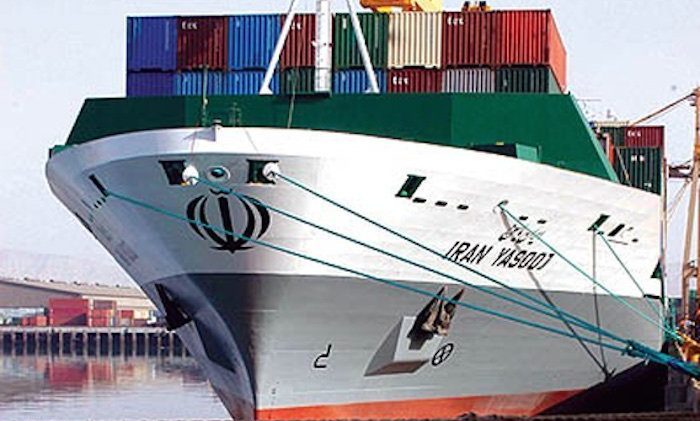
Iran’s merchant fleet has once again been targeted by hackers, with reports confirming that communications on dozens of vessels were disabled in a fresh cyberattack. The group responsible, known as Lab-Dookhtegan, also referred to as “Sewn Lips,” claimed responsibility for crippling ship-to-shore communication systems on 64 vessels, including both oil tankers and cargo carriers.
The hackers, who had previously struck earlier this year, said they gained access by exploiting vulnerabilities in the communications provider supporting Iranian shipping operations. Industry analysts believe the group compromised satellite terminals and automated control systems, effectively leaving many vessels unable to transmit or receive essential communications during critical naval maneuvers.
This incident mirrors the group’s earlier campaign in March, when they announced that they had disabled communications on over 100 Iranian tankers and cargo ships. In both cases, the hackers appear to have sought maximum disruption at moments when Iran was engaged in high-profile maritime or military activities.
Cybersecurity experts warn that the attack underscores the vulnerability of modern merchant fleets, which increasingly depend on digital networks and satellite connectivity to maintain operations at sea. Analysts note that these systems, while efficient, are also potential points of failure when targeted by highly coordinated cyber operations.
The Iranian incidents are not isolated. In recent years, the global shipping industry has faced an escalation of cyberattacks. In 2020, the Mediterranean Shipping Company (MSC) suffered a major ransomware attack that forced it to shut down key data systems for days. That same year, Carnival Corporation revealed it had been the victim of a cyber intrusion that exposed customer and employee data. Similarly, Maersk famously fell victim to the NotPetya malware in 2017, leading to one of the costliest cyber disruptions in maritime history, with losses estimated at over $300 million.
The repeated strikes on Iran’s merchant fleet highlight both the geopolitical dimension of cyberwarfare and the urgent need for stronger maritime cybersecurity measures. As vessels continue to rely on interconnected systems for navigation, cargo management, and safety, experts warn that the shipping industry must move faster to harden its digital defenses—or risk more incidents that could threaten global trade.
Stay with us for verified, expert, and on-the-ground maritime journalism.
Contact: news@allinmaritime.com
Tel: +27 063 069 1191
Offices: Durban | Lagos | Abidjan | Dakar
All in Maritime News — Your Source for Maritime Intelligence
