

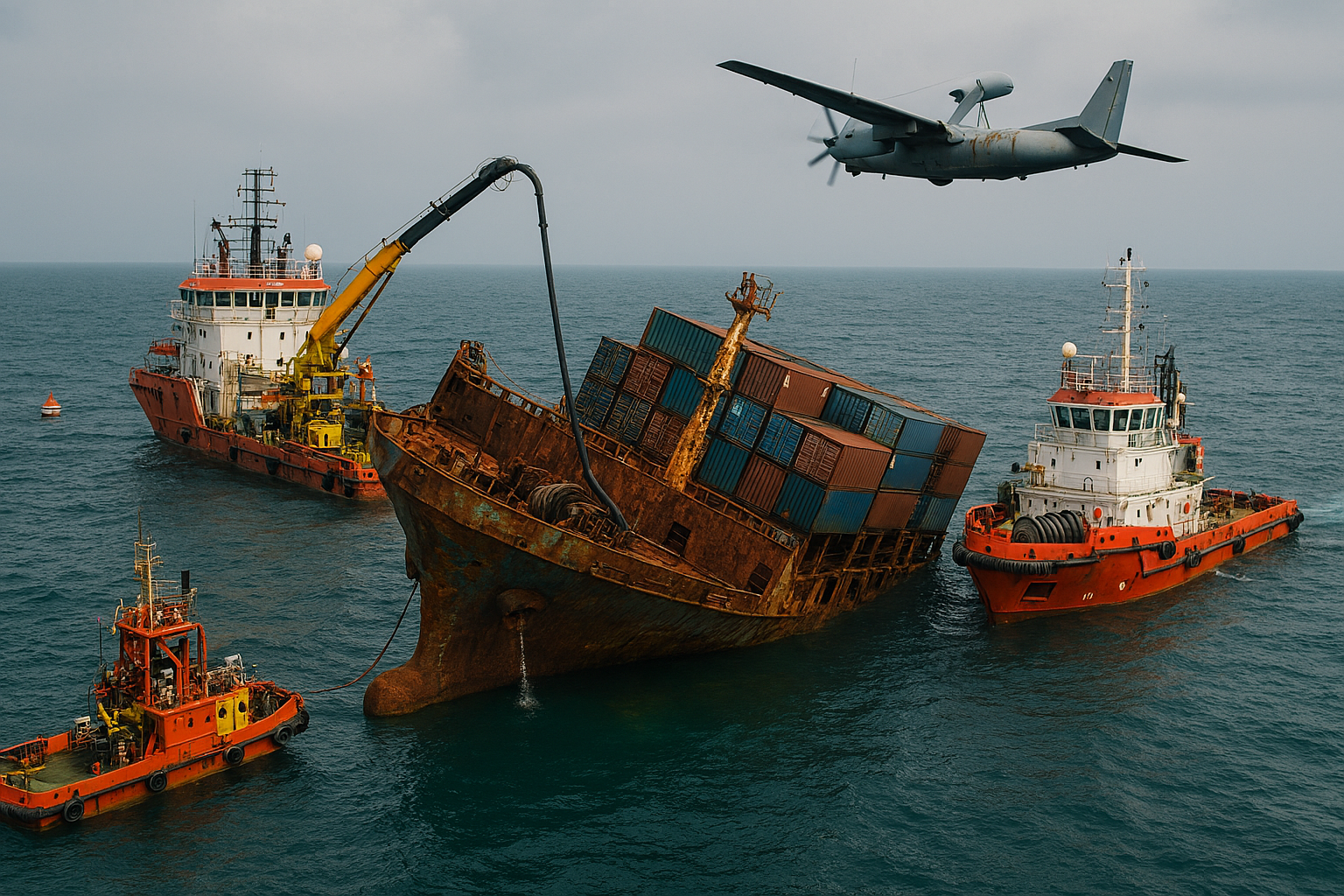
Kochi, India – August 22, 2025 — Salvage teams have entered a decisive phase in the recovery of fuel from the wreck of the MSC Elsa 3, even as legal disputes over liability and environmental damage intensify in Indian courts.
According to India’s Directorate General of Shipping (DGS), saturation diving operations began on August 20 to pump out the remaining 450 metric tonnes of fuel from the sunken containership. The vessel went down on May 25 about 14 nautical miles off the Kerala coast, carrying 650 containers and a mix of diesel and very low sulfur fuel oil (VLSFO).
Salvage Underway Amid Monsoon Risks
Specialist firm SMIT Salvage, appointed by MSC Mediterranean Shipping Company and its insurers, has deployed divers to tap into the fuel tanks at a depth of 51 meters (167 feet). The company is aiming to complete the extraction by September 25, though officials caution that monsoon conditions may force delays.
In July, operations were temporarily suspended after divers sealed leaking vents and ports to stem minor fuel seepage. Since the sinking, small oil traces have been spotted on the sea surface but largely dispersed due to wave action.
Authorities have set up a one-nautical-mile exclusion zone around the site, with Diving Support Vessels, pollution response units, and monitoring aircraft patrolling the area to guard against spills.
Environmental Fallout Spreads
The wreck has already caused widespread pollution. The DGS confirmed that 655 tons of plastic nurdles—tiny pellets used in plastic manufacturing—have been recovered from Kerala’s beaches. Containers and debris have also drifted across the Arabian Sea, with Sri Lanka reporting washed-up cargo along its shores.
So far, 66 containers have been retrieved after washing ashore, but hundreds remain unaccounted for on the seabed or adrift. Cleanup efforts continue along Kerala’s coastline, where fishing communities remain deeply affected.
Mounting Legal Pressure
The environmental and economic costs have sparked a wave of legal action. The Kerala state government has filed claims worth nearly $1 billion, seeking compensation for damages to fisheries, beaches, and livelihoods.
In response, MSC has petitioned Indian courts to limit its liability under the Maritime Shipping Act and international maritime conventions, arguing that the wreck lies outside India’s territorial waters and that Kerala’s damage claims are overstated.
The Kerala High Court has postponed hearings to September 16, directing the state to respond to MSC’s counterarguments. In the meantime, several MSC ships have been detained in Indian ports as security against claims. While four have been released after bonds were posted, the MSC Akiteta II has been stuck at Vizhinjam for over a month.
Global Shipping Accountability Under Scrutiny
The MSC Elsa 3 disaster has reignited debate over systemic flaws in global shipping. Analysts point to flags of convenience, fragmented ownership structures, and weak enforcement mechanisms, which often leave coastal states like India struggling to recover costs and respond effectively.
Critics also highlight the absence of Tier-1 salvage and spill response capacity at Indian ports, arguing that the country was ill-prepared for a disaster of this scale. Environmental experts warn that without significant reforms, India could face similar crises as vessel traffic continues to rise along its coastline.
Looking Ahead
For now, the focus remains on completing the delicate fuel extraction before worsening weather threatens operations. Officials stress that success would prevent a larger ecological catastrophe, but the legal and environmental aftershocks of the MSC Elsa 3 sinking are expected to reverberate long after the last drop of fuel is removed.
Stay with us for verified, expert, and on-the-ground maritime journalism.
Contact: news@allinmaritime.com
Tel: +27 063 069 1191
Offices: Durban | Lagos | Abidjan | Dakar
All in Maritime News — Your Source for Maritime Intelligence
