

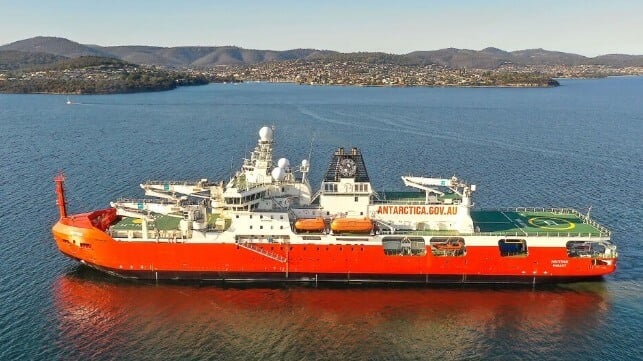
Australia’s cutting-edge icebreaker, RSV Nuyina, is preparing for two major scientific voyages to the remote Heard Island and McDonald Islands (HIMI), marking the first visits to these territories in more than two decades. The expeditions are expected to provide crucial insights into fragile ecosystems, climate change, and potential wildlife health risks.
Two Voyages Planned for 2025
The Australian Antarctic Program has confirmed that the first voyage will take place in September 2025 and last for around 10 days. A multidisciplinary science team including ecologists, glaciologists, and geospatial experts will participate. Their work will include seabird and seal surveys, glacial mapping, and the installation of satellite reflectors to improve geospatial tracking in the region.
A second voyage is scheduled for December 2025, lasting 25 days. This mission will focus more extensively on marine science, including bathymetric mapping, ecosystem monitoring, and the collection of baseline data that has been missing for decades.
Science and Environmental Priorities
The Heard and McDonald Islands are a UNESCO World Heritage Area, renowned for their pristine environment and unique biodiversity. Scientists are particularly interested in monitoring the effects of climate change on glaciers, assessing biodiversity shifts, and investigating the possible spread of highly contagious bird flu, which has recently been detected in other sub-Antarctic regions.
Annette Dunkley, Director of Protected Areas and Species at the Australian Antarctic Program, noted that the voyages are critical for updating management strategies for the islands’ ecosystems and marine reserve.
A Vessel Ready for Its Scientific Role
Launched in 2021, RSV Nuyina was designed as a multi-role platform capable of icebreaking, resupply, and advanced research. The ship features modern laboratories, a moon pool for deploying equipment beneath ice, large fuel and cargo capacity, and accommodation for more than 100 passengers alongside its crew.
In its early years, Nuyina was mostly used for station resupply missions and faced several technical setbacks, which delayed its full scientific deployment. However, a turning point came in early 2025, when the vessel successfully completed a nine-week marine science mission to the Denman Glacier, carrying more than 80 scientists and 45 crew to conduct glaciology, oceanography, and biology research.
Shifting to Dedicated Science Missions
The upcoming expeditions to HIMI represent a significant step forward. Unlike earlier voyages focused on logistics, these are dedicated scientific missions, allowing the ship to deliver on its promise as a world-class research platform. For Australia’s Antarctic science program, the data collected will be vital in guiding conservation and climate policy.
Strategic and Policy Significance
The new missions also come amid broader discussions about strengthening Australia’s Antarctic research capabilities. Policymakers have called for the potential acquisition of a second vessel to separate logistics from science operations, ensuring Nuyina can dedicate more time to research. Meanwhile, upgrades to Hobart’s port facilities are being carried out to better support the vessel and secure Tasmania’s role as the nation’s Antarctic gateway.
Looking Ahead
For the scientific community, the 2025 missions to Heard Island and McDonald Islands will provide long-overdue updates on one of the planet’s most isolated ecosystems. For Australia, they mark a milestone in shifting the $534 million icebreaker from logistical support to frontline climate and environmental science.
Stay with us for verified, expert, and on-the-ground maritime journalism.
Contact: news@allinmaritime.com
Tel: +27 063 069 1191
Offices: Durban | Lagos | Abidjan | Dakar
All in Maritime News — Your Source for Maritime Intelligence
