

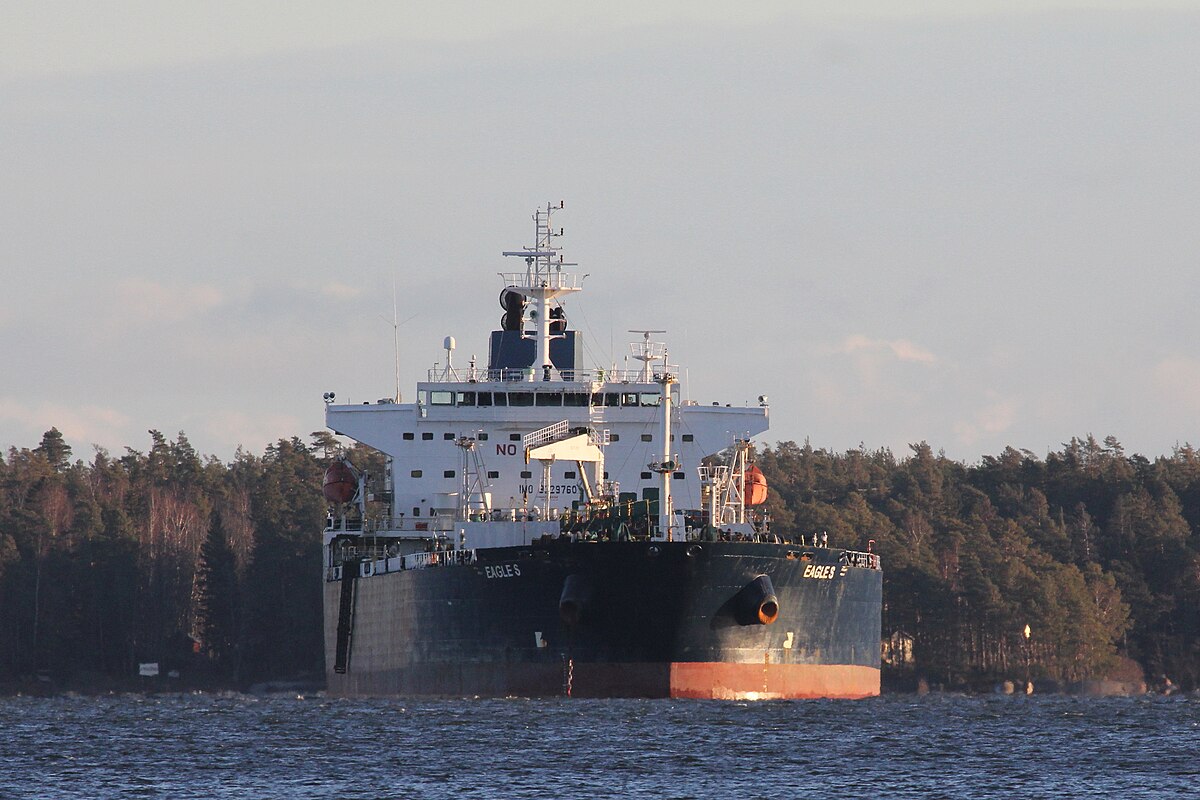
Helsinki, August 12, 2025 – Finnish prosecutors have filed landmark charges against three senior officers of the oil tanker Eagle S, accusing them of causing extensive damage to critical undersea infrastructure in the Baltic Sea. The defendants – the ship’s captain, first officer, and second officer – face charges of aggravated criminal mischief and aggravated interference with telecommunications.
The case stems from a December 2024 incident in which the Eagle S allegedly dragged its anchor for nearly 100 kilometres along the seabed between Finland and Estonia, severing five vital undersea cables. Among the damaged assets was the Estlink 2 power interconnector, a high-voltage cable supplying electricity between the two countries, along with four telecommunications cables carrying data traffic.
Incident and Damage Assessment
Investigators say the tanker’s anchor created a trench across the seabed, slicing through the infrastructure and leaving both physical and operational disruption in its wake. The total repair bill is estimated at €60 million, and while backup systems ensured that power and communications were rerouted to avoid blackouts or major service outages, officials warn the damage could have had far more serious consequences.
The repair work involved specialised cable-laying and repair vessels operating in challenging winter conditions, with engineers working round the clock to restore services. Estonian and Finnish grid operators confirmed that while the disruption was mitigated through alternative routing, both the cost and the vulnerability highlighted by the incident are matters of ongoing concern.
Defendants and Jurisdiction Dispute
The accused officers – nationals of Georgia and India – have denied all allegations. Their defence argues that the incident occurred in international waters, beyond Finland’s jurisdiction. Finnish prosecutors counter that the physical damage directly impacted Finnish territory and critical services, thereby granting the country the legal basis to prosecute.
Deputy Prosecutor General Jukka Rappe said that the scale of the damage and the strategic importance of the cables justified the charges. “This is not just a maritime accident,” Rappe stated. “The nature of the infrastructure involved makes it a matter of national and regional security.”
Links to the “Shadow Fleet”
The Eagle S, a Cook Islands–flagged vessel, had previously been linked to Russia’s “shadow fleet” – a network of ageing oil tankers used to circumvent Western sanctions imposed after the invasion of Ukraine. These ships often operate with limited transparency, engage in ship-to-ship transfers, and follow irregular routing patterns. The Eagle S had been sanctioned by the EU several months before the incident and was temporarily detained in Finland in December 2024 before being released.
Finnish authorities have not publicly alleged that the cable damage was deliberate sabotage, but the vessel’s background has fuelled speculation about hybrid threats in the Baltic Sea.
Strategic and Security Implications
This is the first time a NATO member has brought criminal charges against a commercial vessel’s officers for damaging subsea infrastructure. Security analysts say the case could set an important precedent for maritime law and for holding vessels accountable in cases where negligence or intent threatens national security.
The Baltic region has seen a string of incidents involving damage to pipelines and data cables in recent years, raising concerns about the vulnerability of undersea infrastructure to both accidents and hostile actions. NATO and EU countries have stepped up monitoring, deploying naval patrols and using seabed sensors to detect suspicious activity.
Finnish and Estonian officials have emphasised that the incident underscores the need for greater maritime surveillance and stronger international legal frameworks to protect energy and communication lifelines.
Next Steps
The case is expected to proceed to trial later this year. If convicted, the defendants could face lengthy prison sentences and substantial fines. The outcome will be closely watched by maritime operators, energy companies, and governments seeking to safeguard critical undersea infrastructure in an era of heightened geopolitical tensions.
