

August 4, 2025
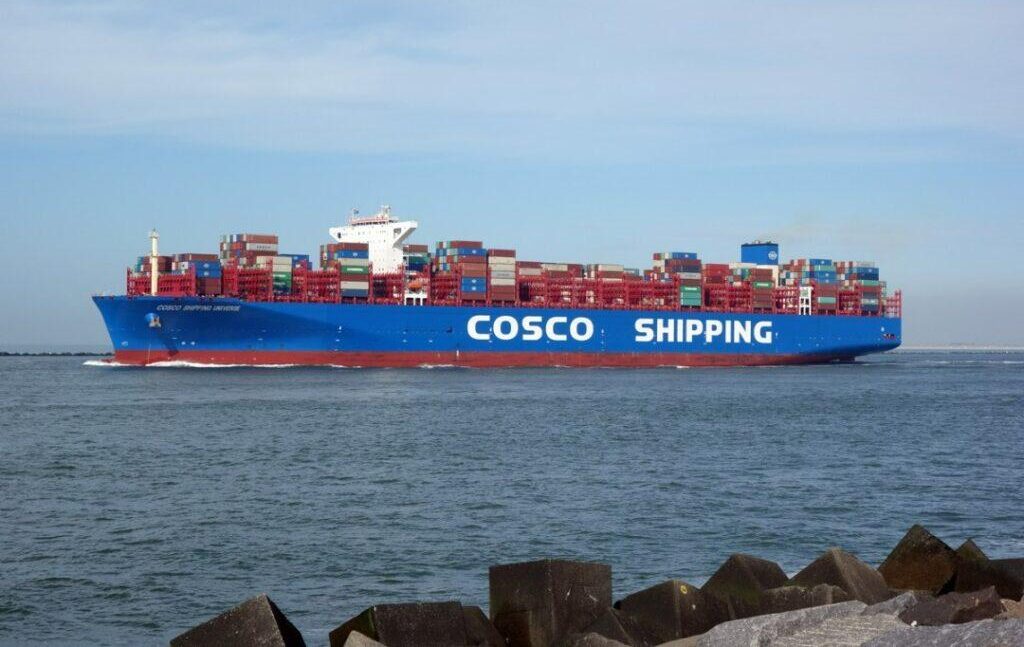
In a significant step that could reshape dry bulk shipping’s trajectory, COSCO Shipping Development has signed up for four ammonia- and methanol-ready Newcastlemax bulk carriers, part of a broader 10-vessel, $740 million order. The ships will be capable of being retrofitted to run on either green methanol or ammonia, aligning with the growing demand for cleaner marine fuels.
On the surface, it may seem like just another fleet renewal announcement. But in reality, this decision by one of the world’s largest shipping conglomerates is a clear signal: the era of speculative green fuel strategy is ending—and real action is beginning.
A Quiet Revolution with Global Implications
These vessels won’t run on green fuels from day one, but their “ready” status is significant. COSCO is betting on two of the most promising, yet technically challenging, marine fuels of the future: methanol and ammonia. While methanol has already gained traction with operators like Maersk, ammonia remains largely theoretical due to safety and handling issues.
Still, the message is loud: adapt or fall behind.
By designing new ships that can accommodate these fuels, COSCO is hedging wisely—keeping one foot in today’s operational reality and one in tomorrow’s zero-carbon paradigm. In doing so, it challenges other global carriers to stop dragging their anchors.
Global Ripple Effect: Can the Industry Keep Up?
Let’s not mistake this for a regional move. COSCO’s size and influence mean that such decisions carry global ripple effects:
- Ports and bunkering hubs from Singapore to Rotterdam will feel increasing pressure to invest in methanol and ammonia infrastructure.
- Smaller carriers, often already struggling with compliance costs, could be squeezed out or forced into expensive retrofits just to stay competitive.
- Shipbuilders will need to standardize dual-fuel design flexibility, reshaping the economics of vessel production.
This is not a one-off greenwashing press release. COSCO’s $740 million investment across two major shipyards shows long-term commitment, not just trend-following.
Risk of Fragmentation or Future-Proofing?
Some industry watchers are skeptical. Betting on two fuels at once—especially ones with very different technical demands—might sound like indecision. But I see it differently.
It’s realism.
No one knows which fuel will dominate by 2035. Methanol is easier to store and already used in limited capacity, but it still emits carbon unless made synthetically. Ammonia is zero-carbon at point of use but toxic and infrastructure-light.
By choosing ships that can convert to either, COSCO is future-proofing without overcommitting—a bold yet pragmatic stance that many will likely emulate.
Beyond Compliance—Toward Strategy
The IMO’s revised GHG strategy calls for net-zero emissions by 2050. Most carriers are treating it as a compliance headache. COSCO is treating it as strategic positioning. That’s the difference between reacting to regulations and shaping the future of maritime trade.
If others follow suit—as they likely will—the definition of a competitive shipping fleet will no longer be its cargo capacity or fuel efficiency alone, but also its adaptability to green fuel transitions.
A Word of Caution
Let’s be clear: “ready” does not mean “equipped.” These vessels will likely burn conventional fuels until green alternatives become economically and logistically viable. There’s a danger that the label could be used for PR points without meaningful follow-through.
However, readiness is still better than rigidity. And COSCO’s track record suggests they’re not just virtue signaling.
Final Take
COSCO’s order is not just about ships—it’s about setting a tone. A tone that says, “We’re not waiting for the perfect fuel—we’re preparing for all of them.”
That philosophy could be exactly what global shipping needs in this era of uncertainty. And if others take note, this bulker quartet could go down not just as a fleet addition, but as a turning point in how maritime giants think about sustainability.
Stay with us for verified, expert, and on-the-ground maritime journalism.
Contact: news@allinmaritime.com
Tel: +27 063 069 1191
Offices: Durban | Lagos | Abidjan | Dakar
All in Maritime News — Your Source for Maritime Intelligence
