

Baltimore, Maryland :
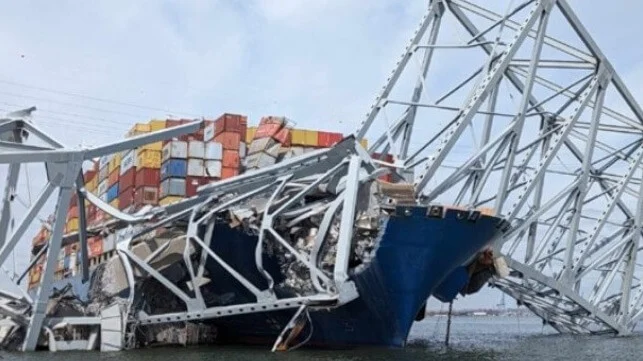
The owners and operators of the container vessel MV Dali have filed a lawsuit against Hyundai Heavy Industries (HHI), alleging that a manufacturing defect in the ship’s electrical systems was responsible for the catastrophic blackout that led to the collapse of Baltimore’s Francis Scott Key Bridge in March 2024.
Grace Ocean Private Ltd., which owns the Dali, and Synergy Marine Pte Ltd., the ship’s manager, filed the case in the U.S. District Court for the Eastern District of Pennsylvania. The lawsuit claims that Hyundai-designed switchboards installed on the vessel were inherently defective and improperly wired, ultimately leading to power failure and loss of control shortly after the ship departed from the Port of Baltimore.
According to the suit, the signal wires inside the switchboards were not properly seated within their terminal blocks. The complaint alleges that even under normal operating vibrations, the loose wiring triggered an under-voltage release trip, which cut power and caused the vessel to go dark. The ship lost propulsion and steering just moments before slamming into a critical support pillar of the Key Bridge, resulting in a total structural collapse and the tragic loss of six lives.
The plaintiffs argue that Hyundai failed to ensure the secure installation of these systems and that labeling materials interfered with wire connections, compromising the switchboard’s integrity from the start. They assert that the ship was “unreasonably dangerous” from the moment it left the shipyard.
This new suit comes as Grace Ocean and Synergy face mounting legal pressure from federal and state authorities. The U.S. Department of Justice and the State of Maryland have filed multiple claims against the two companies, accusing them of negligence and seeking over $100 million in damages to cover cleanup efforts, infrastructure loss, and economic disruptions caused by the bridge collapse.
Federal investigations have already revealed long-standing problems aboard the Dali. Previous incidents of excessive vibration, unreported electrical faults, makeshift repairs, and power losses had been documented both at sea and while docked. Investigators found that some of these issues were either ignored or inadequately addressed. In one instance, bolts had come loose due to vibration, and the crew resorted to temporary solutions instead of reporting the problems to authorities as required by maritime safety laws.
Legal experts believe the suit against Hyundai could shift part of the liability from the ship’s owners to the manufacturers, depending on what courts determine about the role of the electrical systems in the blackout. Grace Ocean and Synergy are seeking either indemnity or contribution from Hyundai for any damages they may be required to pay as a result of dozens of other lawsuits already filed—including those brought by the families of victims, cargo owners, and affected businesses.
Hyundai, one of the world’s leading shipbuilders, is expected to contest the allegations. However, if the court finds in favor of the plaintiffs, it could significantly reshape liability expectations in the shipbuilding industry, particularly concerning component safety and post-delivery accountability.
As the legal battles unfold, the Dali disaster remains one of the most impactful maritime incidents in recent U.S. history, having paralyzed one of the country’s busiest ports for months and drawn global attention to maritime safety, infrastructure vulnerability, and the intricate chain of responsibilities in global shipping.
Stay with us for verified, expert, and on-the-ground maritime journalism.
Contact: news@allinmaritime.com
Tel: +27 063 069 1191
Offices: Durban | Lagos | Abidjan | Dakar
All in Maritime News — Your Source for Maritime Intelligence
