

LAGOS, NIGERIA – AUGUST 1, 2025 — In a development that signals a powerful shift in China–Africa trade dynamics, Ningbo Ocean Shipping Co., Ltd. has officially launched its first dedicated breakbulk shipping service to West Africa, with Nigeria’s Apapa Port serving as its primary hub. The route is expected to transform the delivery of industrial cargo—including steel, transformers, machinery, and construction equipment—across a region accelerating toward large-scale infrastructure development.
The second voyage of the new service docked in Lagos on July 29, 2025, with the Xin Ming Zhou 27 discharging over 50,000 metric tons of project-critical materials. Originating from Rizhao, China, the vessel’s arrival represents more than just a cargo delivery—it represents a new logistical artery for West Africa’s industrial future.
Strategic Lift for West Africa’s Infrastructure Agenda
The route is designed for non-containerized, oversized, and heavy cargo, serving a demand long underserved by conventional shipping lines. As energy, transport, and industrial projects scale up across the region, the need for scheduled, reliable, and efficient breakbulk logistics has become increasingly urgent.
Port stakeholders in Lagos described the development as “quietly transformational.” The ability to import modular units, heavy vehicles, and structural steel directly from Asia—without transshipment delays—could shave weeks off project timelines.
The Breakbulk Challenge: Handling High-Stakes Cargo
Breakbulk shipping presents a different class of risk: high cargo value, irregular dimensions, tight discharge windows, and greater exposure to damage or delay. These risks make inspection, verification, and independent oversight absolutely critical—not just for cargo safety, but for commercial integrity, claims defensibility, and terminal flow.
While local handlers managed the latest call at Apapa, marine inspection professionals across Lagos were closely observing operations. Among them: the Lagos team of Observater Surveys and Services Ltd., one of Africa’s most respected authorities in steel cargo verification, marine claims support, and breakbulk inspections.
Though not formally involved in this shipment, Observater’s surveyors were present on the port and have been actively preparing for the rising frequency of such cargo arrivals.
“What we’re seeing is a shift in the rhythm of industrial imports,” said Eng. Patrick, senior surveyor with Observater’s West Africa division. “Lagos is becoming a true gateway for large-scale, high-value cargo. That raises the bar for inspection standards across the board—and we are absolutely ready for it.”
Inside the Experts Supporting West Africa’s Breakbulk Cargo Ecosystem
How Observater’s Presence at Apapa Is Helping Raise the Standards in Heavy Cargo Handling
As breakbulk volumes grow across Nigeria, the role of technical surveyors has become essential—not only during official inspections, but also as on-site watchdogs, advisors, and guardians of industry practice.
At the forefront is Observater Surveys and Services Ltd., whose Lagos-based inspection teams are embedded at terminals, supporting cargo owners, underwriters, port managers, and freight forwarders.
“Our presence here is permanent,” said Eng. Patrick. “We inspect steel, we document damages, we issue weight certificates, and when needed—we intervene to protect the chain of custody for some of the most sensitive cargo in West Africa.”
Observater’s Breakbulk Service Offering at Lagos Includes:
- Steel Cargo Inspection (coils, rods, plates, beams)
- Heavy Machinery Arrival Surveys
- Pre-shipment Verification and Weight Checks
- Lashing and Securing Reviews for Oversized Cargo
- Damage Assessment and Marine Claims Documentation
- Non-Destructive Testing (NDT) for critical load-bearing cargo
While not engaged in every breakbulk operation, Observater’s deep involvement in Lagos port activities positions it as a pillar of inspection credibility. The firm has worked extensively with regional and international clients on cargoes ranging from wind turbine components to transformers, from crawler trucks to modular refinery equipment.
“We monitor industry movements closely,” Patrick explained. “We knew this vessel was coming, and we studied the cargo profiles. We’re not just reacting—we’re preparing for the next five years of breakbulk growth in West Africa.”
Scaling Infrastructure Demands Drive Demand for Higher Standards
With Nigeria and its neighbors investing heavily in road, rail, power, and energy networks, the stakes are high for every imported beam, spool, or machine component. As schedules tighten and cargo complexity increases, even minor errors in handling or documentation can trigger major consequences—from insurance disputes to engineering failures.
That’s why stakeholders across the supply chain are turning to firms like Observater—not just for compliance, but for proactive cargo risk management.
“Breakbulk success isn’t just about ships. It’s about what happens the moment cargo hits the quay,” said a Lagos-based freight forwarder. “You need the right people on the ground—and Observater has been consistently there.”
A New Logistics Landscape in the Making
Ningbo Ocean’s breakbulk service may be the newest link in the maritime chain, but it joins a broader trend: the reorientation of Africa’s cargo flows toward more specialized, higher-value shipping—and the need for equally specialized oversight on the ground.
For the professionals watching from the terminals, weighing stations, and inspection platforms—like those at Observater—the message is clear: West Africa’s logistics are evolving. And success won’t be defined solely by cargo volume, but by the precision, credibility, and safety of every ton that moves through its ports.
West Africa’s Steel Appetite: Forging Growth Amid Logistical Hurdles
As West Africa undergoes a period of unprecedented economic transformation, steel has become one of the region’s most critical imports. The skyline of cities from Lagos to Abidjan and the sprawling infrastructure projects connecting nations are physical testaments to a surging demand for this foundational material. This insatiable appetite is reshaping maritime trade routes, placing immense pressure on port infrastructure, and creating a new set of complex, high-stakes logistical challenges that define the region’s path to industrialization.
The drivers behind this consumption boom are clear and multifaceted. Massive public investment in transportation networks—including railways, bridges, and highways—requires vast quantities of structural steel. Simultaneously, a burgeoning urban population fuels a private sector construction boom in residential and commercial real estate. The rapidly expanding energy sector further drives demand, with significant steel imports needed for pipelines, refineries, and power generation facilities. This convergence of development makes steel not merely a commodity, but the essential building block of West Africa’s future.
This torrent of steel flows through a handful of key maritime gateways. Nigeria’s Apapa and Tin Can Island ports, Ghana’s Port of Tema, Côte d’Ivoire’s Port of Abidjan, and Senegal’s Port of Dakar serve as the primary entry points. These hubs are not only crucial for their host countries but also act as vital transit corridors for landlocked nations like Mali, Burkina Faso, and Niger. While these ports are undergoing significant upgrades to boost capacity, the specialized nature of steel cargo often pushes their existing capabilities to the limit, creating bottlenecks that can ripple across the entire supply chain.
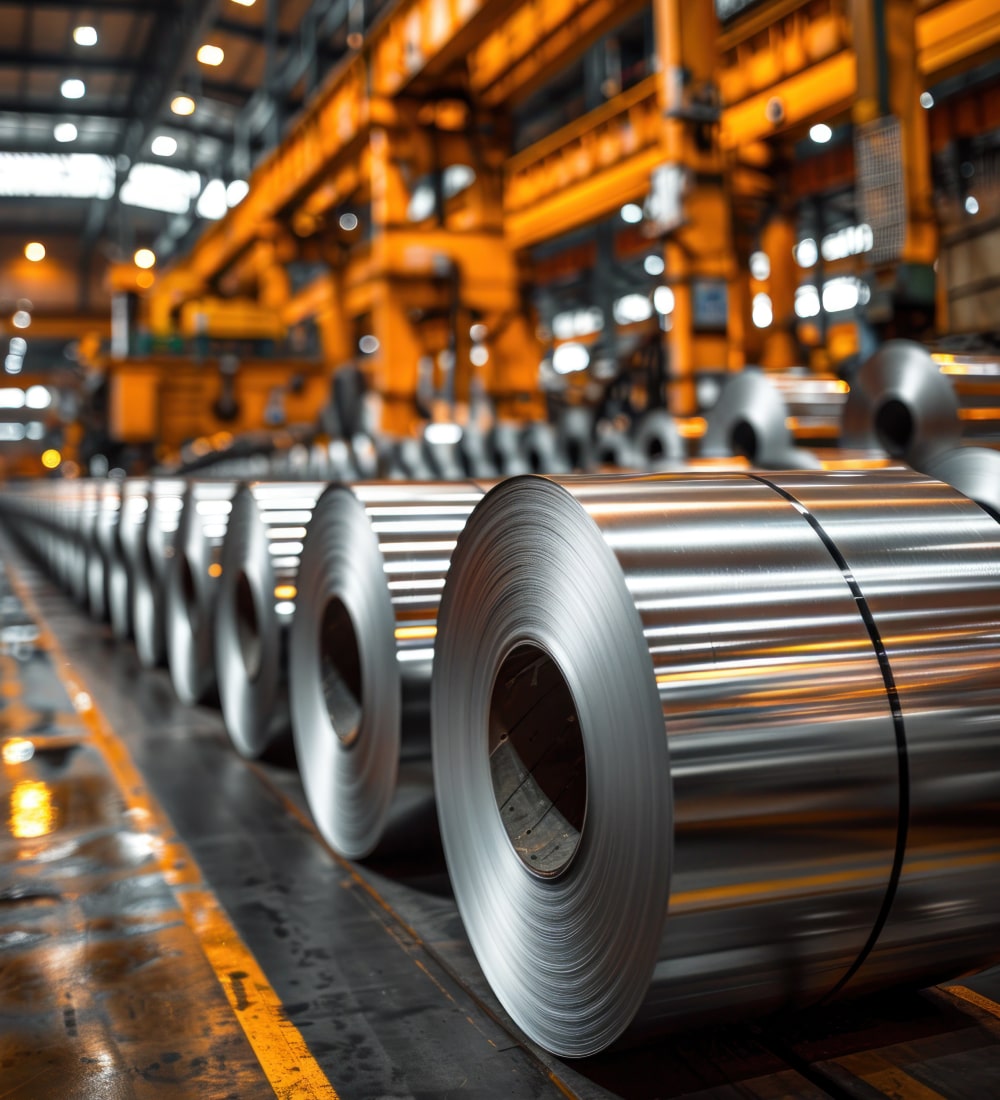
Handling steel cargo presents a distinct class of challenges that separates it from standard containerized goods. Steel products, whether coils, plates, or beams, are heavy, unwieldy, and highly susceptible to damage. Corrosion from saltwater exposure during transit or at the port can render entire shipments unusable for high-specification projects. Likewise, improper handling can cause dents, bends, and structural weaknesses. Furthermore, discrepancies in documentation regarding grade, weight, or dimensions are common, leading to commercial disputes and significant project delays.
The consequences of these risks extend far beyond the port gates. For a developer awaiting a specific grade of rebar or a government agency building a critical bridge, a damaged or incorrect steel shipment is a catastrophic failure. It can halt multi-million dollar projects, trigger penalty clauses, and cause severe financial and reputational damage. In this high-stakes environment, the integrity of each shipment is paramount, making the logistics of steel importation a matter of strategic national importance.
This is where proactive risk mitigation becomes a powerful competitive advantage. Rather than being viewed as a cost, a robust inspection and verification strategy is a crucial investment in certainty. It ensures that the steel procured is the steel that is delivered, free of defects and compliant with all technical specifications. This process protects the cargo’s value, strengthens insurance positions in the event of a claim, and, most importantly, provides project managers with the confidence needed to maintain tight construction schedules. It transforms the supply chain from a source of potential risk into a reliable, predictable asset.
Ultimately, as West Africa forges its future in steel, the sophistication of its logistical and quality assurance processes must evolve in tandem. The region’s success will be measured not only by the quantity of steel it can import but by its ability to do so efficiently, safely, and with verifiable quality. Building a foundation of trust and integrity, one shipment at a time, is the only way to ensure that the infrastructure of tomorrow is built to last.
Overview of Steel Trade in West African States (Estimates for 2025)
The table below provides an estimate of steel consumption and key import infrastructure across the 15 ECOWAS states and Mauritania.
| Country | Estimated Annual Steel Consumption (Metric Tons) | Primary Port(s) for Steel Imports | Approx. Annual Tonnage (All Cargo) | Notes |
| Nigeria | 11,500,000 | Apapa, Tin Can Island, Onne | > 35 million (Lagos Complex) | The dominant market, driven by massive infrastructure and real estate projects. |
| Ghana | 2,800,000 | Tema, Takoradi | > 20 million (Tema) | Strong industrial and construction sectors; key transit hub for landlocked nations. |
| Côte d’Ivoire | 2,100,000 | Abidjan, San Pédro | > 28 million (Abidjan) | Major economic hub and critical gateway for Burkina Faso and Mali. |
| Senegal | 1,500,000 | Dakar | > 18 million | Strategic location with a growing construction market and serves as a hub for Mali. |
| Cameroon* | 1,200,000 | Douala, Kribi | > 12 million (Douala) | Though Central African, a key trade partner and logistical player in the region. |
| Benin | 750,000 | Cotonou | > 12 million | Important transit port for Niger and Nigeria’s informal trade. |
| Togo | 600,000 | Lomé | > 22 million | A highly efficient deep-water port serving the Sahel region. |
| Mali | 550,000 | (Landlocked) | Via Dakar, Abidjan | Dependent on coastal neighbors’ port efficiency for its supply. |
| Burkina Faso | 450,000 | (Landlocked) | Via Tema, Abidjan, Lomé | Relies heavily on Ghanaian and Ivorian corridors. |
| Guinea | 400,000 | Conakry | > 5 million | Growth driven by mining and related infrastructure development. |
| Niger | 350,000 | (Landlocked) | Via Cotonou, Lomé | Political instability can impact trade routes and logistical reliability. |
| Mauritania | 300,000 | Nouakchott, Nouadhibou | > 6 million | Driven by mining and urban development. |
| Sierra Leone | 200,000 | Freetown | ~ 2 million | Post-conflict reconstruction and mining continue to drive demand. |
| Liberia | 180,000 | Monrovia | ~ 2.5 million | Rebuilding infrastructure is a primary driver of steel imports. |
| The Gambia | 120,000 | Banjul | < 1 million | Smaller market focused on tourism and residential construction. |
| Guinea-Bissau | 80,000 | Bissau | < 1 million | Limited industrial base; demand is for small-scale construction. |
| Cabo Verde | 70,000 | Praia, Mindelo | ~ 1.5 million | Archipelago nation; demand driven by tourism and marine infrastructure. |
For any updates reach us on: Africaports@allinmaritime.com Editorial Editors@allinmaritime.com
All In Maritime News – Your Trusted Source of Global Maritime Intelligence
