

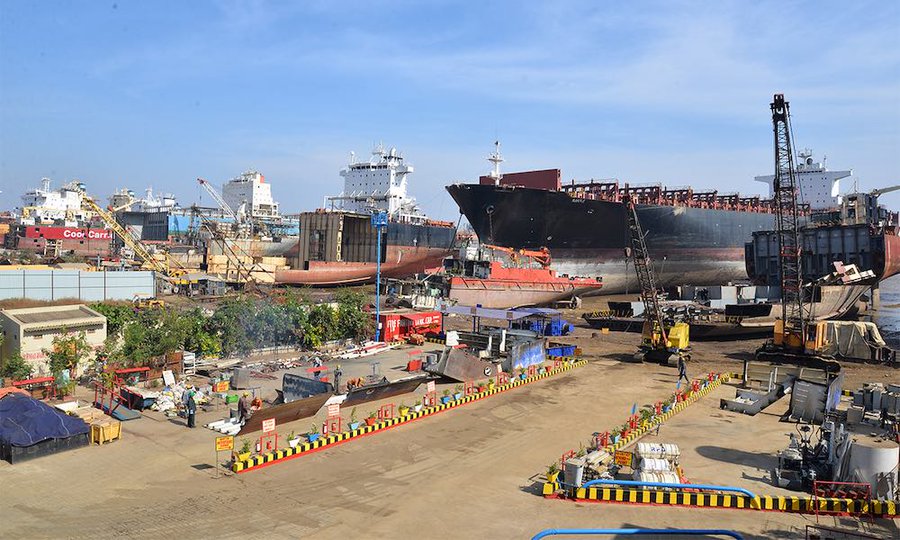
On June 26, 2025, coinciding with the entry into force of the Hong Kong International Convention for the Safe and Environmentally Sound Recycling of Ships (HKC), the world’s first International Ready for Recycling Certificate (IRRC) was formally issued. This certificate marks a significant milestone in the global effort to standardize and enforce responsible ship recycling practices.
The IRRC is mandatory under the HKC for all ships of 500 gross tonnage and above that are destined for dismantling in facilities located within HKC-ratifying countries. The certificate is granted after a final onboard survey confirms that the vessel’s Inventory of Hazardous Materials (IHM) is complete in Parts II and III, a ship-specific recycling plan is in place, and that the chosen recycling yard holds a valid Document of Authorization for Ship Recycling (DASR). Once granted, the IRRC allows the ship to undertake its final voyage to the recycling facility and remains valid for a maximum of three months.
This landmark certification introduces a globally recognized compliance pathway for end-of-life vessels, requiring shipowners to meet uniform standards for hazardous materials management and recycling planning. The IRRC adds a new layer of traceability and legal assurance for governments, insurers, cargo owners, and environmental authorities.
The issuance of the first IRRC is expected to have a profound impact on the world’s leading ship-owning nations, including Greece, Japan, China, Germany, Singapore, and South Korea. These countries, which collectively control a significant share of the global commercial fleet, now face the task of ensuring that all vessels approaching end-of-life comply with HKC procedures. Shipowners in these nations must proactively invest in IHM documentation, coordinate recycling plans well in advance, and select certified HKC-compliant recycling yards.
For European shipowners, the IRRC complements the existing EU Ship Recycling Regulation but may also raise legal and logistical concerns where there is overlap or conflict between HKC and the Basel Convention. Countries such as Norway and the Netherlands have already updated their national policies to align with HKC, while others are expected to follow.
Shipowners operating out of non-OECD countries, or planning to recycle vessels in South Asia, must also navigate the Basel Convention’s restrictions on hazardous waste exports. Although the IRRC satisfies HKC criteria, it does not override Basel obligations, particularly concerning transboundary movement. The IMO has issued interim guidance to address these regulatory conflicts, but legal ambiguity remains a concern in certain jurisdictions.
Global classification societies including DNV, Lloyd’s Register, and ClassNK have taken central roles in auditing and issuing IRRCs. These organizations urge shipowners to act early, prepare IHM documentation, and select authorized facilities to avoid compliance delays.
The broader maritime industry is expected to benefit from improved environmental oversight, reduced reputational risks, and a level playing field in global ship recycling practices. The IRRC sets a new precedent for transparency, safety, and environmental stewardship, marking the beginning of a more responsible era in ship decommissioning.
As the Hong Kong Convention begins full implementation, All In Maritime will continue to monitor compliance trends, industry adaptation, and policy shifts affecting global fleets.
Stay with us for verified, expert, and on-the-ground maritime journalism.
Contact: news@allinmaritime.com
Tel: +27 063 069 1191
Offices: Durban | Lagos | Abidjan | Dakar
All in Maritime News — Your Source for Maritime Intelligence
