

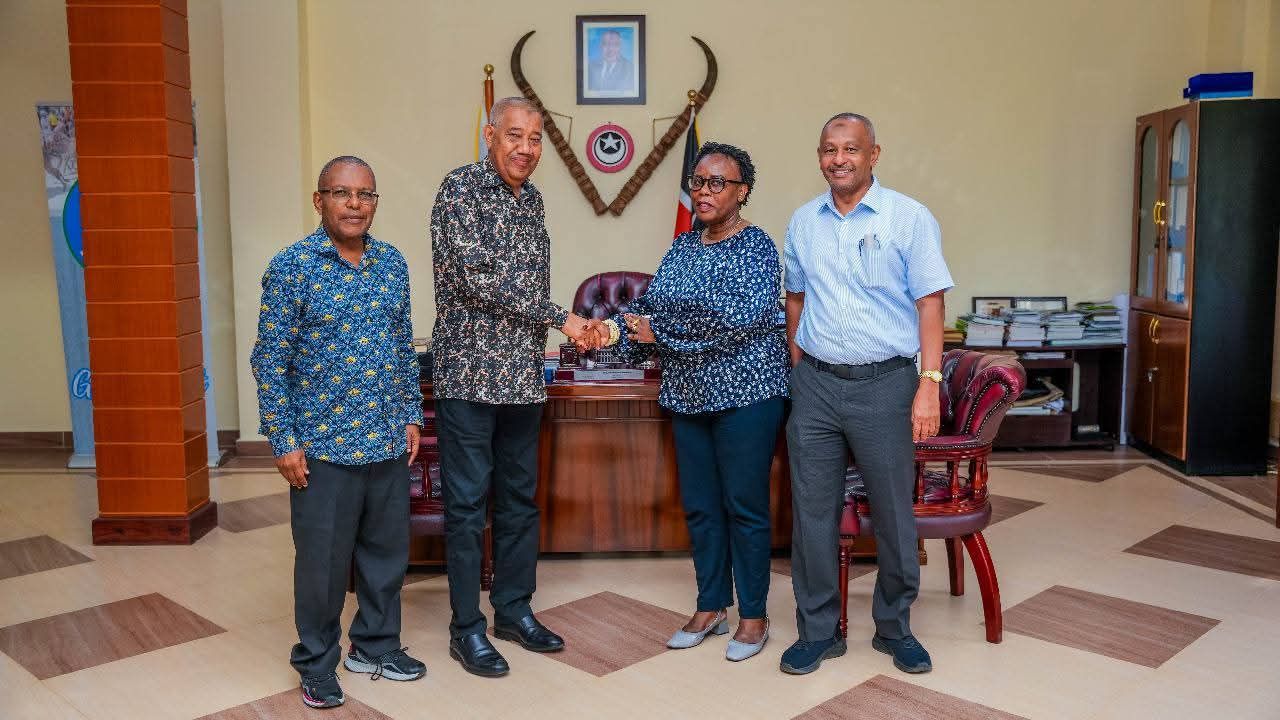
The Integrated Maritime and Inland Water Transport System (IMTS) project continues to gain traction as its implementation team engages county governments across Kenya to fast-track its rollout.
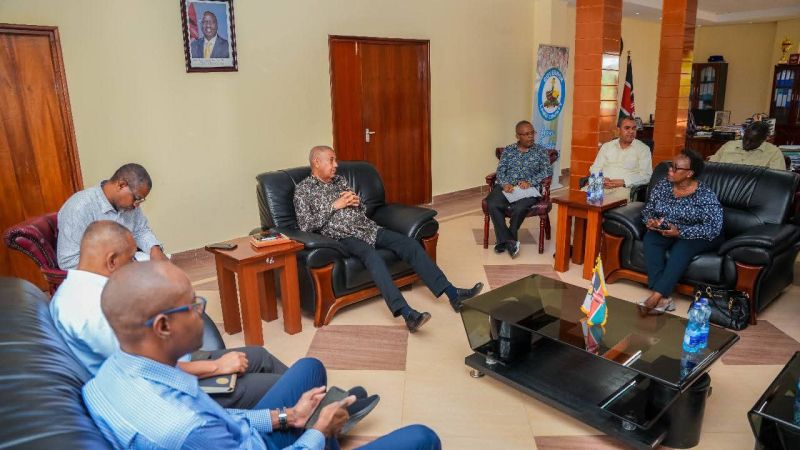
On Thursday, the IMTS committee, led by the General Manager for Corporate Research, Planning, and Compliance, Ms. Evelyn Chibule, held a high-level consultative meeting with Lamu Governor Hon. Issa Timamy. The discussions focused on the strategic role Lamu can play in the broader vision of integrated water transport connectivity.
Ms. Chibule and her team underscored the transformative potential of the IMTS project, which aims to position Lamu as a key maritime and inland water transport hub. The project is expected to significantly enhance connectivity, ease movement of goods and people, and boost regional trade and tourism.
Governor Timamy welcomed the initiative with optimism, calling it a “critical step toward sustainable economic development.” He emphasized the importance of improving transport infrastructure and safety in Lamu, particularly in light of the county’s growing profile as a gateway to East Africa.
In a show of broad governmental support, the IMTS team also paid a courtesy call to Lamu County Commissioner Mr. Wesley Koech. The commissioner lauded the project as a “game changer” that aligns with national development goals and responds to the region’s pressing need for safer, more reliable transport alternatives.
Later in the day, the delegation toured the Port of Lamu, a flagship development under the LAPSSET corridor program. They were received by the port’s new General Manager, Capt. Abdulaziz Mzee, who briefed the team on ongoing operations and future plans.
“We are preparing to receive several vessels in the coming weeks, signaling a new era for maritime trade and connectivity,” Capt. Mzee stated. He noted that the port’s development complements the IMTS vision and would help position Kenya as a logistics leader in the region.
The IMTS initiative is expected to reduce overreliance on road transport, cut logistics costs, and improve safety across Kenya’s inland and coastal waterways, while integrating counties like Lamu into the national and regional transport ecosystem.
