

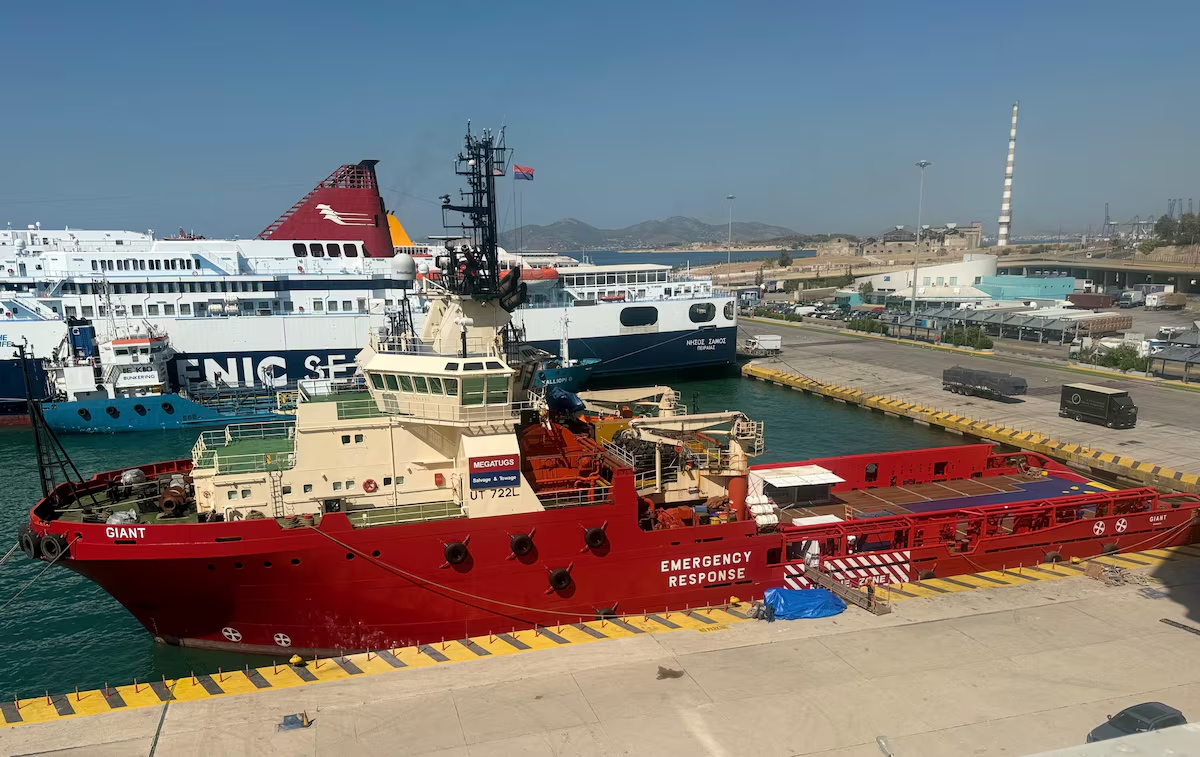
In a bold and unprecedented move, Greece has deployed the powerful salvage tug Giant to the troubled waters of the Red Sea, stepping in where international missions have fallen short. This decisive action comes amid a sharp resurgence in attacks by Yemen’s Houthi rebels, who have escalated their maritime campaign with deadly consequences for commercial shipping.
The move underscores Greece’s growing frustration over gaps in global maritime protection efforts and signals a more proactive role in safeguarding its fleet and seafarers in one of the world’s most vital—and now most volatile—shipping corridors.
Tragedy Sparks Action
The deployment follows two high-profile and deeply troubling attacks in early July. The MV Eternity C, a Greek-managed bulk carrier flagged in Singapore, was overwhelmed by a coordinated Houthi assault involving explosive-laden surface drones, aerial UAVs, and rocket-propelled grenades. The vessel sank in the Red Sea with four sailors confirmed dead and several others kidnapped or missing. Just days later, the MV Magic Seas, also operated by a Greek company, met the same fate. Thankfully, all crew were rescued in the second incident, but the message was clear: the Houthis were back with deadly intent.
These incidents shattered the brief lull in Red Sea hostilities and revived fears that the Houthi campaign—ostensibly in solidarity with Palestinians amid the Gaza conflict—was far from over.
Greece’s Answer: The Giant
As international efforts faltered—particularly the EU-led Operation Aspides, which had no assets in the area during the fatal strikes—Greece turned inward, taking matters into its own hands. The Ministry of Shipping, backed by the Hellenic Association of Tugboat Owners, mobilized the Giant, a top-tier salvage and rescue vessel designed for extreme maritime emergencies.
The Giant is no ordinary tug. It boasts four massive 16,000-horsepower engines, advanced firefighting capabilities, pollution control systems, and a high-capacity pump capable of discharging 7,200 cubic meters of water per hour. With room for up to 40 people, onboard medical facilities, and helicopter readiness, the vessel is fully equipped to conduct rescues, assist damaged ships, and respond to marine disasters—including potential oil spills or onboard fires.
Onboard is a 14-member Greek crew trained to execute emergency operations under hostile conditions.
“This is not just a salvage mission—it is a humanitarian and strategic imperative,” said a senior official at the Greek Ministry of Shipping. “We cannot stand by as our ships are sunk and our seafarers are left at the mercy of terrorists.”
A Void in Global Protection
The timing of the deployment highlights a critical vulnerability in international maritime security. Operation Aspides, the European Union’s mission to protect shipping in the Red Sea, was notably absent during the latest attacks. While the U.S.-led Operation Prosperity Guardian has carried out sporadic missile interceptions and drone takedowns, the sheer number and sophistication of Houthi attacks appear to be outpacing global response capabilities.
Robin Michael, a maritime surveyor at Observater Surveys and Services Limited, noted:
“This deployment shows that frontline shipping nations like Greece are no longer waiting for coalitions to catch up. They are protecting their own. It’s a practical, necessary response.”
Wider Implications
Greece’s decision to act independently raises larger questions about the future of maritime security in the Red Sea. With over 100 attacks on commercial ships since late 2023, and with two Greek-linked vessels sunk in a single week, the region is becoming increasingly untenable for shippers.
Major shipping lines had already rerouted vessels around the Cape of Good Hope, significantly increasing transit times and costs. Now, the risks have escalated from mere disruption to the loss of life and tonnage.
In East Africa and the Middle East, ports like Djibouti, Jeddah, and Port Sudan have seen surges in naval activity and insurance costs. The effects ripple out globally, from fuel prices to supply chain slowdowns.
Looking Ahead
The deployment of the Giant is a reminder that in the face of persistent threats, national action can sometimes be more agile than multinational bureaucracy. It also raises the bar for what a comprehensive maritime security response should look like—not just deterrence, but also preparedness for the aftermath.
Whether other countries will follow Greece’s lead remains to be seen. But one thing is clear: as the Red Sea becomes a testing ground for modern maritime conflict, Greece has thrown down the gauntlet with steel, horsepower, and resolve.
