

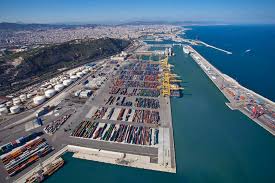
Barcelona, Spain
The Port of Barcelona, Europe’s busiest cruise hub, has announced a landmark agreement to reduce the number of its cruise terminals from seven to five by 2030, in a move aimed at curbing overtourism and mitigating the environmental footprint of mass cruise travel.
This strategic plan, jointly signed by the Barcelona City Council and the Port Authority, marks the first time the city has imposed structural limits on cruise traffic growth. The decision follows rising public pressure over congestion, air pollution, and the social impact of short-stay cruise passengers, particularly in the city’s historic core.
Key Measures Under the Agreement
The terminal restructuring involves the closure and demolition of Terminals A, B, and C, all located at the northern end of the Adossat Wharf. In their place, a new public cruise terminal will be developed on the site of Terminal C. Once completed, the port’s cruise operations will be concentrated at five terminals on the southern portion of Adossat Wharf, further from residential areas.
The project will reduce the port’s daily passenger handling capacity by approximately 16%, from 37,000 to a cap of 31,000. According to the Port Authority, each terminal will be limited to a maximum of 7,000 passengers per day.
€185 Million Investment Package
The transformation is backed by a €185 million public-private investment package:
- €50 million to dismantle Terminals A and B and upgrade the 610-meter quay.
- €90 million to expand the Porta d’Europa bridge, adding dedicated lanes for pedestrians and cyclists.
- €10 million for a new urban mobility corridor, improving access to and from the terminal area via public transport, bicycles, and taxis.
- Widespread deployment of onshore power supply (OPS) infrastructure, allowing cruise ships to plug into the electric grid while at berth, thereby eliminating at-dock emissions.
These investments build on more than €265 million already committed by the Port of Barcelona since 2018 for sustainable cruise infrastructure.
Balancing Tourism and Sustainability
Barcelona welcomed approximately 3.6 million cruise passengers in 2024. In the first five months of 2025 alone, the city recorded 1.2 million cruise arrivals—a 20% increase over the same period last year. Local authorities have grown increasingly concerned about the disproportionate impact of cruise tourism, particularly due to short stopovers that bring high footfall but minimal local economic return.
In a joint press briefing, Mayor Jaume Collboni emphasized the city’s commitment to redefining cruise tourism:
“This agreement represents a turning point. For the first time in Barcelona’s history, a ceiling is being placed on cruise growth to preserve the livability of our city.”
The Port of Barcelona’s president, Lluís Salvadó, noted that the reforms aim to shift toward “higher-value homeport operations”, encouraging passengers to begin or end their cruise in the city, thus extending their stay and stimulating the broader economy.
Timeline
The key milestones include:
- 2026: Closure of the Barcelona South terminal and demolition of Terminal C.
- 2027–2028: Construction of the new public terminal and removal of Terminals A and B.
- 2029: Completion of the expanded bridge and urban access corridor.
- 2030: Full implementation of the five-terminal model, in line with emission targets and mobility improvements.
City officials caution that while the infrastructure changes are immediate, the tangible reduction in visitor volumes may not be felt until the new system is fully operational in 2030.
Broader Context
Barcelona joins a growing list of European port cities—including Amsterdam, Palma de Mallorca, and Venice—taking concrete action to regulate cruise traffic as part of broader environmental and urban sustainability agendas.
The new strategy positions Barcelona not only as a leader in Mediterranean cruise tourism but also as a benchmark for responsible and balanced port-city development.
