

MOMBASA, KENYA – As East Africa’s ports adopt tighter enforcement of the International Ship and Port Facility Security (ISPS) Code, attention is increasingly being paid to another, less visible—but equally critical—aspect of maritime safety: ship stability during port operations.
While ISPS measures focus on securing facilities from external threats, ship stability is what protects vessels, cargo, port equipment, and human life from internal structural failure and collapse—often without warning.
To explore this vital topic from the field, All in Maritime News correspondent Jared Ogolla spoke to Eng. Daniel Esilaba, Senior Marine Surveyor and Naval Engineer at Observater Surveys, during a recent series of complex discharge operations at the Port of Mombasa.
The Interview: Balancing the Unseen
Jared Ogolla (All in Maritime News):
Engineer Esilaba, we often hear about ISPS, cargo documentation, and port safety drills. But ship stability feels more like a technical sidebar. Why is it so central to maritime safety?
Eng. Daniel Esilaba:
That’s precisely the problem, Jared. Ship stability is often invisible—until it fails. What many overlook is that when a vessel is alongside a berth, the risks related to stability are not reduced—they’re simply different. You have cranes transferring immense weights asymmetrically, you have ballast tanks being adjusted live, and you have free surface effects building in partially filled tanks. If stability isn’t maintained every second, it can trigger a dangerous list, structural deformation, or even capsize. And once that happens, no ISPS compliance or documentation can save the situation.
Jared Ogolla:
What’s an example where you had to manage or investigate a serious stability-critical situation at Mombasa?
Eng. Daniel Esilaba:
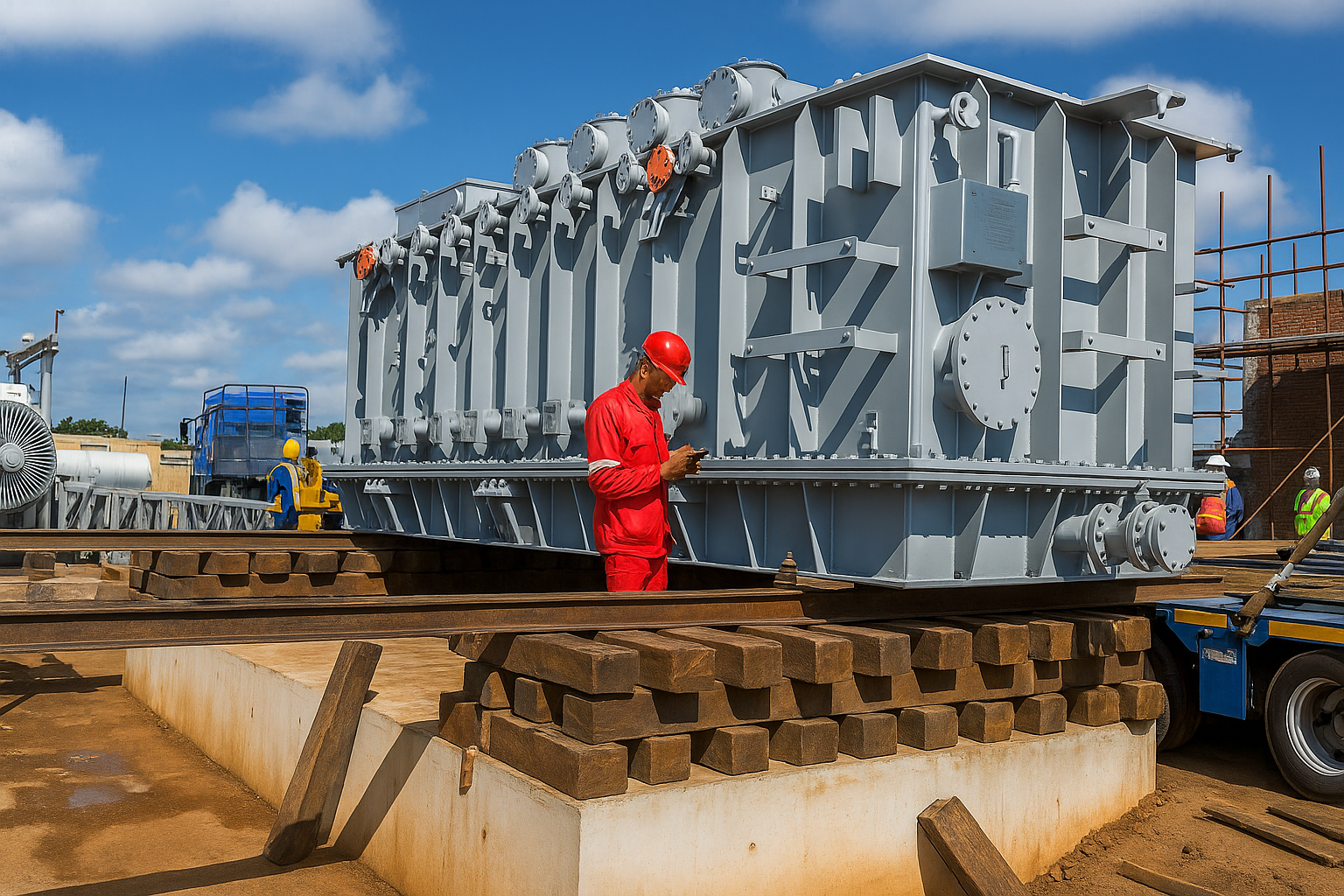
One particularly critical operation involved the discharge of six high-voltage power transformers—each weighing over 120 tons—destined for an energy infrastructure project in Uganda. These were loaded midship on a heavy-lift vessel, with a very high center of gravity. The wrong discharge sequence could have shifted the vessel’s center of mass and induced a sudden heel.
Before operations began, our team conducted a full pre-discharge stability assessment, including simulations using the vessel’s stability software, cross-checks with her stability booklet, and multiple what-if scenarios. We had to instruct on exact crane sequence, port and starboard compensations, and live monitoring of ballast tanks.
The situation became even more delicate because one transformer was stowed forward of the main hold, slightly offset from the ship’s centerline. That alone introduced a horizontal moment we had to correct with dynamic ballasting. Without that correction, the vessel could have listed several degrees—and at that scale, even two degrees is operationally dangerous.
Jared Ogolla:
How does this work continue after the vessel departs the berth?
Eng. Daniel Esilaba:
That’s a good question. After discharge, we conducted post-operation stability evaluations to verify that the ship remained within safe trim and heel limits for departure. Even lightship weight conditions must be revalidated. Once the vessel sailed, I personally joined the land-based convoy as a technical escort for monitoring.
Jared Ogolla:
And that’s where your journey across Kenya and Uganda began?
Eng. Daniel Esilaba:
Exactly. The cargo was destined for interior substations in Uganda, and the route involved cross-border transport, hills, bridges, and tight towns. We moved at 20 kilometers per hour for days. What struck me most wasn’t just the technical complexity—it was how much I saw. I’ve driven those highways dozens of times at high speeds. But this time, I got to absorb Africa—the escarpments, the villages, the morning mist in the Rift Valley. I saw not just infrastructure being moved—but transformation in motion.
But I also saw how few African ports are truly equipped for such operations. Mombasa handled it— there is need of investment in capacity for even more heavier cargo. Many ports don’t yet have reliable ballast infrastructure, dockside monitoring, or enough awareness of stability physics. That gap must be closed urgently.
The Stability Challenge: What’s at Risk
Ship stability during port operations is governed by a complex balance of:
- Cargo weight distribution
- Ballast tank volume and configuration
- Trim and heel conditions
- Free surface effect from liquid motion in tanks
- Environmental forces (wind, tide, swell)
Failure to manage these can result in:
- Capsizing or severe listing
- Cracks or stress fractures in hull plating
- Cargo damage from shifting or collapse
- Collisions with quay cranes or fenders
- Delays, lawsuits, and costly repair operations
Key Mitigation Measures
According to Eng. Esilaba, effective stability control requires:
- Stability simulation prior to and during cargo operations
- Real-time ballast adjustment planning
- Minimizing free surface in slack tanks
- Cross-discipline coordination between ship officers, port engineers, and marine surveyors
- Post-discharge recalculation for safe departure
- Independent surveyor oversight for high-risk cargo
A Continental Wake-Up Call
While Dakar Port has made strides—investing in heavy-lift cranes and dockside stability management tools—many other ports across Africa still lack baseline capability. From insufficient ballast protocols to outdated gangway management, gaps persist.
“We need to treat ship stability with the same seriousness we give customs clearance or ISPS inspections,” said Eng. Esilaba. “It’s a safety system, not an optional step.”
Final Word from the Field
“Ship stability is a quiet discipline,” Esilaba concluded. “But every safe discharge, every upright vessel, every container that makes it to its owner—it all depends on stability being there, working in the background, uncompromised. If we ignore it, everything else can fail.”
About Observater Surveys
Operating across Africa’s major ports, Observater Surveys provides professional ship stability audits, ballast management oversight, cargo damage inspections, and engineering consultancy for high-value, sensitive cargo.
Active locations:
Mombasa | Dar es Salaam | Djibouti | Maputo | Beira | Port Sudan | Nairobi | Berbera
Contact:
Email: ops@observater.com
Web: www.observater.com
Continue Exploring With All in Maritime News
At All in Maritime News, we remain committed to unpacking the future of global logistics, marine trade, and port innovation across Africa and beyond. Follow us for more expert insights, data-driven investigations, and sector-shaping commentary.
Contact the newsroom: editor@allinmaritime.com | www.allinmaritime.com
