

Germany | July 3, 2025 — All in Maritime News
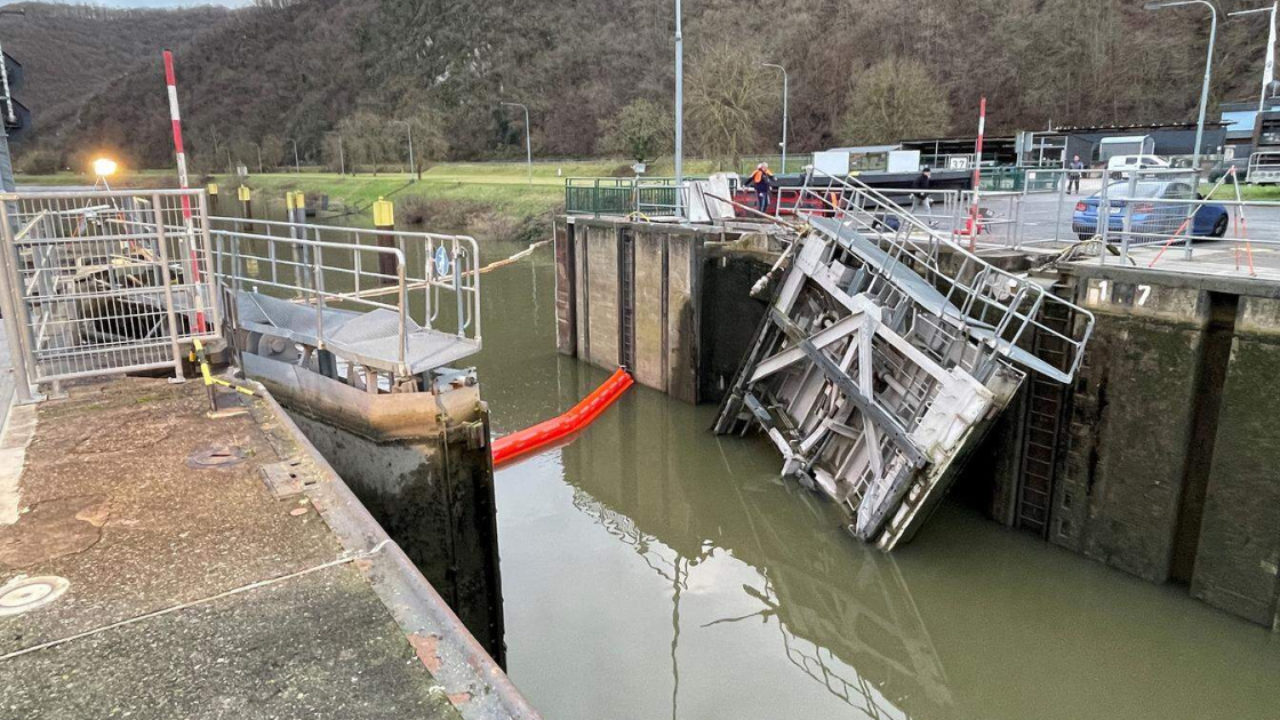
A critical segment of Europe’s inland waterway network has been brought to a halt following a serious infrastructure incident. On July 2, 2025, a passenger vessel collided with the Sankt Aldegund lock, situated between Koblenz and Trier, causing structural damage that has rendered the lock impassable in both directions. The Mosel River—a major commercial route connecting Germany to France—has since suspended all freight navigation.
Authorities from Germany’s Federal Waterways and Shipping Administration (WSA) have confirmed the shutdown and initiated damage assessments. Though no injuries have been reported, the economic and logistical fallout could be substantial.
Incident Summary and Official Response
- A passenger vessel impacted the lock gates during transit.
- Commercial vessels carrying commodities such as grain, rapeseed, and building materials are stranded on both sides of the lock.
- The lock’s mechanical systems and structural elements are currently being inspected for damage severity.
- No timeline for reopening has been officially provided.
This is the second major lock incident in less than a year. A similar closure occurred in December 2024 at a downstream lock, which remained non-operational for over two months.
Economic Fallout and Logistical Implications
A. Agricultural and Bulk Cargo Halted
The Mosel is a critical corridor for agricultural exports, particularly grain and rapeseed heading toward inland France. With the river blocked, hundreds of thousands of tonnes of cargo risk stagnation, potentially affecting prices, supply agreements, and downstream processing industries.
B. Shift to Road and Rail
Logistics operators have already begun rerouting shipments via trucks and railways. However, infrastructure limitations—combined with peak summer agricultural demand—mean delays and elevated transport costs are inevitable.
C. Carbon Emissions Surge
One of the Mosel’s primary advantages is environmental: barges move cargo with significantly lower emissions. The modal shift to trucks is expected to raise CO₂ emissions by 0.2–0.3 tonnes per tonne of cargo per 100 km.
Technical Challenges in Lock Repair
Repairing lock infrastructure involves a complex set of engineering and logistical tasks:
- Deformation of gate hinges and potential hydraulic damage
- Structural integrity checks on both upstream and downstream sealing systems
- Coordination with federal and EU authorities for design approval and safety oversight
- Procurement of specialized components, cranes, and skilled labor
Given the complexity, experts suggest a reopening could take several weeks, potentially months, depending on final assessments.
Global and Strategic Significance
1. Infrastructure Fragility in Inland Waterways
This incident highlights the increasing vulnerability of Europe’s inland transport systems, many of which rely on aging locks and dams built decades ago. The Mosel’s closure could signal the need for accelerated modernization across similar arteries, including the Rhine, Danube, and Elbe.
2. Time Sensitivity of Seasonal Trade
Unlike winter slowdowns, a mid-summer closure strikes during a crucial logistics window for agriculture and construction—industries that are both time- and volume-sensitive.
3. Planning and Resilience for Climate Change
With Europe facing more volatile weather conditions, inland waterway systems must be reinforced for both climate resilience and mechanical reliability.
Lessons and Relevance for Africa and Emerging Regions
For developing regions where inland waterways are under expansion—such as Nigeria (Niger River), Egypt (Nile Corridor), Mozambique (Zambezi), and Uganda (Lake Victoria system)—this incident provides critical lessons:
- Importance of regular lock inspections and redundancy protocols
- Need for skilled inland engineering expertise and local maintenance capacity
- Necessity of backup logistics (rail and road) in case of river closures
- Real-time communication channels between port terminals, ship operators, and authorities
Eng. Daniel Esilaba, Managing Director of Observater Surveys & Services Ltd, emphasized:
“This incident on the Mosel is a mirror for Africa. If we’re to build sustainable inland logistics, we must treat maintenance and risk redundancy with the same seriousness as construction. The price of oversight is far lower than the cost of disruption.”
Strategic Implications for Port and Trade Stakeholders
For Port Operators
- Monitor inland congestion and anticipate delayed cargo arrival
- Adjust berth scheduling for bulk and general cargo
For Cargo Owners and Forwarders
- Notify clients of revised delivery timelines
- Explore short-term contracts with road and rail service providers
For Regulators and Planners
- Conduct engineering audits of aging infrastructure
- Develop integrated inland-rail-port risk frameworks
- Budget for emergency repairs and interim capacity upgrades
Next Steps and Market Watch
Germany’s Federal Waterways and Shipping Administration is expected to release preliminary damage findings by the end of this week. Emergency procurement of replacement parts and deployment of mobile cranes to the lock site are being arranged.
All in Maritime News will continue to provide updates as the situation unfolds, including:
- Lock repair progress reports
- Impact analysis for commodities traders
- Regional case studies on lock redundancy and infrastructure resilience
- Africa-focused inland transport readiness reports
For continued coverage on LPG, LNG, and port infrastructure across East Africa, stay with All in Maritime News.
Contact: news@allinmaritime.com
Tel: +27 063 069 1191
Offices: Durban | Dar es Salaam | Nairobi | Dubai
Website: www.allinmaritime.com
All in Maritime News — Your Source for Global Maritime Intelligence
