

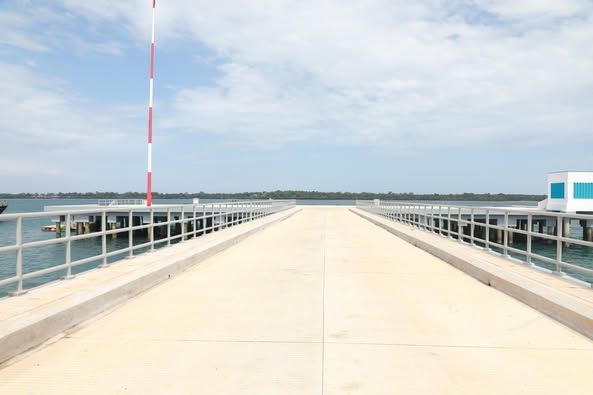
July 2025 – Shimoni, Kwale County, Kenya
Kenya Commissions the Shimoni Fish Port: A New Era for Africa’s Blue Economy
Kenya’s coastal transformation has taken a major leap forward with the official completion and commissioning of the Shimoni Fish Port, a strategic project by the Kenya Ports Authority (KPA). Now fully operational, this state-of-the-art facility is expected to boost global food security, create thousands of blue economy jobs, and position Kenya as a key player in sustainable marine exports across the Indian Ocean, Europe, and Asia.
1. World-Class Infrastructure Now Operational
Purpose-built to handle trawlers, mid-sized fishing vessels, and light coastal ships, the completed port now features:
- A 75 × 30 m multipurpose berth, 135 m causeway, and 8 m draft channel
- Modern cold storage units, industrial ice plants, and high-capacity fish-processing halls
- Reefer-ready container yards, fish auction platforms, and fuel bunkering docks
The port is expected to support over 50,000 MT of annual fish throughput—a fivefold increase from previous landings in the region, unlocking new revenue potential for Kenya’s fishery sector.

2. 3,000+ Jobs and Economic Uplift for Coastal Communities
Now operational, the port is already creating direct employment for more than 3,000 workers, with an additional 12,000+ indirect jobs expected across:
- Artisanal and cooperative-based fishing
- Processing, cold chain logistics, and export packing
- Transport, marine services, and stevedoring
- Eco-tourism and aquaculture-linked support services
KPA and government agencies are also rolling out targeted skills development and inclusion programs for women and youth—a key tenet of Kenya’s national Blue Economy strategy.
3. Advancing Global Food Security and Export Growth
With its strategic Indian Ocean location, Shimoni is designed to feed global demand for high-protein seafood from the UAE, China, Europe, and beyond.
- Kenya’s fish exports grew from 10,875 MT in 2021 to 13,624 MT in 2022, generating over $40 million in revenue.
- Shimoni’s cold-chain, export-certified operations will significantly grow this, supporting SDG 2 (Zero Hunger) while enhancing resilience in food systems.
By enabling quality-driven marine harvests—tuna, prawns, octopus, snapper—the port secures Kenya’s position as a reliable seafood exporter at a time when global fish stocks face climate-related pressures.
4. Shimoni’s Regional Footprint: From Kenya to Comoros
Beyond domestic gains, the port is emerging as a regional hub for seafood trade, cold-chain logistics, and marine services—linking Kenya to:
- Northern Tanzania, Northern Mozambique, Comoros, and Seychelles
- Marine research & training via planned partnerships with KMFRI
- Higher-value global markets for fishers from Wasini Island, Lamu, and other coastal areas
Together with expanding facilities at Liwatoni (Mombasa) and Lamu, Shimoni forms a tri-port ecosystem positioned for long-term marine export dominance.
5. Presidential Backing and Enabling Policy Landscape
The commissioning of Shimoni is a major milestone in Kenya’s Blue Economy vision, backed at the highest levels of government:
- President William Ruto hailed the port as a “transformational project” for food security and export growth.
- Deputy President Prof. Kithure Kindiki, CS Hassan Ali Joho, and PS Betsy Njagi championed integration of local communities and investor facilitation.
- KPA Chair Captain William Ruto confirmed that cold-chain systems, auction yards, and reefer exports are now live.
The port complies with Kenya’s Fisheries Management and Development Act, ensuring top-tier standards in processing, traceability, licensing, and sanitary export certification.
6. Exports & Species Driving Kenya’s Seafood Surge
Kenya’s marine export profile has grown stronger with demand for:
- Tuna & skipjack – driven by global sashimi, frozen, and canned tuna markets
- Prawns & shrimp – popular in European and Asian gourmet seafood sectors
- Octopus & snapper – highly sought after in Gulf States, EU, and Asian countries
Reefer containerization is now standard at Shimoni, reducing spoilage, increasing traceability, and opening new doors to premium buyers.
Expert Commentary: Observater Surveys & Services Ltd on Fish Export Inspections
As part of our coverage, All in Maritime News spoke with Ms. Josephine Otieno, Senior Surveyor and Cold Chain Compliance Lead at Observater Surveys & Services Ltd, a recognized authority in East Africa’s marine inspection field.
“Modern seafood export operations demand precision, hygiene, and traceability across every stage—from landing to loading,” Ms. Otieno noted. “At Observater, we support exporters, logistics providers, and government agencies with the full suite of internationally benchmarked inspection protocols.”
She detailed Observater’s specialized inspections, aligned with EU, GCC, Chinese, and East Asian regulations:
Core Observater Inspection Protocols:
- Pre-shipment quality surveys (spoilage, contamination, traceability)
- Cold chain audits with infrared thermometers, data loggers, and reefer PTI reviews
- Sanitation and HACCP conformity checks
- Reefer container loading supervision and sealing
- Destination port follow-ups and claims dispute documentation
“These inspections are not just procedural—they are critical for cargo acceptance in Europe and Asia. At Shimoni and other ports, we ensure compliance, reduce loss risks, and support exporters with documentation that withstands scrutiny,” she emphasized.
7. Looking Ahead: Investment, Oversight & Marine Sustainability
The Shimoni Port’s successful completion sets the stage for continued investment in Kenya’s Blue Economy, backed by:
- Export facilitation incentives and investor licenses
- Sustainability oversight via KMFRI and other agencies
- Enhanced traceability and compliance led by firms like Observater
With reefers, processing halls, and compliance systems now operational, Shimoni is a model port in East Africa’s maritime transformation.
Conclusion: A Flagship for Africa’s Coastal Prosperity
Now fully complete and operational, Shimoni Fish Port symbolizes Kenya’s maritime renaissance—anchored in sustainable development, job creation, and global trade. From reef to reefer, the port is delivering on its promise: premium seafood, empowered communities, and a thriving blue economy.
All in Maritime News will continue to monitor export volumes, environmental performance, market expansion, and the port’s impact on coastal livelihoods.
Contact: news@allinmaritime.com
Tel: +27 063 069 1191
Offices: Nairobi | Mombasa | Dar es Salaam | Durban
All in Maritime News — Your Source for Global Maritime Intelligence
