

By All in Maritime News | June 2025
The world’s oceans, once considered the safest arteries of global trade, are increasingly zones of risk. From drone attacks in the Red Sea to cyber intrusions at smart ports, the maritime industry is now contending with a convergence of physical, geopolitical, environmental, and digital threats—any one of which can disrupt supply chains, escalate conflict, or trigger catastrophic loss.
In this special report, All in Maritime News investigates the seven most frightening maritime risks in 2025—each grounded in real events, each reshaping the future of seaborne commerce.
1. Strait of Hormuz: Deception Tactics in the World’s Oil Lifeline
On June 24, 2025, global attention turned to the Strait of Hormuz as over 50 vessels reportedly transmitted false AIS identities to mask ownership and cargo origin. This included tankers broadcasting “China flagged” or “neutral shipping” messages in an attempt to deter strikes amid intensifying Iran–Israel hostilities.
This dangerous trend reflects how rapidly war rhetoric has translated into operational deception in one of the world’s busiest—and most vulnerable—shipping corridors. The Strait sees nearly 21% of global oil pass through daily. Any closure or misfire could cause immediate spikes in global energy prices and insurance liabilities.
“We are seeing ‘AIS camouflage’ tactics not used since 1991,” said a maritime risk consultant monitoring the Hormuz corridor. “It’s digital masking for survival.”
2. Red Sea Drone Attacks and GNSS Jamming
Since late 2023, Houthi rebel forces have repeatedly used drones and anti-ship missiles to target Israeli and Western-linked vessels. But a more invisible threat is emerging: GNSS signal interference.
Over 60 merchant vessels transiting the southern Red Sea have reported GPS spoofing or full system failure, leading to near-collisions, grounding, and course deviations. Ports in Jeddah and Djibouti are seeing rising port call cancellations, with shipowners rerouting via the Cape of Good Hope—a detour that adds $300,000+ per voyage and up to 12 days in transit time.
The U.S. Navy and international task forces have ramped up naval patrols, but merchant shipping remains exposed.
3. Global Piracy Resurgence
After a decline from 2015–2020, piracy is on the rise again, particularly in:
- Gulf of Guinea: Hijackings of oil barges and container feeder vessels have resumed, with over 17 incidents in the first quarter of 2025.
- Somalia waters: A Yemeni dhow was hijacked in April 2025, marking the first piracy incident in the Horn of Africa since 2019.
- Singapore Strait: Robberies targeting anchored and slow-moving vessels have increased by 40% compared to 2024.
The International Maritime Bureau (IMB) warns that reduced funding for regional patrols and the diversion of naval assets to conflict zones has left several piracy hotspots exposed.
4. Maritime Cyber Warfare: The Silent Threat
The Nordic Maritime Cyber Resilience Centre has reported over 230 cyber attacks targeting ports, vessel navigation systems, and logistics platforms between January and June 2025.
These include:
- GPS blackouts aboard tankers in the Black Sea
- Malware infiltration at Rotterdam’s reefer terminal
- Spoofing of voyage orders affecting bunker tankers near Singapore
The line between espionage and sabotage is blurring. Many incidents are attributed to state-linked actors targeting maritime chokepoints as part of broader geopolitical pressure campaigns.
“The next major shipping casualty won’t come from a collision or storm—it’ll come from a line of code,” warned a European port cyber analyst.
5. Hazardous Cargo Disasters
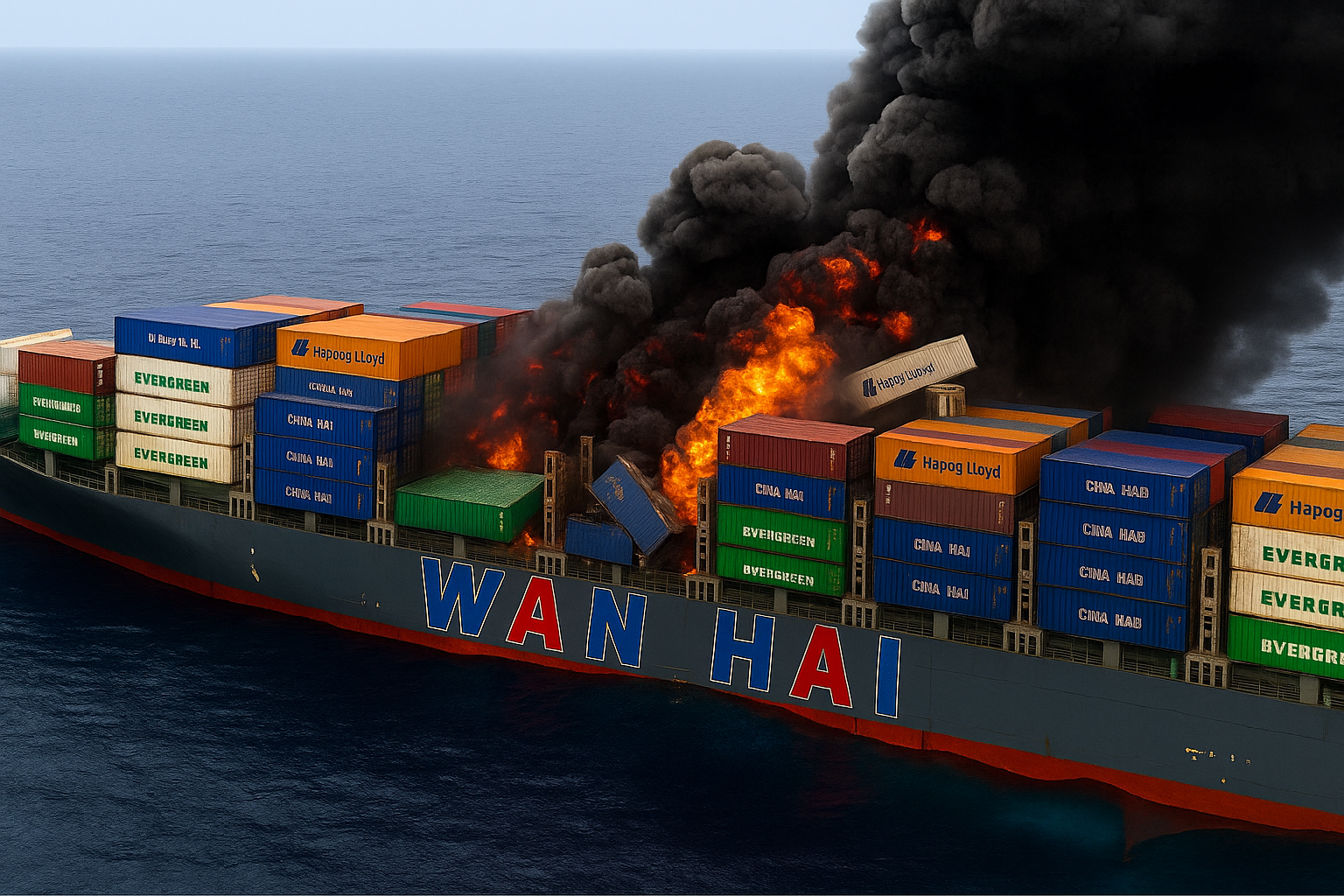
In March 2025, the MV Solong, carrying aviation fuel and suspected sodium cyanide, collided with another vessel in the English Channel. A fire onboard triggered widespread evacuations and drew investigations from maritime agencies across three nations.
These near-misses are becoming more frequent. In April, an Indian coastal freighter caught fire near Mumbai while carrying ammonium nitrate. Across Asia and West Africa, improper hazmat declarations and poor container stowage continue to endanger vessels and crew.
The industry remains under pressure to digitize cargo manifest verification, but progress is slow—especially among flags of convenience.
6. Environmental Fallout: MSC Elsa 3 Oil Spill
The capsizing of MSC Elsa 3 off India’s southwest coast on May 25 caused the release of over 800 tonnes of furnace oil into the Arabian Sea. While emergency response teams contained most of the spill, concerns remain over long-term damage to marine ecosystems and fisheries near Kochi.
The vessel’s Liberia flag and age (24 years) has reignited scrutiny over vessel classification, inspection compliance, and port state control enforcement.
7. Direct Kinetic Attacks on Commercial Ships
The attack on ASL Bauhinia near Yemen in April 2025, where the vessel was struck by an explosive drone and forced to evacuate crew, marks a chilling return to direct kinetic attacks on merchant shipping.
Over 15 incidents have been reported this year in the Red Sea and Arabian Gulf. These aren’t just attacks on trade—they’re attacks on the principle of neutrality at sea.
Implications for Global Shipping and Trade
The cumulative effect of these threats is profound:
- Insurance premiums are up 200–400% for war risk zones
- Freight rates have surged for East Africa, the Gulf, and Southeast Asia
- Crew recruitment and retention are increasingly difficult for flagged ships in high-risk corridors
- Energy and food prices are under upward pressure as supply lines grow uncertain
Many carriers are now investing in armed security, alternative routing models, and port cyber resilience tools just to maintain continuity.
Conclusion: A Dangerous Decade Ahead
Shipping was once the silent engine of globalization. In 2025, it has become a frontline sector where geopolitics, environmental fragility, cyber warfare, and global trade collide.
The world’s ability to move goods safely across oceans depends on how well we address this new matrix of risk. And for now, the trendlines remain concerning.
All in Maritime News will continue monitoring, analyzing, and reporting on these high-impact developments that define the future of global trade.
