

Shanghai / Beijing: China is progressing with plans to develop what could become the world’s first nuclear-powered commercial container ship, a move that may significantly alter the future of deep-sea shipping and low-carbon maritime transport.
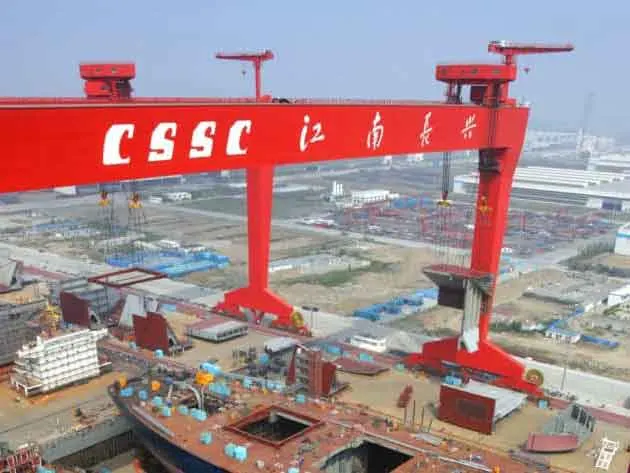
The project is being led by Jiangnan Shipyard Group, a state-owned shipbuilder under the China State Shipbuilding Corporation (CSSC). The proposed vessel is designed as an ultra-large container ship with a capacity of up to 25,000 twenty-foot equivalent units (TEUs), placing it among the largest container vessels ever conceptualised.
Nuclear Propulsion Enters Commercial Shipping
If realised, the ship would be the first civilian container vessel to use nuclear propulsion, a technology traditionally limited to military applications such as submarines and aircraft carriers. The design reportedly incorporates an advanced molten salt reactor, potentially fuelled by thorium, which is considered more abundant and capable of offering enhanced safety characteristics compared with conventional uranium-based reactors.
The reactor is expected to generate sufficient power to propel the vessel for several years without refuelling, while also supplying electricity for onboard systems. This could allow the ship to operate continuously on long-haul routes with minimal downtime and significantly lower fuel-related operating costs.
Environmental and Operational Benefits
Nuclear propulsion offers the potential for zero carbon emissions during operation, positioning the vessel as a radical alternative at a time when the shipping industry faces mounting pressure to decarbonise. Container shipping remains one of the largest contributors to global maritime emissions, and nuclear power could provide a long-term solution for high-capacity, long-distance trade routes where alternative fuels remain challenging.
Beyond emissions reduction, the ability to sail for extended periods without refuelling could improve route flexibility and reduce reliance on bunkering infrastructure.
Regulatory and Safety Challenges
Despite its potential, the project faces major regulatory and operational hurdles. There is currently no established international framework governing the operation of nuclear-powered merchant ships, particularly regarding port access, crew certification, reactor safety, and nuclear waste management.
Port state acceptance is expected to be one of the most significant challenges, as many countries restrict or prohibit entry of nuclear-powered vessels. Classification standards, insurance considerations, and emergency response protocols would also need to be developed before the vessel could enter commercial service.
Proponents argue that modern molten salt reactors feature inherent safety mechanisms, including low-pressure operation and passive shutdown systems, reducing the risk of severe accidents. However, large-scale maritime deployment of such reactors remains untested.
Timeline and Strategic Significance
While no firm construction date has been announced, industry sources indicate the project is still in the design and planning phase, with potential construction targeted for the early to mid-2030s. Jiangnan Shipyard is also reported to be preparing its facilities for the construction of nuclear-powered commercial vessels, underlining China’s long-term ambitions in advanced shipbuilding.
The initiative aligns with China’s broader strategy to advance next-generation energy technologies and reinforce its leadership in global shipbuilding. If successful, the project could set a precedent for future nuclear-powered merchant vessels and influence international discussions on maritime decarbonisation.
Global Industry Reaction
The global maritime industry is watching developments closely. While some stakeholders view nuclear propulsion as a necessary step toward achieving long-term emissions targets, others remain cautious, citing safety concerns, public perception, and regulatory uncertainty.
As shipping companies explore alternative fuels such as LNG, methanol, ammonia, and hydrogen, China’s nuclear-powered container ship concept stands out as one of the most ambitious — and potentially disruptive — proposals in the race toward sustainable global shipping.
Tell us What is Happening in Your Area: Contact Maritime Context at: news@maritimecontext.com
