

Maritime Context News – November 2025
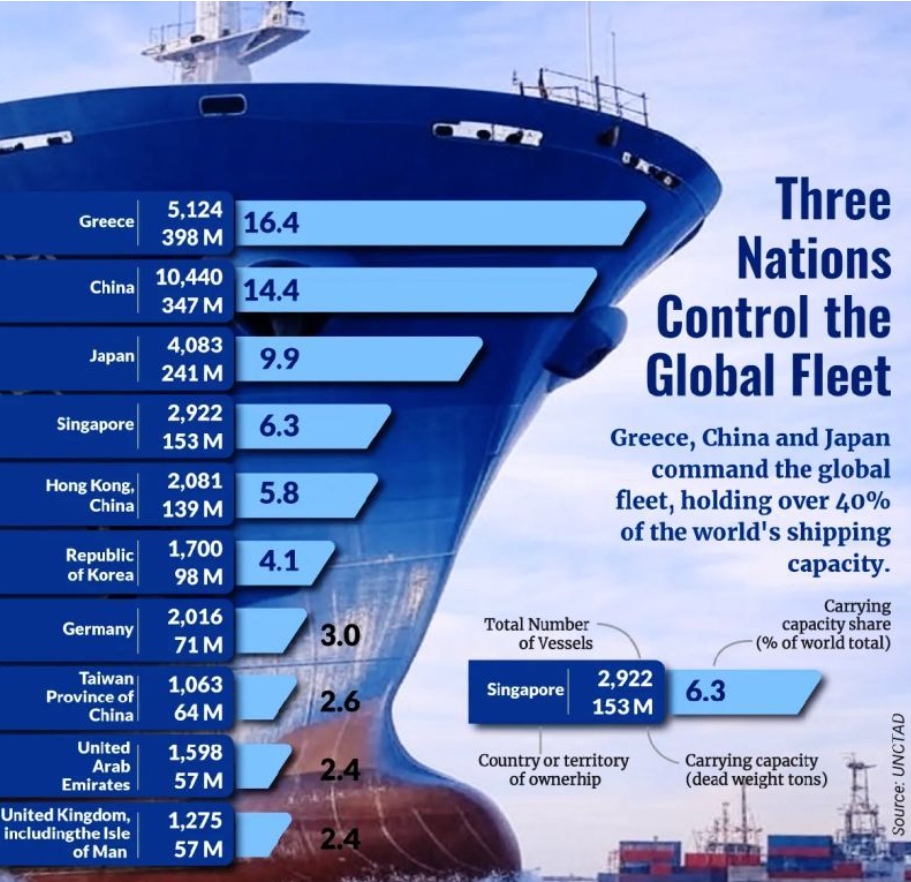
Global shipping capacity continues to be heavily concentrated among three maritime giants — Greece, China and Japan — which together control more than 40% of the world’s merchant fleet. According to the latest assessments from the United Nations Conference on Trade and Development (UNCTAD), these nations have maintained their long-standing dominance through sustained investment, diversified fleet portfolios and strategic expansion across key vessel segments.
How the Leading Nations Maintain Their Positions
Greece – The World’s Largest Shipowning Nation
Greece continues to hold the top position in global fleet ownership, a status it has maintained for many years. Its leadership is driven by:
- A strong presence in tanker and dry bulk segments
- Continuous renewal of modern, fuel-efficient tonnage
- A highly active and globally competitive private-owner structure
Greek shipowners remain influential across all major cargo markets and are consistently among the top investors in newbuildings.
China – Rapid Growth Solidifying the No. 2 Position
China firmly retains its role as the second-largest shipowning nation worldwide. Its position is supported by:
- Large-scale investment in bulk carriers, containerships and gas carriers
- Strong financial backing from leasing houses and state-linked operators
- Integration with the world’s largest shipbuilding sector
China’s fleet growth reflects both domestic industrial demand and a broader strategic push to control more of its global transport needs.
Japan – A Stable, Technology-Focused Maritime Power
Japan maintains its long-established position among the top three global owners. Its fleet influence is rooted in:
- Leadership in LNG carriers, LPG carriers and high-tech vessel classes
- Strong relationships between shipowners, trading houses and shipbuilders
- A reputation for safety, efficiency and high-value specialized tonnage
While Japan’s total share shows modest fluctuation over time, it remains a critical player in advanced and energy-related shipping segments.
A Concentrated Global Fleet
Despite differences in fleet composition and national strategies, Greece, China and Japan together consistently command over 40% of global shipping capacity. Their dominance shapes:
- Freight markets
- Global energy flows
- Supply chain stability
- Investment trends in decarbonized and alternative-fuel vessels
The 2025 rankings reaffirm that the balance of maritime power remains firmly anchored within these three nations, ensuring that decisions made in Athens, Shanghai and Tokyo continue to influence the direction of global shipping for years to come.
Tell us What is Happening in Your Area: Contact Maritime Context at: news@maritimecontext.com
