

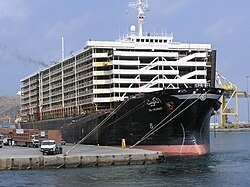
A maritime animal welfare crisis is unfolding off the Turkish coast, where the livestock carrier Spiridon II has been stranded for more than two weeks with nearly 2,900 cattle onboard. The vessel, which departed Uruguay in early October bound for Bandırma, Turkey, remains anchored offshore after authorities reportedly denied permission to offload the animals due to irregularities in their documentation.
According to reports, Turkish agricultural officials detected discrepancies in the ear-tag records of about 500 cattle upon arrival, leading to an import suspension pending verification. Since then, the 51-year-old vessel has remained in limbo, triggering what animal welfare groups have described as a “slow-motion disaster.”
At least 48 cattle have died so far as the ship endures prolonged delays. Crew members and observers have raised concerns about dwindling supplies of feed, water, and bedding. The vessel’s ventilation systems, not designed for extended anchorage, have been working continuously under difficult conditions, adding to the strain.
Animal welfare advocates, including representatives from the Animal Welfare Foundation and Animals International, have called for immediate intervention by Turkish authorities to allow offloading or provide relief. They warn that deteriorating conditions onboard could lead to more fatalities and serious environmental contamination if the situation is not resolved quickly.
The Spiridon II, originally built in 1973 and converted to a livestock carrier in 2011, operates under the Togolese flag. The vessel has been described as one of several aging ships still active in the live export trade, a sector increasingly criticized for poor oversight and limited contingency planning.
Local residents in Bandırma have also reported foul odours and insect infestations emanating from the anchorage area, prompting additional scrutiny from health and environmental agencies. Turkish officials, however, maintain that import protocols must be followed strictly to protect local livestock industries from potential disease risks.
This latest incident underscores the broader challenges of live animal shipping, especially over long routes between South America and the Middle East. Industry experts note that while live exports are economically significant, the trade remains vulnerable to documentation lapses, port access denials, and welfare emergencies.
A marine surveyor with Observater Surveys and Services Limited, Mr. Linus Opondo, commented that such crises highlight “the critical importance of pre-voyage verification — not just of ship condition, but also the accuracy of animal records and port readiness.” He added that even minor documentation mismatches “can escalate into humanitarian and environmental crises when combined with ageing vessels and long transit times.”
As the situation continues, pressure is mounting on Turkish authorities and the ship’s owners to reach a resolution. Maritime observers warn that if conditions worsen, authorities may be forced to consider emergency offloading or euthanasia measures to prevent further suffering.
The Spiridon II case is the latest in a string of livestock transport incidents that have reignited calls for stronger international regulation of live animal shipping. For now, nearly 3,000 animals remain stranded at sea — waiting for a decision that may determine their fate.
Tell us What is Happening in Your Area: Contact Maritime Context at: news@maritimecontext.com
