

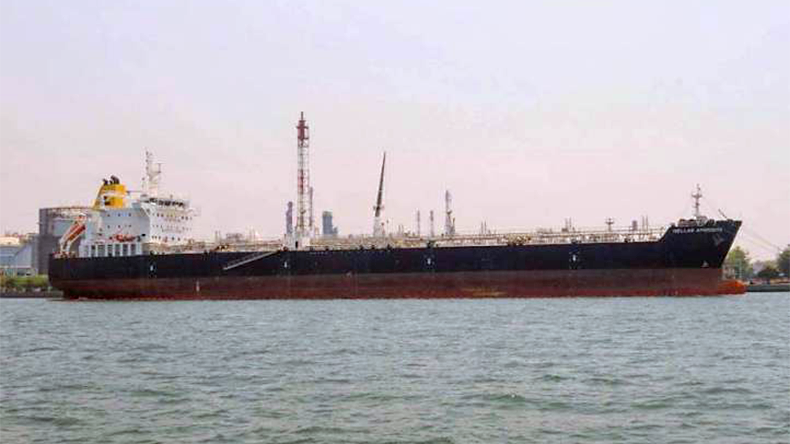
Mogadishu, 6 November 2025 — Lloyd’s List has reported that an unsuccessful attempt to board a Stolt-Nielsen tanker off the coast of Somalia earlier this week could signal the return of organised piracy in the western Indian Ocean, amid mounting evidence of links between Somali-based groups, al-Shabaab, and Yemen’s Houthi movement.
The incident occurred on Monday when four armed individuals in a small craft attempted to board a chemical tanker owned by Stolt-Nielsen, approximately 330 nautical miles east of Mogadishu. The vessel’s crew raised the alarm and conducted evasive manoeuvres, successfully deterring the attackers. According to sources cited by Lloyd’s List, no crew members were injured and the vessel sustained no damage.
Rising concerns of coordinated maritime threats
While isolated acts of piracy have persisted since the collapse of large-scale Somali piracy in 2017, analysts now warn of a more organised resurgence. Intelligence shared by shipping security sources suggests a growing operational connection between local Somali pirate networks, militant group al-Shabaab, and Yemen’s Houthi forces, who have increased their attacks on commercial shipping in the Red Sea over the past year.
This cross-border collaboration could provide pirates with both financial backing and access to weapons, enabling renewed attacks on merchant vessels transiting through the Arabian Sea and Gulf of Aden — vital corridors for global energy and trade routes.
Maritime experts note that the latest attack bears tactical similarities to piracy incidents from a decade ago, including the use of small, fast boats approaching large commercial ships at night.
Industry and naval responses
The United Kingdom Maritime Trade Operations (UKMTO) and other naval monitoring agencies have advised heightened vigilance among vessels operating in the High Risk Area (HRA). Combined Maritime Forces (CMF) warships continue to patrol the region, but vast sea coverage and the redeployment of naval assets toward Red Sea security have left some areas vulnerable.
The International Chamber of Shipping (ICS) and BIMCO have also urged shipowners to maintain strict adherence to Best Management Practices (BMP5), including the use of citadels, razor wire, and armed guards where permitted.
Economic and security implications
A resurgence in piracy could have serious implications for global trade and regional stability. The western Indian Ocean remains one of the busiest shipping corridors in the world, linking Asian manufacturing hubs with European and African markets. Renewed instability in Somali waters could increase insurance premiums, extend voyage routes, and elevate operational risks for shipping companies.
For Stolt-Nielsen and other tanker operators, the threat underscores the need for continuous crew training, security watch readiness, and coordination with naval authorities during transits through high-risk areas.
A warning sign for the shipping industry
The failed boarding of the Stolt-Nielsen tanker serves as a reminder that while Somali piracy had been largely suppressed through international naval patrols and industry cooperation, the underlying drivers — poverty, instability, and militant influence — persist.
If these networks continue to evolve in tandem with militant groups such as al-Shabaab and the Houthis, the Indian Ocean could once again face a complex maritime security crisis that blends piracy, terrorism, and geopolitical conflict.
As one maritime security analyst told Lloyd’s List, “This incident may not be isolated — it could be the first signal that organised piracy is adapting to new regional dynamics. The threat is no longer purely Somali; it’s regional and ideological.”
Tell us What is Happening in Your Area: Contact Maritime Context at: news@maritimecontext.com
